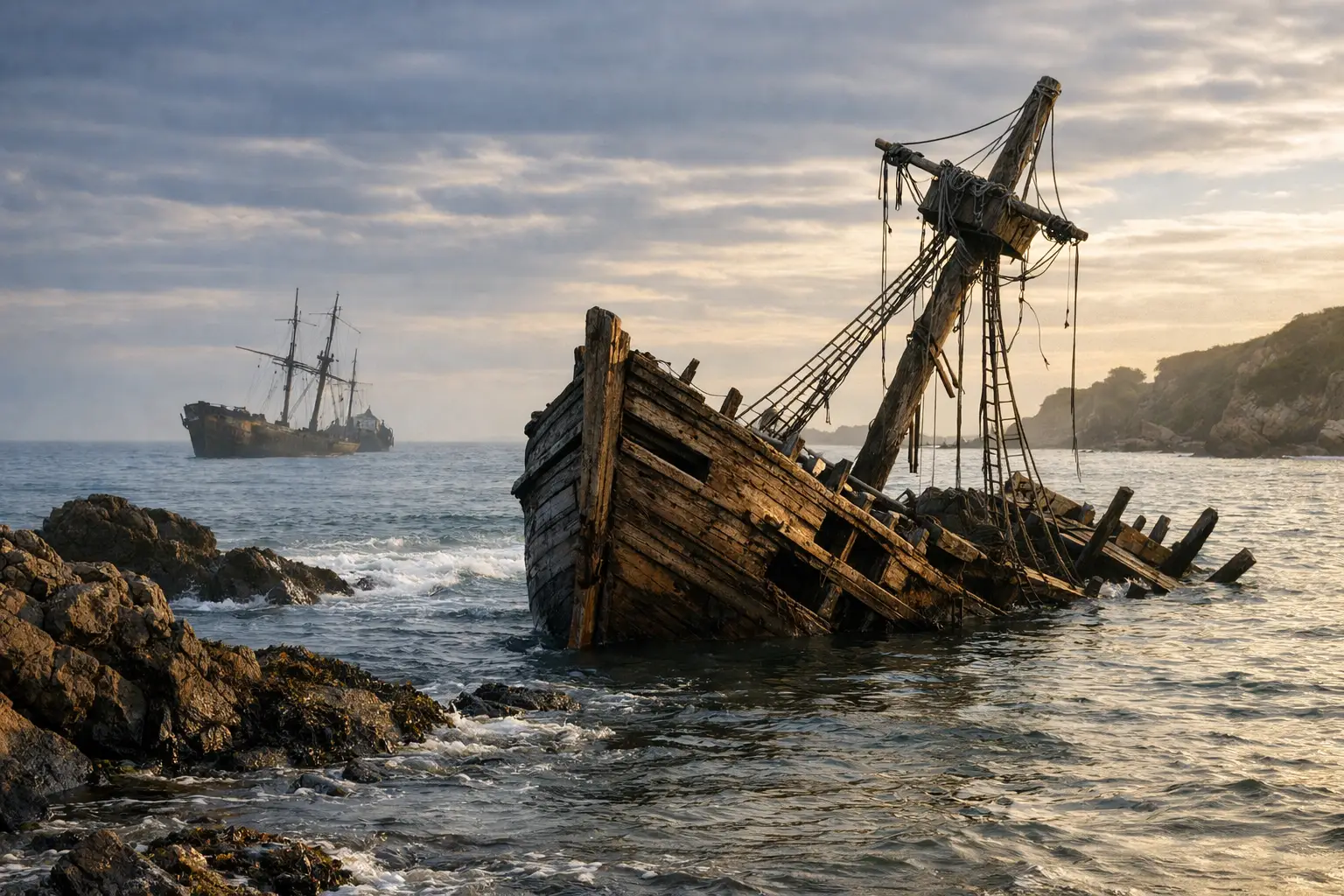

Long before a shipwreck became a museum case, it was a journey interrupted – a hull split by monsoon seas, a fire in the hold, a reef misjudged at dusk, or a trading venture that simply never reached port. The history of shipwrecks is not only a record of disaster. It is also a record of movement: of ceramics packed for export, spices routed across oceans, navigators testing seasonal winds, and empires built on maritime ambition.
For visitors drawn to maritime heritage, that is what makes shipwrecks so compelling. They preserve the ordinary and the extraordinary at once. A sunken vessel may tell us about royal trade, but it may also reveal the bowl someone expected to sell in a busy port, the storage jar stacked for practical use, or the kiln-made plate that once travelled as a luxury object and now survives as historical evidence.
Why the history of shipwrecks matters
Shipwrecks capture a rare kind of historical truth. On land, objects are moved, repurposed, broken apart or buried under new construction. Underwater, a wreck can preserve an entire moment in commercial life. Cargo remains grouped together. Ceramics stay close to the routes that carried them. Even when a wreck has suffered damage, what survives can still show patterns of trade with remarkable clarity.
That is especially true in Asia, where maritime exchange shaped cities, courts and everyday life for centuries. Long before modern shipping lanes, merchants crossed the South China Sea, the Strait of Malacca and the wider Indian Ocean through networks governed by monsoon timing, local knowledge and calculated risk. A single wreck can therefore illuminate much more than one voyage. It can point to who was trading, what was in demand, which ports mattered, and how taste itself travelled across regions.
There is, of course, a tension at the heart of shipwreck history. These sites are valuable because they are archaeological archives, yet they also attract commercial interest because their cargo can be visually striking and financially significant. Fine porcelain, stoneware and trade ceramics are not only historical artefacts. They are also objects of beauty, craftsmanship and desire. The most responsible interpretation holds both truths together.
From ancient loss to maritime archive
The earliest shipwrecks known to archaeology tend to survive in fragments – timber traces, amphorae, anchors, metal ingots or scattered cargo. Even so, they transformed the study of the ancient world. Historians once relied heavily on written records, which often reflected elite viewpoints and left great gaps. Wrecks brought direct physical evidence into the story.
They showed what merchants actually carried rather than only what officials recorded. They revealed practical design choices in shipbuilding. They helped historians compare what was meant to happen in trade with what happened in practice. This is one reason shipwreck archaeology changed maritime history so profoundly. It shifted attention from abstract routes on a map to the material reality of seaborne exchange.
As maritime commerce expanded between Asia, the Middle East, Europe and East Africa, the number and variety of wrecks increased. Some vessels were local traders hugging coastlines. Others were large ocean-going ships carrying ceramics, metals, textiles, resins and precious goods over long distances. Every crossing involved danger. Storms, shifting shoals, navigational error, structural failure, piracy and war all played their part.
Not every wreck was dramatic. Many were simply the result of maritime life operating at scale. When enough ships travel often enough, loss becomes part of the system. That can sound stark, but it is central to understanding the history of shipwrecks. Wrecks were not anomalies at the edge of trade. They were part of trade’s lived reality.
The Asian seas and the cargo of civilisation
For those interested in ceramic history, Asian shipwrecks are particularly revealing. Porcelain and stoneware were durable, stackable and widely traded, which means they survive in significant quantities and offer a vivid record of exchange. They also tell stories of taste. A cargo was rarely random. Shape, glaze, decoration and quality were often chosen for particular markets.
A blue and white dish found in a wreck may speak to Chinese kiln production, but it can also indicate overseas demand, regional dining customs and the prestige attached to imported wares. Storage jars reveal the practical side of trade. Finer export porcelain reflects aspiration, wealth and cross-cultural fashion. Together, these objects document how goods moved not just between ports, but between ways of life.
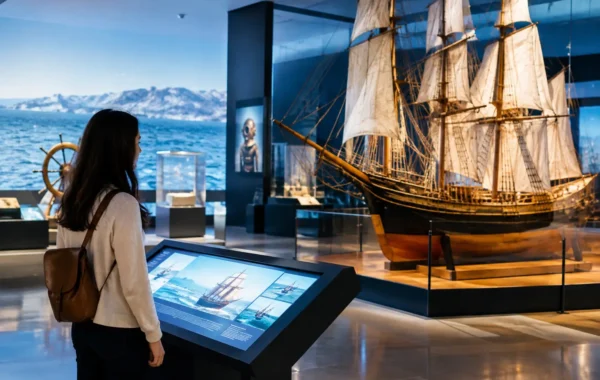
This is where shipwreck collections become so powerful in a public setting. Visitors do not need to be archaeologists to understand the significance of a recovered bowl or jar. The object itself carries presence. It once occupied a ship’s hold, survived the violence of sinking, rested underwater for centuries, and now re-enters view as both artwork and evidence.
In Southeast Asia, these discoveries have reshaped how regional history is told. The sea is no longer a backdrop between great civilisations on land. It becomes the stage itself – active, commercial, contested and richly connected. Penang, with its own maritime character and history of exchange, is a fitting place to encounter these stories through authentic shipwreck ceramics and refined interpretation.
What shipwreck ceramics can tell us
Ceramics are often the most immediately legible survivors of a wreck, but they should never be mistaken for simple decorative remnants. They help date a vessel, identify trade connections, and map economic priorities. Kiln styles can indicate origin. Repetition within a cargo can suggest market planning. Variations in quality may point to mixed buyers, from elite households to everyday consumers.
At times, shipwreck ceramics also challenge established assumptions. A wreck may contain forms not well documented on land, or combinations of wares that suggest more complex trade patterns than historians had imagined. In that sense, underwater archaeology does not merely confirm what we know. It corrects it.
Yet interpretation requires care. Context matters. A ceramic removed without proper documentation loses part of its historical value, because the relationship between objects in a cargo can be as revealing as the objects themselves. This is why serious institutions place such importance on provenance, curation and storytelling grounded in scholarship.
When presented well, however, these artefacts do something rare. They appeal to seasoned collectors and first-time museum visitors alike. One group may notice firing quality, glaze depth or dynastic markers. Another may simply marvel that a porcelain vessel has survived beneath the sea for centuries. Both responses are valid. Both are part of the cultural power of shipwreck history.
The modern history of shipwrecks
The modern era changed shipwrecks in two major ways. First, industrial shipping increased the scale of maritime movement, leading to vast new fields of wreck history linked to war, migration and global commerce. Secondly, new diving and survey technology made underwater sites more accessible for study – and, at times, more vulnerable to disturbance.
Twentieth-century conflicts produced wrecks with very different meanings from ancient trade losses. These sites can be war graves, memorials and politically sensitive heritage locations. Their interpretation demands restraint and respect. Meanwhile, commercial salvage brought public attention to underwater finds but also raised difficult questions about ownership, conservation and ethics.
There is no single answer here. In practice, it depends on the site, the legal framework, the quality of recovery, and whether the material is preserved and interpreted in ways that serve the public good. The best outcomes are those that protect the archaeological story rather than strip it away.
This is why museums remain essential to the history of shipwrecks. They turn recovery into understanding. They place objects back into narrative, connecting craftsmanship with trade, and beauty with historical circumstance. At their best, they also widen the experience, allowing visitors to encounter maritime heritage not as a niche academic subject but as a living cultural conversation.
Why these stories still resonate
Shipwrecks endure in the imagination because they hold contradiction so well. They represent loss, yet they preserve. They are accidents, yet they become archives. They speak of ambition, commerce, craftsmanship and human vulnerability in the same breath.
For travellers and heritage-minded visitors, that resonance is part of the appeal. To stand before a recovered ceramic is to feel time collapse slightly. The object was made for use, packed for trade, lost to the sea, and restored to view in an entirely different age. It arrives before us altered in meaning, but not diminished.
At Straits & Oriental Museum, that encounter is given the setting it deserves – one that honours maritime history with sophistication, visual richness and cultural depth. In a world of hurried attractions, shipwreck heritage offers something more lasting: the chance to see how the sea carried not only goods, but entire histories, and how some of those histories survived because they sank.