
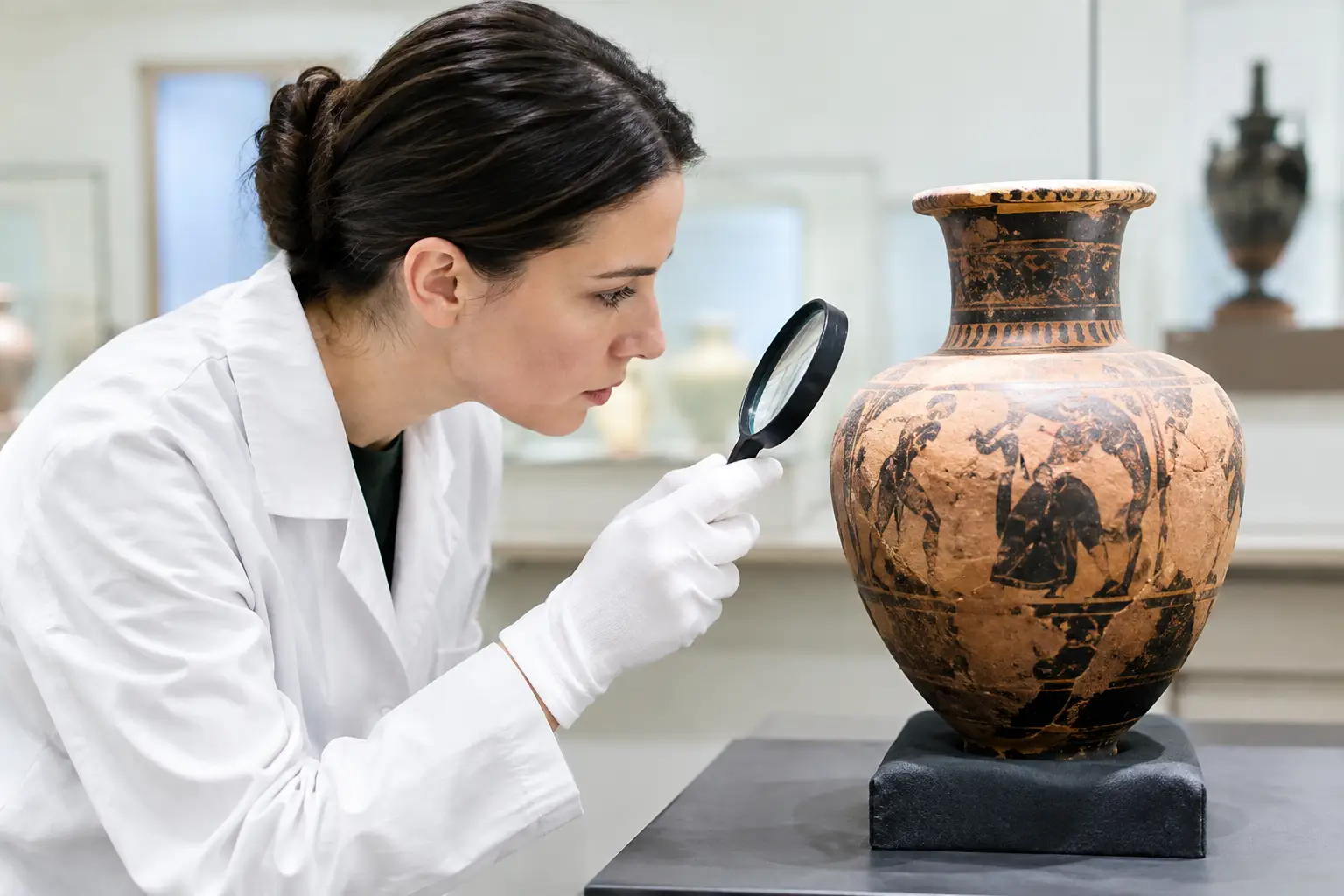

A porcelain bowl lifted from a centuries-old wreck can appear almost impossibly fresh: a painted cobalt-blue flourish still clear, its glaze catching the light. It is natural to ask, are museum artefacts authentic? The short answer is that reputable museums work hard to ensure they are, but authenticity is not a single, simple label. It is a chain of evidence, expertise, care and transparency.
For visitors, this question matters because an artefact is more than an attractive old object. Its value lies in the journey it has travelled: who made it, when it was used, where it was found, and what it can reveal about the people and trade routes that shaped the world. A ceramic recovered from an Asian shipwreck carries a particularly vivid story. It may have been loaded as cargo, sailed across busy seas, rested beneath the water for generations, and then entered conservation and study before appearing in a gallery.
What makes museum artefacts authentic?
An authentic artefact is generally an original object from the period, culture or event it represents. It is not a modern reproduction made to look old. Yet museums use the word with care, because an original object may also have been repaired, cleaned, reassembled from fragments or altered during its long life. Those interventions do not automatically make it less genuine. Rather, they become part of the object’s documented history.
Authenticity rests on several connected questions. Is the material consistent with the claimed date and place of production? Is there a credible record of where the object came from? Does its construction, decoration and wear correspond with comparable examples? Has it been examined by archaeologists, curators, conservators or relevant specialists?
The strongest answer comes when these forms of evidence agree. A piece of Chinese export porcelain, for example, may be assessed through the form of its foot rim, the composition of its paste and glaze, kiln marks, painted motifs, and its relationship to excavated or shipwreck assemblages of a known date. No single detail should be expected to carry the entire case.
Provenance is the object’s paper trail
Provenance means an artefact’s ownership and discovery history. In an ideal case, the record traces an object from an archaeological excavation or documented recovery through to a museum collection. It might include field reports, photographs, recovery records, conservation notes, export permissions, previous catalogues and acquisition documents.
A complete provenance offers confidence, but historical collections are not always perfect. Records can be incomplete, especially for objects that entered collections many decades ago. That does not necessarily mean an item is false. It does mean a responsible institution should avoid overstating what it knows and should continue researching the object.
For underwater archaeology, context is especially precious. A shipwreck cargo can show which wares travelled together, how they were packed, and which markets they may have served. A single bowl viewed in isolation can be beautiful. Hundreds or thousands of ceramics recovered in a documented wreck context can illuminate a whole chapter of maritime exchange.
Why shipwreck ceramics need special care
Ceramics are durable, which is why they survive on the seabed so compellingly. However, survival is not the same as arriving in a display case unchanged. Salt can penetrate porous areas and old cracks. Marine growth may conceal details. Pressure, movement and the wrecking event itself can cause breaks, abrasion and staining.
Before a recovered object can be shown safely, conservators may desalinate it slowly, remove unstable deposits, join fragments and stabilise vulnerable areas. This work is careful rather than cosmetic. The aim is not to make every object look new; it is to preserve it, make it understandable and prevent further deterioration.
Visitors may notice small fills, repaired sections or differences in surface colour. These can be signs of conscientious conservation, not deception. A well-presented museum will distinguish original material from modern support where appropriate, allowing the artefact’s age and condition to remain legible.
This is particularly meaningful for shipwreck collections. A crack, a barnacle trace or a softened edge can be evidence of a vessel’s final voyage. Perfection is not always the most truthful presentation. Sometimes the marks of the sea are part of the story.
How museums test and research a collection
Museum authentication brings together human knowledge and scientific investigation. Curators compare an object with published examples, excavation material and established collections. Ceramic specialists look closely at shape, firing, decorative language and manufacturing methods. Conservators examine condition and previous repairs.
Where questions remain, scientific methods can help. X-ray imaging may reveal construction and concealed joins. Microscopy can identify surface changes or tool marks. Chemical analysis can examine clay, pigments, glazes and restoration materials. Thermoluminescence testing can sometimes assist with dating fired ceramics, although results must be interpreted cautiously and alongside other evidence.
Science is not a magic stamp of approval. Tests have limitations, can be expensive, and may require a minute sample. The best practice is therefore cumulative: material evidence, historical research, archaeological context and connoisseurship should inform one another.
At Straits & Oriental Museum, shipwreck ceramics are presented not merely as decorative objects but as witnesses to the maritime networks that connected Asia. Their significance grows through careful interpretation: the cargo they belonged to, the dynasties and workshops behind their production, and the seaborne commerce that brought them towards distant ports.
Are replicas ever displayed in museums?
Yes, and they should be. Replicas, casts, reconstructions and digital displays can make fragile or inaccessible heritage easier to understand. A reproduction might allow a child to feel the shape of a vessel that must not be handled, or show how a broken jar originally appeared. A reconstructed section of a wreck can bring scale and context to an exhibition.
The key principle is clear labelling. Visitors should never have to guess whether they are looking at an original, a facsimile, a restored object or an interpretive reconstruction. Honest labels do not diminish the experience. They strengthen it, because they show respect for both the visitor and the artefact.
There is also a practical trade-off. Displaying every rare object under bright lights or allowing close contact can accelerate damage. Museums may choose a replica for an interactive station while preserving the original in carefully controlled conditions. That is not a compromise in integrity. It is a way of protecting heritage for future generations.
What to look for as a curious visitor
You do not need to be a collector or archaeologist to assess whether a museum is treating authenticity seriously. Begin with the story being told. Does the label explain an object’s date, origin and material? Does it identify uncertainty where uncertainty exists? Is the connection to a shipwreck, excavation or collection history described with enough detail to be meaningful?
Look, too, for the distinction between historical fact and informed interpretation. Museums often use phrases such as “probably”, “attributed to” or “thought to have been”. These are not evasions. They signal intellectual honesty when the evidence supports a strong possibility rather than absolute certainty.
A credible museum also acknowledges condition. If a vessel has been reconstructed from shards, that fact can deepen your appreciation of the painstaking work behind its display. If an item was acquired from an older collection with gaps in its early record, a responsible institution will research and address those gaps rather than hide them.
Finally, trust your sense of whether the objects are being treated as cultural inheritance rather than props. Authenticity is visible in the seriousness of the care, the quality of research and the willingness to let an artefact retain its complexity.
Authenticity is also an ethical promise
An artefact can be old and still raise difficult questions. Museums must consider whether an object was legally recovered, exported and acquired, whether its provenance is sufficiently clear, and whether display respects the communities and histories connected to it. These questions are especially relevant in a global antiques market, where undocumented objects can be separated from the archaeological contexts that give them meaning.
For this reason, authenticity is not simply about spotting a forgery. It is about responsible stewardship. The most valued collections are those that preserve knowledge as well as objects, allowing visitors to encounter history with confidence while recognising where further research is needed.
The next time a centuries-old ceramic catches your eye, pause before admiring only its colour or craftsmanship. Ask what seas it crossed, what evidence accompanies it, and how its survival has been cared for. That curiosity turns a museum visit into something richer: a direct encounter with the human stories carried across time.