
A porcelain bowl recovered from the seabed can hold more than a pattern, a maker’s mark or the trace of a distant kiln. It can reveal an entire world of merchants, sailors, royal courts and port communities connected by Asian maritime trade. For centuries, the seas linking China, Southeast Asia, India and the wider Indian Ocean carried objects of extraordinary beauty, along with the ideas, beliefs and ambitions that travelled beside them.
This was not a single route with a single story. It was a vast, shifting network shaped by monsoon winds, political alliances, changing tastes and the practical risks of life at sea. Its surviving cargoes, particularly ceramics preserved in shipwrecks, offer an unusually immediate way to encounter that history.
Asian Maritime Trade Was a Living Network
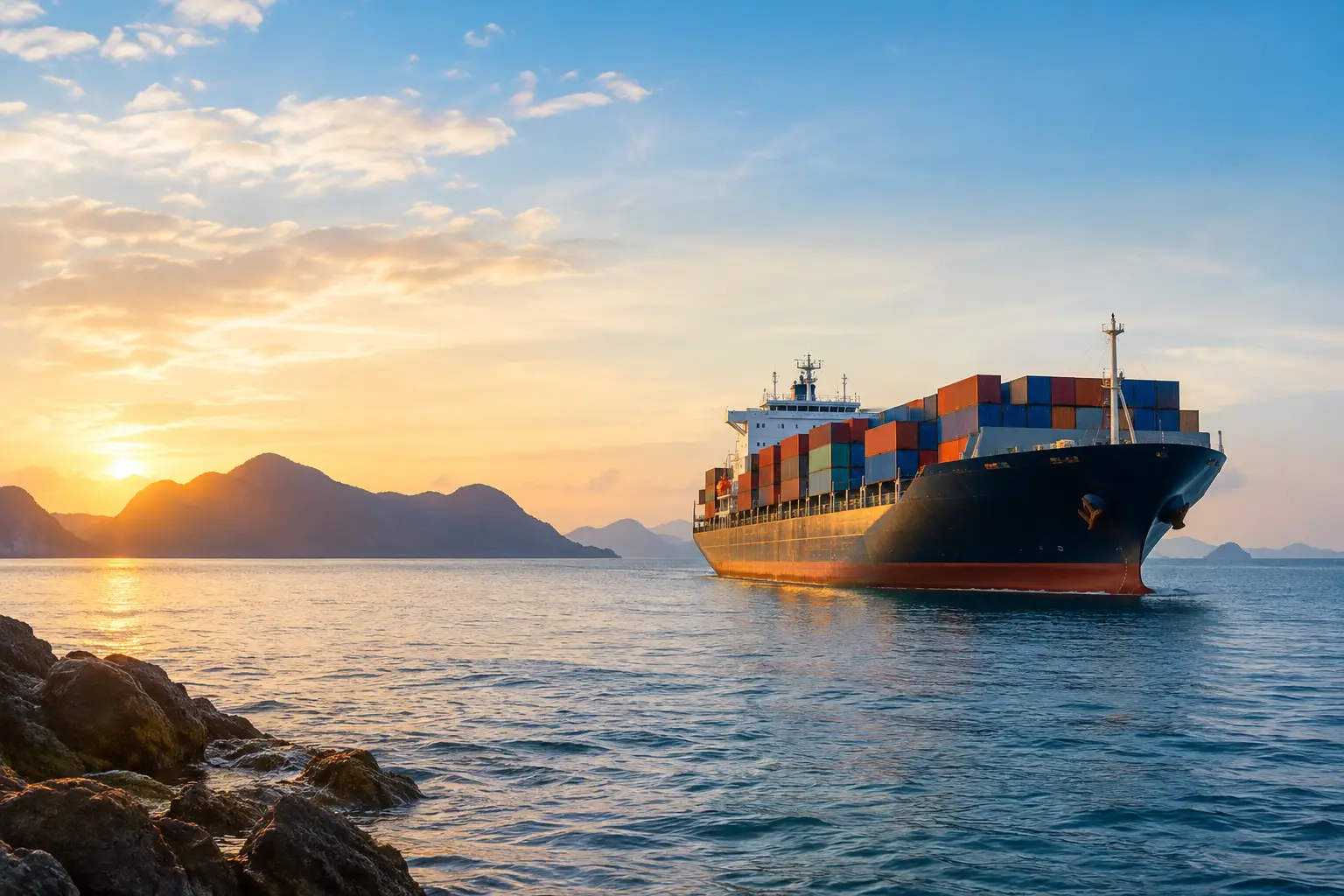
Long before modern shipping lanes, mariners timed their journeys to the monsoon. Seasonal winds could carry a vessel from southern China through the South China Sea and into the ports of the Malay Archipelago, before connecting with the Bay of Bengal, India, the Persian Gulf and East Africa. The return journey depended on a different wind and careful calculation.
These rhythms made Southeast Asia far more than a passage between larger powers. Its coastal settlements and island ports were places where cargoes were exchanged, crews replenished supplies and commercial relationships were built over generations. Spices, forest products, metals, textiles, resins and aromatic woods moved through these harbours. So did ceramics, which became among the most recognisable and enduring goods in the maritime world.
Porcelain and stoneware were valuable because they combined function with refinement. A finely made vessel could serve food or hold water, yet it also carried prestige. Its glaze, painted decoration and technical quality signalled connections to workshops and markets far beyond the place where it was finally used. Demand was not simply imposed from one direction: traders responded to local preferences, ordering shapes and designs suited to particular customers.
That is why cargoes may include utilitarian storage jars alongside elegant blue-and-white wares, or bowls made for everyday trade beside pieces intended for elite households. The sea route was commercial, but it was also deeply social. Every object had to be selected, packed, financed, transported, sold and incorporated into daily life.
What Shipwreck Ceramics Can Tell Us
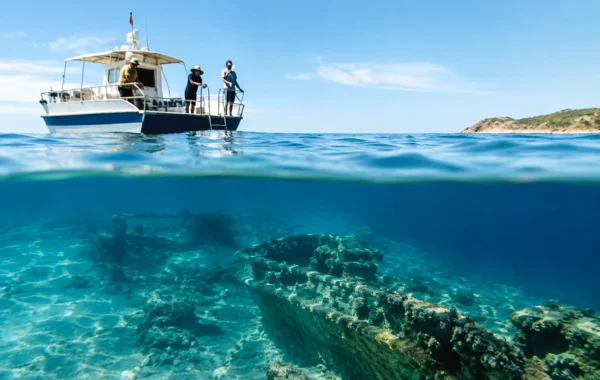
A shipwreck is a moment in time interrupted. When a vessel sank, its cargo was removed from circulation and, in favourable conditions, protected beneath layers of sand and sediment. Centuries later, archaeological recovery can reveal not only what was being carried, but how trade operated at a particular point in history.
Ceramics are especially revealing. Unlike cloth, timber or foodstuffs, they can survive long after organic materials have disappeared. Their forms, glazes and motifs help specialists identify production centres and approximate dates. The composition of a cargo can then suggest where a ship was travelling, who its intended buyers may have been and how merchants balanced luxury goods with practical wares.
Yet shipwreck ceramics should not be treated as isolated treasures. Their significance lies in context. A bowl is more meaningful when considered alongside other pieces from the same hold, the ship’s construction, its location and the broader political climate of its voyage. A cargo with thousands of similar vessels may point to established large-scale demand. A mixed cargo may speak of several markets, changing plans or the layered commercial networks of a busy port.
There are limits to what any wreck can prove. A ship’s final cargo does not represent every object traded in its era, nor does it tell us every detail of the people on board. Archaeology is strongest when it is read alongside historical records, kiln research and knowledge of regional exchange. Even so, the material evidence has a particular power: it brings abstract trade routes into human scale.
Porcelain as Evidence of Taste and Exchange
The splendour of porcelain rests partly in its ability to cross boundaries without losing its identity. Chinese kilns developed exceptional technical mastery, but their exports were never received passively. Buyers across Asia chose, adapted and valued these wares in distinct ways.
Some vessels entered domestic life as tableware. Others were displayed, passed down through families or used in ceremonial settings. Local potters also responded to imported styles, producing regional ceramics that borrowed shapes, colours or decorative ideas while remaining unmistakably their own. Asian maritime trade, then, was not merely about goods moving from port to port. It encouraged new visual languages and shared habits of consumption.
This exchange can be seen in details that reward close looking: the curve of a bowl, the density of cobalt blue, a floral motif, a moulded handle or the base of a storage jar. Such features can point to a period of production, but they also reveal what merchants believed would sell. Commerce left its mark on beauty.
Penang and the Maritime World
George Town belongs to this longer seafaring story. Its historic position along the Straits of Malacca places it within one of the world’s most consequential maritime corridors, where vessels have long passed between the Indian Ocean and the South China Sea. The port city that visitors encounter today is shaped by generations of movement, migration and exchange.
That heritage is visible beyond the waterfront. It lives in food, language, craft, religious life and architecture, each bearing evidence of communities who arrived, settled and traded across the region. Maritime history is not confined to a date on a map. It is part of the texture of Penang’s cultural identity.
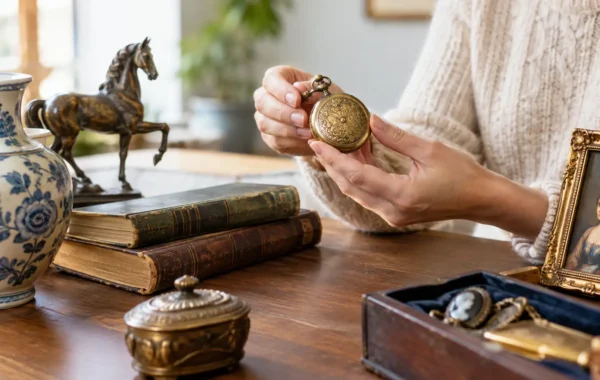
For visitors, this makes shipwreck artefacts especially resonant. They do not merely illustrate a distant past; they offer a tangible connection between the waters beyond the island and the cosmopolitan life found on shore. To stand before a recovered ceramic is to consider the distance it travelled, the hands that made it and the voyage it never completed.
At Straits & Oriental Museum, authentic artefacts recovered from shipwrecks including the Wanli, Turiang, Royal Nanhai, Nanyang, Xuande and Desaru bring these connections into focus. Seen together, they document the splendour of porcelain while giving shape to a regional history that is often discussed in broad terms. Here, history can be encountered through material detail: a glaze altered by time, a familiar form made centuries ago, a cargo preserved beneath the sea.
Why the Sea Still Matters
The routes of the past were not peaceful or predictable. Sailors faced storms, reefs, piracy, illness and the uncertainty of winds that could turn a profitable voyage into a disaster. States competed for strategic ports and levied taxes on commerce. Merchant communities had to work across differences of language, faith and custom.
Still, the network endured because no single kingdom, port or culture controlled it completely for long. Its strength came from interdependence. A vessel might carry goods made in one place, financed in another, crewed by people of several backgrounds and bound for customers further still. That complexity feels strikingly contemporary, even as the objects themselves belong to another age.
The most rewarding way to approach this history is with curiosity rather than nostalgia. These ceramics are beautiful, but they also invite difficult and compelling questions about wealth, labour, risk and cultural exchange. Whose hands made them? Who could afford them? What was lost when a ship went down, and what knowledge survived because it did?
A museum visit can begin with the colour of a porcelain dish and end with a larger appreciation of the sea as a maker of worlds. Take time to look closely: the most memorable stories of trade are often held in the smallest details.