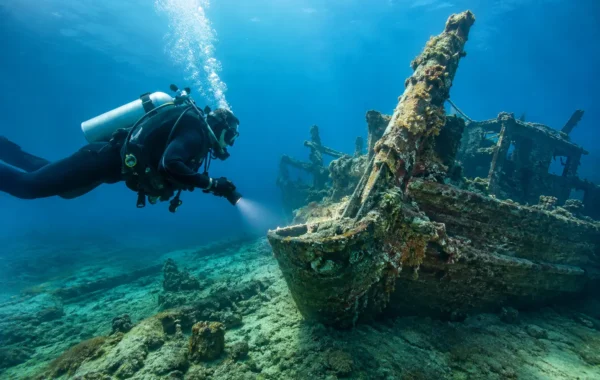
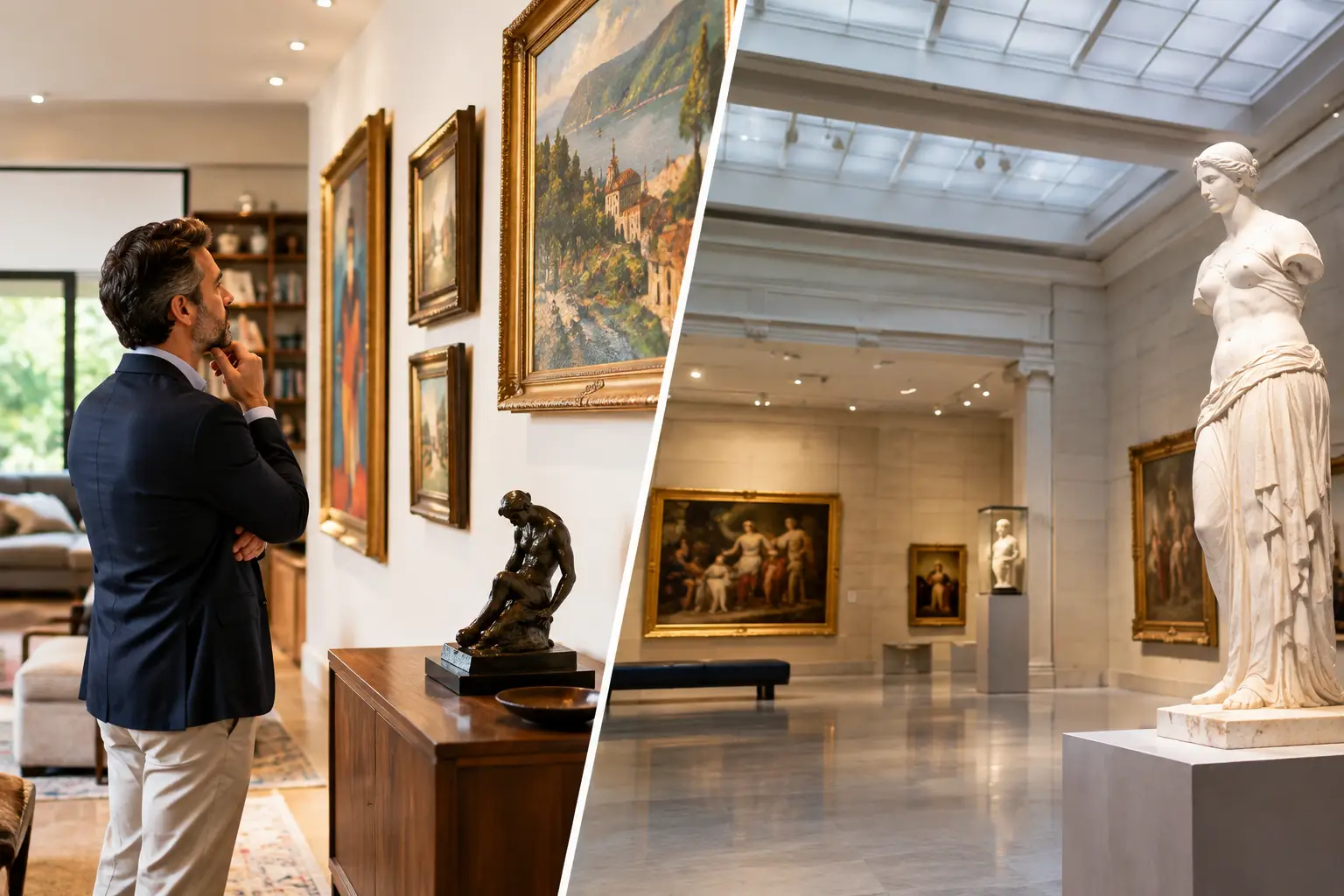

A porcelain bowl raised from a centuries-old shipwreck can sit quietly in a private home, admired by a handful of guests. The same bowl, placed in a museum gallery with its cargo companions, can reveal a much larger story: the trading routes that carried it, the kiln that made it, the people who used it and the sea that preserved it. That distinction sits at the heart of private collections versus museums.
Neither setting is automatically more meaningful. Private collectors have often recognised importance before public institutions do, preserving objects that might otherwise have been lost. Museums, meanwhile, give objects a public life through research, interpretation and long-term care. For anyone drawn to antiques, maritime heritage or Asian ceramics, the real question is not which is superior. It is what each setting allows an artefact to become.
Private collections versus museums: two forms of stewardship
A private collection begins with personal conviction. A collector may be captivated by the quiet glaze of a Ming porcelain dish, the rarity of a particular export ware, or the thrill of tracing an object to a historic wreck site. Over decades, that focus can produce a collection of remarkable depth, shaped by knowledge, patience and an individual eye.
This freedom is one of private collecting’s great strengths. Collectors can follow specialised interests that may be too narrow, too emerging or too commercially uncertain for a public institution. They may acquire objects quickly, build direct relationships with dealers and scholars, and take intellectual risks. Some of the most significant collections of Asian art, ceramics and archaeological material have begun as deeply personal pursuits.
A museum works to a different mandate. Its responsibility extends beyond acquisition to documentation, conservation, scholarship and access. An object enters a collection not simply as something beautiful or rare, but as evidence. Its condition, origin, material, ownership history and context must be recorded as carefully as possible. That process can be painstaking, but it protects the object’s ability to speak credibly across generations.
The difference, then, is not merely between ownership and display. It is between a collection shaped around an individual vision and one held in trust for a wider public.
Context gives an object its voice
A single shipwreck ceramic can be visually arresting. A group of ceramics recovered from the same wreck can transform how we understand a moment in maritime history. Their forms, marks, quantities and placement within a cargo may indicate where merchants sourced goods, which markets they hoped to reach and how trade connected China, Southeast Asia and beyond.
Museums are particularly well placed to present this wider picture. Labels, maps, comparative displays and guided interpretation can show why a bowl matters beyond its surface. Visitors may learn how an uneven glaze records kiln practices, how a familiar motif travelled across cultures, or why a seemingly modest storage jar was essential to life aboard a vessel.
Private collectors also create context, especially when they keep exemplary records and welcome expert study. A carefully documented collection can advance scholarship significantly. Yet context becomes harder to preserve when objects are separated from related material, sold without accompanying documentation or kept unseen for long periods. Provenance is not a technical footnote. It is part of an artefact’s story, and often the difference between a compelling object and reliable historical evidence.
For maritime archaeological material, this is especially important. Shipwreck finds are not simply treasures from the seabed. They are fragments of a working world, shaped by commerce, technology, risk and cultural exchange. Their value grows when they remain connected to that world.
The intimacy and limitations of private ownership
There is a particular pleasure in living with art and antiques. In a private collection, an object can be studied slowly and closely, away from crowds and display cases. The collector may notice details over years: a hand-painted line that changes in different light, a firing flaw that reveals the making process, or a shape that echoes an example in a catalogue or museum gallery.
Private ownership can also support conservation, lending and public scholarship. Many collectors lend generously to exhibitions, fund research or ultimately donate their holdings to museums. In these cases, private passion becomes a powerful source of public benefit.
But private ownership has limits that should be acknowledged plainly. Access depends on the owner. Even an exceptional collection may be unavailable to students, researchers and the public. Future care may be uncertain if heirs do not share the same expertise or commitment. Objects can also enter the market with incomplete collecting histories, creating questions that responsible buyers and institutions must take seriously.
The most respected collectors understand that possession is only one part of stewardship. Documentation, lawful acquisition, proper storage, conservation advice and willingness to share knowledge matter just as much as the acquisition itself.
What museums make possible
Museums create encounters that cannot be replicated in a private home. They place objects in dialogue: a blue-and-white dish beside related ceramics, a cargo assemblage beside a map of monsoon routes, an archaeological find alongside the human stories that give it meaning. Visitors do not need specialist knowledge to begin. A well-curated display can invite curiosity, then reward closer looking.
Public display also creates accountability. Museums must consider how objects were acquired, how they are described and whose histories are represented. Standards differ between institutions, and museums are not without blind spots or difficult legacies. Still, the best museums make their methods visible, revise their interpretations when new research emerges and recognise that heritage belongs to more than those able to buy it.
Conservation is another essential distinction. Light levels, humidity, handling and mounting can determine whether delicate ceramics, textiles or organic materials survive for decades or centuries. Museum stores and galleries are designed around these pressures, supported by conservators and collection teams whose work is often invisible to visitors. The pleasure of seeing an artefact on display rests on this disciplined care.
At Straits & Oriental Museum, shipwreck ceramics are presented not as isolated luxuries but as witnesses to Asia’s maritime past. Their forms and surfaces carry the splendour of porcelain, while their recovery from historic wrecks opens a journey through trade, travel and exchange across the seas.
Value is not the same as price
The market can assign extraordinary prices to rare objects, but price and cultural value do not always move together. An object may be highly desirable because it is scarce, fashionable or associated with a renowned collection. Another may carry immense historical importance despite modest market appeal because it clarifies a trade route, craft tradition or community history.
Museums must often balance these values. They may seek objects that fill a gap in a public narrative rather than pursue only the most decorative or expensive examples. A fragment with secure archaeological information can sometimes teach more than a pristine piece with no known history.
Collectors face a related choice. Buying with care means asking more than whether an object is attractive or likely to appreciate. Where did it come from? Is its ownership history credible? Has it been exported and sold lawfully? Are there records connecting it to a specific site, collection or scholarly publication? These questions protect both the buyer and the heritage the object represents.
When public and private interests meet
The strongest cultural ecosystems do not force a contest between collectors and museums. They encourage responsible partnership. Collectors can lend, publish, support exhibitions and make research possible. Museums can provide scholarly frameworks, conservation expertise and public platforms that let private holdings contribute to a broader cultural record.
There are occasions when privacy is appropriate, particularly for fragile material, sensitive cultural objects or collections still being researched. There are also moments when public access is vital, especially when an object illuminates a shared history or has significance beyond its owner’s personal enjoyment. Each case requires judgement.
For visitors, the most rewarding approach is to look beyond labels such as ‘private’ and ‘public’. Ask what an object can tell us, whether its story is well documented and how it has been cared for. A beautiful ceramic can delight the eye anywhere. When its journey, makers and maritime passage are given room to be understood, it becomes something richer: a connection to the people and currents that shaped our shared past.
The next time an ancient vessel or porcelain fragment catches your attention, linger with its history as well as its beauty. The object may have survived the sea, the market and the passage of centuries. Its fullest story is still waiting to be heard.