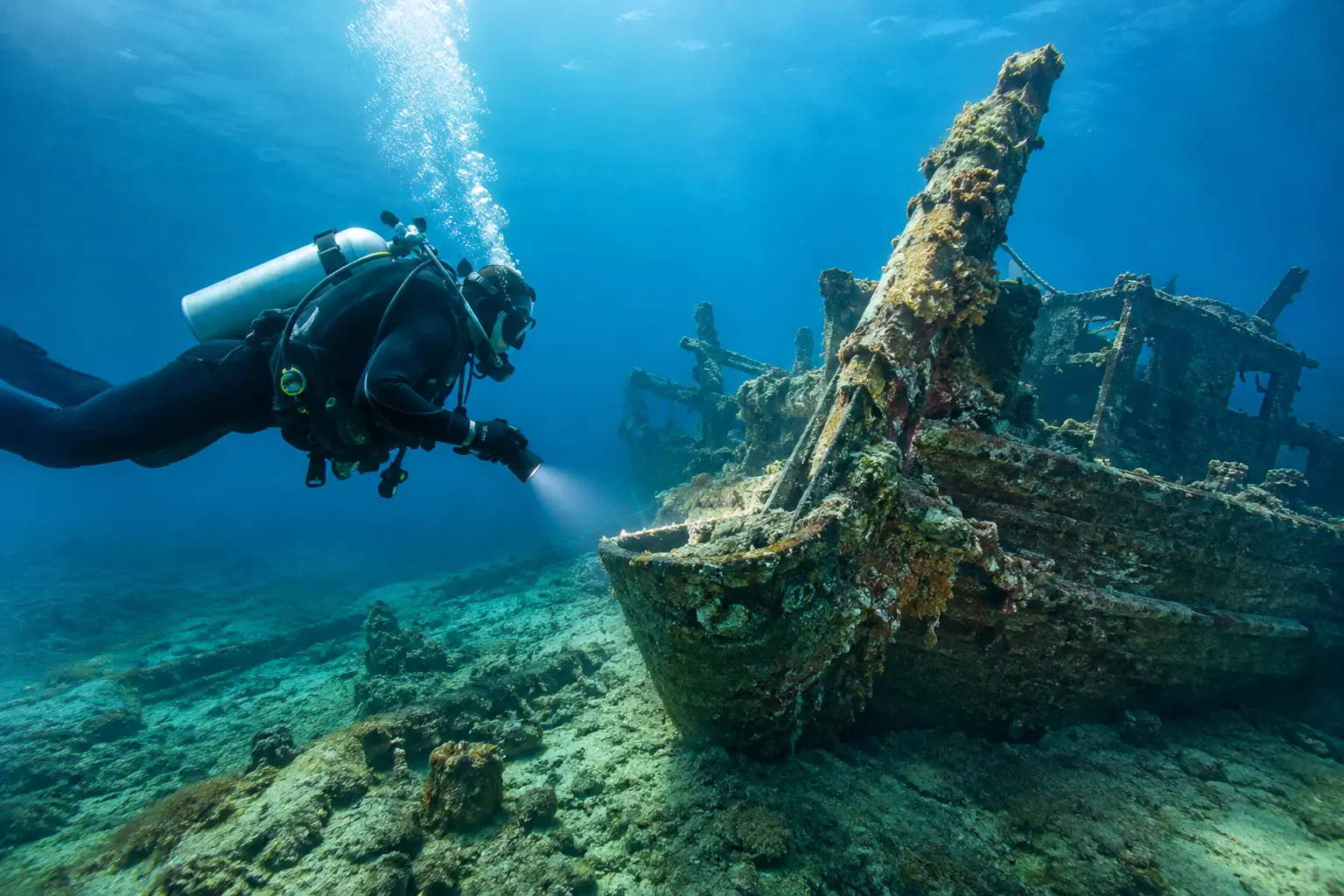

A shattered bowl on the seabed can hold the outline of a whole voyage. Its glaze may identify a kiln, its form may suggest the market it was made for, and the sediment around it can reveal how a vessel met its end. This guide to maritime archaeology explains how such fragments become evidence – and why shipwreck collections offer one of the most immediate ways to encounter Asia’s seafaring past.
What maritime archaeology studies
Maritime archaeology is the study of humanity’s relationship with water. It includes shipwrecks, ports, harbours, submerged settlements, navigational channels, shipbuilding sites and the objects carried across seas and rivers. Although dramatic wrecks often capture public imagination, the field is not solely about treasure beneath the waves. Its purpose is to understand people: where they travelled, what they traded, how they built vessels and how coastal communities connected with one another.
A shipwreck is particularly valuable because it can preserve a moment in time. A merchant vessel may carry ceramics packed in layers, jars of food, metal ingots, personal belongings, anchors and parts of the ship itself. When studied carefully, these materials form a remarkably detailed record of commerce and daily life.
In Southeast Asia, this record is especially rich. The waters linking China, the Malay Archipelago, India and the wider Indian Ocean were among the world’s most active maritime corridors for centuries. Cargoes of porcelain, stoneware, spices, forest products and precious goods travelled through routes that placed the Malay Peninsula at the heart of regional exchange.
A guide to maritime archaeology: reading a wreck
Archaeologists do not begin by asking, “What is this object worth?” They ask, “What can this object tell us in its original setting?” That distinction shapes every responsible investigation.
The first priority is context. A single blue-and-white porcelain dish may be beautiful, but its meaning changes when it is found beside hundreds of similar pieces, a particular type of storage jar, coins, timber fastenings or navigational equipment. The arrangement of a cargo can show how goods were packed, whether the vessel was carrying commercial stock or personal possessions, and even whether it had been disturbed after sinking.
Dating a wreck usually requires several forms of evidence. Ceramic styles can be compared with known kiln traditions and historical production periods. Coins may provide a narrow date range. Scientific analysis of timber, metal and residues can add further clues. Written sources, where they survive, may illuminate the ships, ports and trading networks of the period. No single method is always decisive; maritime archaeology builds a convincing interpretation by bringing evidence together.
Ceramics as witnesses to trade
Ceramics are among the most enduring finds from Asian shipwrecks. Porcelain and stoneware survive seawater far better than textiles, wood and many organic materials, while their decorative styles often carry strong clues about place and date.
A finely painted Chinese porcelain bowl might have been made for an overseas market rather than a domestic household. A large storage jar could have transported provisions or valuable commodities. A Vietnamese or Thai ceramic piece can point to a different commercial network, revealing that the sea routes were not controlled by one producing region alone.
The real story lies in the cargo as a whole. A wreck carrying thousands of ceramics was not merely transporting tableware. It was moving taste, status, technology and cultural influence between communities. Porcelain made at one kiln could be admired in a distant port, used at a wealthy table and eventually become part of a local collecting tradition.
The vessel matters too
Cargo often receives the spotlight, but the ship itself is an archive. Hull construction can indicate whether a vessel was built according to Chinese, Southeast Asian, European or hybrid traditions. The choice of timber, the way planks were joined, and the form of an anchor can all reveal maritime knowledge passed between shipwrights.
This is where caution matters. In tropical waters, wooden remains can decay quickly or be altered by marine organisms, storms and human activity. Sometimes only fragments survive. Archaeologists must resist filling gaps with appealing assumptions and instead distinguish clearly between what the evidence proves, what it suggests and what remains unknown.
From seabed to museum gallery
Recovering an artefact is not the end of its story. It is the beginning of a demanding conservation process. Objects lifted from the sea may contain salts that crystallise as they dry, causing cracking, flaking or surface loss. Iron can corrode rapidly once exposed to air, while waterlogged wood requires highly specialised treatment to prevent shrinkage and collapse.
Documentation takes place at every stage. Archaeologists record the location, depth, orientation, condition and association of each find, using photography, drawings, measurements and increasingly detailed digital mapping. This careful record protects the integrity of the collection. Without it, an object can be visually impressive but historically diminished.
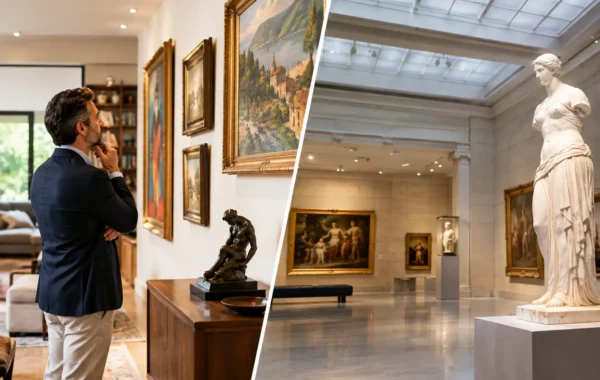
In a museum setting, the task becomes one of interpretation as well as preservation. Displays should allow visitors to appreciate a ceramic vessel’s artistry while understanding the journey that brought it into the present. At Straits & Oriental Museum, shipwreck ceramics from celebrated Asian wrecks offer a tangible entry point into these stories of commerce, craftsmanship and cross-cultural encounter.
Why provenance is essential
Provenance means an object’s documented history: where it was found, how it was recovered, who has cared for it and how it entered a collection. In maritime archaeology, provenance is central to both scholarship and ethics.
Objects removed without proper recording lose much of the information that gives them meaning. A vessel taken from a seabed without context may still be attractive, but it can no longer reliably explain the wreck, its cargo arrangement or its relationship to other finds. Uncontrolled salvage also risks damaging sites that cannot be replaced.
Visitors and collectors can support good practice by asking thoughtful questions. Is the object’s origin documented? Was its recovery lawful? Has it been conserved appropriately? Does the institution explain its archaeological context rather than presenting it as a decorative curiosity? These questions do not diminish the pleasure of encountering heritage. They deepen it.
How shipwrecks reshape history
Historical trade is often described through royal records, port taxes and merchant accounts. Shipwrecks add the material evidence of what actually travelled. They can complicate familiar narratives in productive ways.
For example, a cargo may show that a supposedly local style had far-reaching appeal, or that a trading route involved more regions than written sources acknowledge. A mixture of goods from different origins can reveal the layered nature of maritime commerce: objects might be produced in one place, acquired in another and sold again hundreds of miles away.
Shipwreck archaeology also brings ordinary lives closer. Among commercial cargoes, archaeologists may find cooking pots, tools, gaming pieces, personal ornaments or food remains. Such objects remind us that every maritime network depended on crews who ate, worked, waited and faced considerable risk at sea.
Seeing maritime heritage with sharper eyes
When visiting a shipwreck exhibition, begin by looking beyond the most ornate pieces. Notice the repeated forms, variations in decoration and signs of use. Ask why certain objects appear in large quantities, why others are rare, and what the combination of materials says about the intended market.
Look for the story of movement. A ceramic object may have been made in China, loaded at a port, carried through the Straits of Malacca and destined for another community entirely. That journey connects artisans, sailors, merchants, rulers and households across a vast maritime world.
It is also worth noticing what is absent. Organic cargoes such as textiles, wood and food often do not survive, so the archaeological picture is necessarily incomplete. Good interpretation makes room for that uncertainty while showing how much can still be learned from what remains.
Protecting what the sea has kept
Maritime sites face pressure from coastal development, looting, trawling, storms and changing sea conditions. Protection may mean leaving a wreck in place, monitoring it over time or undertaking a carefully planned excavation where there is a clear research and conservation case. Removal is not automatically preservation; it can create new risks if the resources to conserve and document material are not in place.
The most meaningful encounter with a shipwreck is therefore not simply an encounter with rare objects. It is an invitation to see the sea as a living archive of exchange, ambition and human ingenuity. Stand before a recovered ceramic and consider not only its beauty, but the hands that made it, packed it, sailed with it and preserved its story for those who came after.