
A bowl lifted from the seabed can tell a bigger story than a royal decree. Among the most compelling objects in maritime history, ancient shipwreck ceramic treasures preserve not only beauty, but evidence – of trade routes, dining habits, kiln technology, status, and the movement of ideas across Asia’s waters.
For visitors drawn to George Town’s layered past, these ceramics offer something rare: history made tangible. They are not abstract accounts of commerce or empire. They are plates, jars, kendi, dishes, and storage wares once packed into the holds of ships that never reached their destination. Centuries later, they return not as cargo, but as witnesses.
What ancient shipwreck ceramic treasures reveal
Ceramics survive where many other materials do not. Wood decays, textiles vanish, and paper dissolves. Porcelain and stoneware, by contrast, endure. That endurance is what makes shipwreck ceramics so significant. They allow us to read the maritime past through actual objects that traveled historic sea lanes linking China, Southeast Asia, the Malay Peninsula, and beyond.
A single recovered cargo can show what was being exported at a specific moment, which kiln styles were favored by foreign markets, and how merchants organized goods for long-distance trade. Some cargoes were made for elite consumption, with refined glazes and courtly forms. Others were practical wares intended for households, ports, and regional markets. Together, they present a more complete picture of life at sea and life ashore.
This is where the fascination deepens. Ancient ceramics from shipwrecks are not only beautiful objects. They are time markers. A motif, glaze tone, foot ring, or shape can help place a piece within a dynasty, production center, or trading era. In that sense, every shard and every intact vessel contributes to a wider historical map.
The sea as an accidental archive
There is a reason shipwreck ceramics hold such enduring appeal for historians, collectors, and curious travelers alike. When a merchant vessel sank, its cargo was effectively sealed off from normal use. Instead of being handled, broken, repaired, or discarded over generations, many pieces remained underwater for centuries.
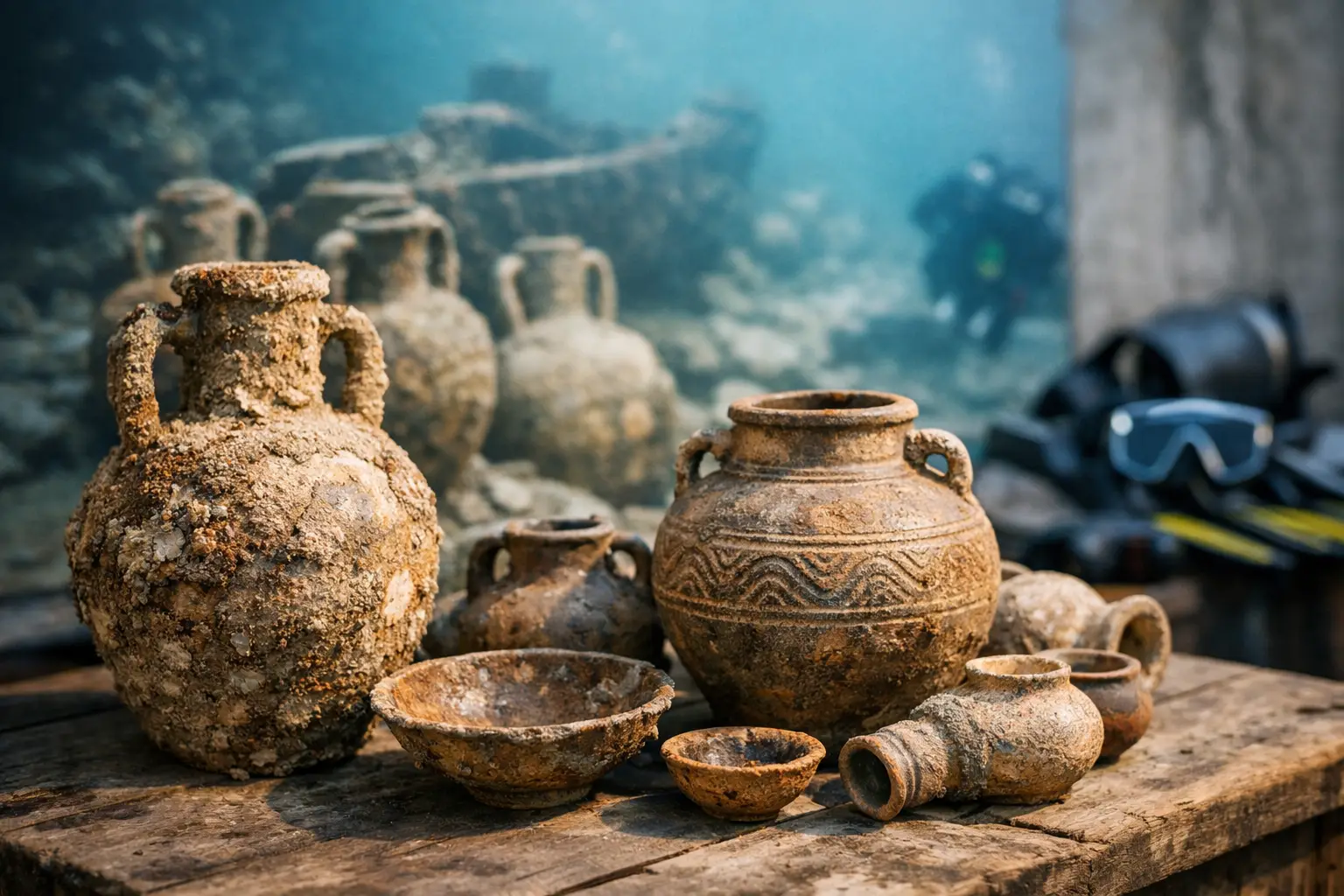
That does not mean they were untouched. The sea leaves its mark. Some ceramics emerge with marine accretions, softened surfaces, or traces of long submersion that distinguish them from pieces preserved on land. Yet those same conditions can also protect cargoes in remarkable ways. Entire assemblages have been recovered in patterns that reflect how goods were originally packed, stacked, and transported.
This matters because context changes everything. A porcelain dish displayed on its own is elegant. A porcelain dish understood as part of a cargo from a known wreck becomes evidence. It tells us what merchants valued, how ships were provisioned, and how ceramics moved through the commercial arteries of the region.
Why Asia’s shipwreck ceramics are especially important
The maritime history of Asia is inseparable from ceramics. For centuries, porcelain and stoneware were among the most sought-after goods in regional and international trade. Kilns produced wares at scale, and maritime routes carried them to port cities, royal courts, market towns, and private homes.
Shipwreck finds from Asian waters often illuminate this vibrant commercial world with unusual clarity. They show the breadth of exchange between Chinese producers and Southeast Asian consumers. They also reveal that trade was never monolithic. Cargoes varied by period, destination, and demand. One wreck might carry finely made blue-and-white export porcelain, while another includes sturdy utilitarian wares intended for everyday use.
That variety is part of their power. It reminds us that maritime trade was not only about luxury. It was also about daily life, hospitality, ritual, storage, and dining. Ceramic treasures from shipwrecks connect grand historical narratives to intimate human routines.
Ancient shipwreck ceramic treasures and the human story
It is easy to admire these objects for their craftsmanship alone. The glaze, the symmetry, the painted decoration, the confidence of a well-thrown form – all of it rewards close attention. But their deeper pull comes from the human story behind them.
Every recovered ceramic object once formed part of a larger chain of labor and ambition. Someone mined the clay. Someone shaped the vessel. Someone fired it in a kiln. Someone purchased it, packed it, recorded it, loaded it, and set sail with it. A wreck interrupts that journey, but it also preserves it.
There is an emotional dimension here that visitors feel almost immediately. A cargo lost at sea evokes risk, distance, and uncertainty. These were not symbolic voyages. They were commercial missions shaped by monsoon winds, navigation challenges, and the constant hazards of maritime travel. The ceramics that survive are therefore linked not just to artistic excellence, but to the fragility of trade itself.
Why preservation and presentation matter
Ancient shipwreck ceramic treasures deserve more than casual display. They require careful interpretation, responsible conservation, and an environment that respects both their aesthetic and archaeological value.
This is one of the trade-offs in presenting shipwreck ceramics to the public. Their visual appeal is immediate, which makes them accessible to broad audiences. At the same time, if they are presented only as decorative antiques, much of their significance is lost. The strongest exhibitions do both. They honor the beauty of the objects while also explaining the wreck, the route, the period, and the cultural world from which the cargo came.
That balance matters for families, seasoned museum-goers, and collectors alike. Some visitors are captivated by form and color first. Others want chronology, provenance, and regional context. A distinguished museum experience should accommodate both responses and guide them into a richer understanding.
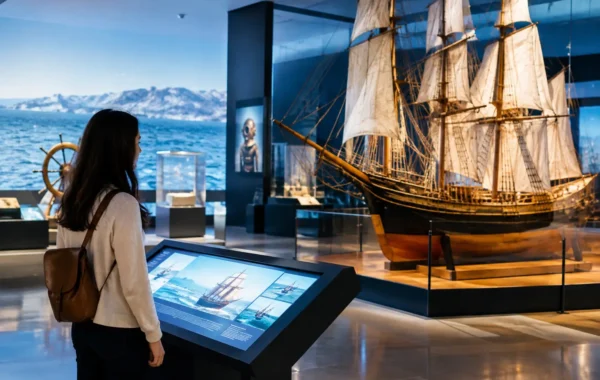
At Straits & Oriental Museum, this is precisely what makes the encounter so memorable. The ceramics are not treated as isolated rarities, but as part of a broader maritime story that belongs to Penang and to the wider region. Set within an integrated heritage and lifestyle destination, the experience invites visitors to move between history, visual culture, conversation, and leisure without losing the seriousness of the collection itself.
What to notice when viewing shipwreck ceramics
The most rewarding way to approach these collections is to slow down. Begin with shape. Is the piece made for storage, pouring, serving, or ritual use? Then look at surface details – the glaze color, brushwork, motifs, and signs of firing. Finally, notice anything that hints at its underwater life, whether marine residue, discoloration, or subtle wear.
It also helps to view objects comparatively. A large cargo was rarely uniform. Differences in quality, decoration, and function reveal market segmentation long before that term existed. Some wares were premium goods. Others were practical and economical. Seen together, they tell a more democratic story of trade.
For collectors, provenance and condition naturally carry weight. For general visitors, the greater pleasure may be in recognizing how familiar many forms still feel. Plates remain plates. Bowls remain bowls. The distance of centuries shrinks when an object still resembles something used at a table today.
More than salvage, a record of civilization
Shipwreck ceramics can sometimes be discussed too narrowly, as though their main appeal lies in rarity or market value. That is only part of the picture. Their real significance lies in what they document.
They document manufacturing traditions at their height. They document maritime commerce across interconnected ports. They document taste, utility, aspiration, and adaptation. They also document the long-standing role of the sea not as a barrier, but as a corridor linking communities across Asia.
This is why ancient shipwreck ceramic treasures continue to resonate so strongly with modern audiences. They satisfy the eye, but they also reward reflection. They remind us that cultural exchange has always traveled with objects – with things made by hand, moved by ship, desired in distant places, and preserved by chance.
For anyone seeking a meaningful heritage experience in Penang, these ceramics offer more than a look at the past. They offer contact with a world once in motion, interrupted beneath the waves and now returned to view with extraordinary grace. The next time you stand before a recovered bowl or jar, take a moment to imagine not only where it came from, but where it was meant to go.