
A blue-and-white bowl behind glass can appear quietly beautiful, yet it may have travelled farther and endured more than most objects in the room. It may have been made for a distant market, packed into a ship’s hold, lost beneath the sea and recovered centuries later. Knowing how to explore maritime history museums begins with recognising that the finest displays are not simply about ships. They are about the people, trade, risk, taste and ambition that moved across water.
A rewarding visit asks for more than a quick circuit of the galleries. Give each object enough attention to reveal its journey, and a maritime museum becomes a vivid record of how coastlines, ports and communities shaped one another.
Begin with the sea, not the showcase
Before focusing on a particular artefact, establish the wider setting. Which sea, strait or ocean does the museum’s story concern? Was this a route for regional exchange, a crossing between continents, or a dangerous passage affected by monsoons, reefs and political rivalries?
Maritime history is often presented through impressive individual objects, but their meaning lies in movement. A ceramic jar, navigational instrument or cargo manifest gains force when you understand where it started, who might have handled it and where it was intended to arrive. Look first for maps, timelines and introductory panels. They provide the geography needed to read the galleries with confidence.
It also helps to resist the idea that a route only ran in one direction. Ships carried cargoes out and brought other goods, customs and ideas home. A port could be a marketplace, a place of repair, a meeting point for languages and a gateway to entirely new tastes. The sea connected societies as surely as it separated them.
How to explore maritime history museums through objects
Once you have a sense of place, slow down. Choose a small number of objects that genuinely draw your eye rather than trying to absorb every label. A well-curated museum rewards close looking, particularly when the collection includes material recovered from shipwrecks.
Start with the object itself. Notice its material, scale, surface and signs of use. Is the glaze unusually bright? Is the ceramic finely painted, made for a wealthy household, or is it a sturdy storage vessel designed to survive a long voyage? Tiny irregularities may be evidence of hand-making, age or underwater preservation rather than flaws.
Then read its label as a clue rather than a final answer. The most useful details are often its date, place of production, intended market and recovery site. If a bowl was made in one part of Asia and found in a wreck near another, it tells a story of commercial networks that were remarkably sophisticated long before modern global trade.
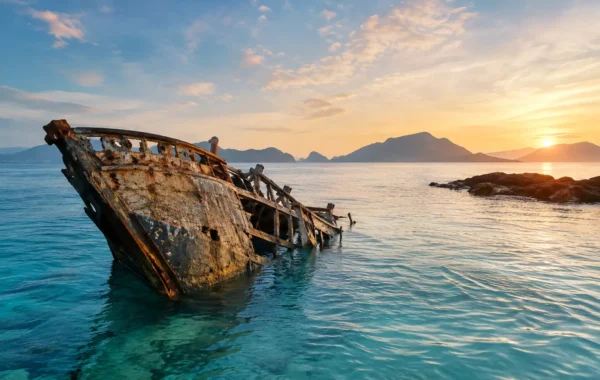
Shipwreck ceramics are especially compelling because they preserve a moment interrupted. A cargo was selected, packed and loaded with a destination in mind, then never reached it. The objects are therefore both works of art and archaeological evidence. Their value is not confined to rarity. Together, they can reveal what was being traded at a particular time, which decorative styles travelled well and how merchants anticipated demand.
Do not assume that the most ornate piece is automatically the most historically significant. A group of humble bowls or jars may offer a clearer view of everyday consumption and the scale of commerce. Museums often balance visual splendour with such quieter evidence. Both deserve attention.
Ask four questions of every remarkable artefact
When an object catches your attention, keep four questions in mind: who made it, who used it, how did it travel, and why did it survive? These questions turn passive viewing into a more personal form of historical enquiry.
The answers are not always certain, and that uncertainty is part of the discipline. Archaeology works with evidence, comparison and informed interpretation. A museum that acknowledges what is known, likely or still debated is not making the story less dramatic. It is showing respect for the complexity of the past.
Read shipwrecks as human stories
A shipwreck can be tempting to view as a treasure chest beneath the waves. Yet its human dimension matters just as much as its cargo. Consider the crew navigating unfamiliar waters, the traders financing the voyage, the craftspeople producing goods, and the families waiting in ports at either end of the route.
Look for the practical details of seafaring life: the type of vessel, its construction, the season of travel, its provisions and its likely destination. These details restore a sense of reality to a journey that might otherwise feel remote. A wreck was not merely an archaeological event. It was a rupture in the lives of people whose names may never have been recorded.
This perspective also changes how we think about luxury. Porcelain can be exquisite, but it was also commercial cargo. Its decoration, size and durability were shaped by buyers’ preferences and the calculations of merchants. In maritime galleries, beauty and business are often inseparable.
Follow the trade routes beyond the map
Maps make trade look orderly: lines flowing from port to port. In reality, routes depended on weather, diplomacy, local knowledge and chance. Ships stopped to replenish supplies, avoid storms, repair damage and exchange cargo. The route printed on a gallery wall is a useful framework, but the voyage itself was rarely straightforward.
Pay attention to the places between origin and destination. The Malay Peninsula, for instance, has long held strategic significance because of its position beside vital waterways linking the Indian Ocean and the South China Sea. Such locations were not peripheral stops. They were active centres of exchange, where goods and cultures met, changed hands and acquired new meanings.
At Straits & Oriental Museum in George Town, shipwreck ceramics from vessels including the Wanli, Turiang, Royal Nanhai, Nanyang, Xuande and Desaru offer a tangible way to encounter these networks. Seeing authentic porcelain from different wrecks side by side makes the region’s maritime heritage feel immediate: not an abstract trading system, but a succession of real voyages across Asian waters.
Use the gallery’s design to deepen the visit
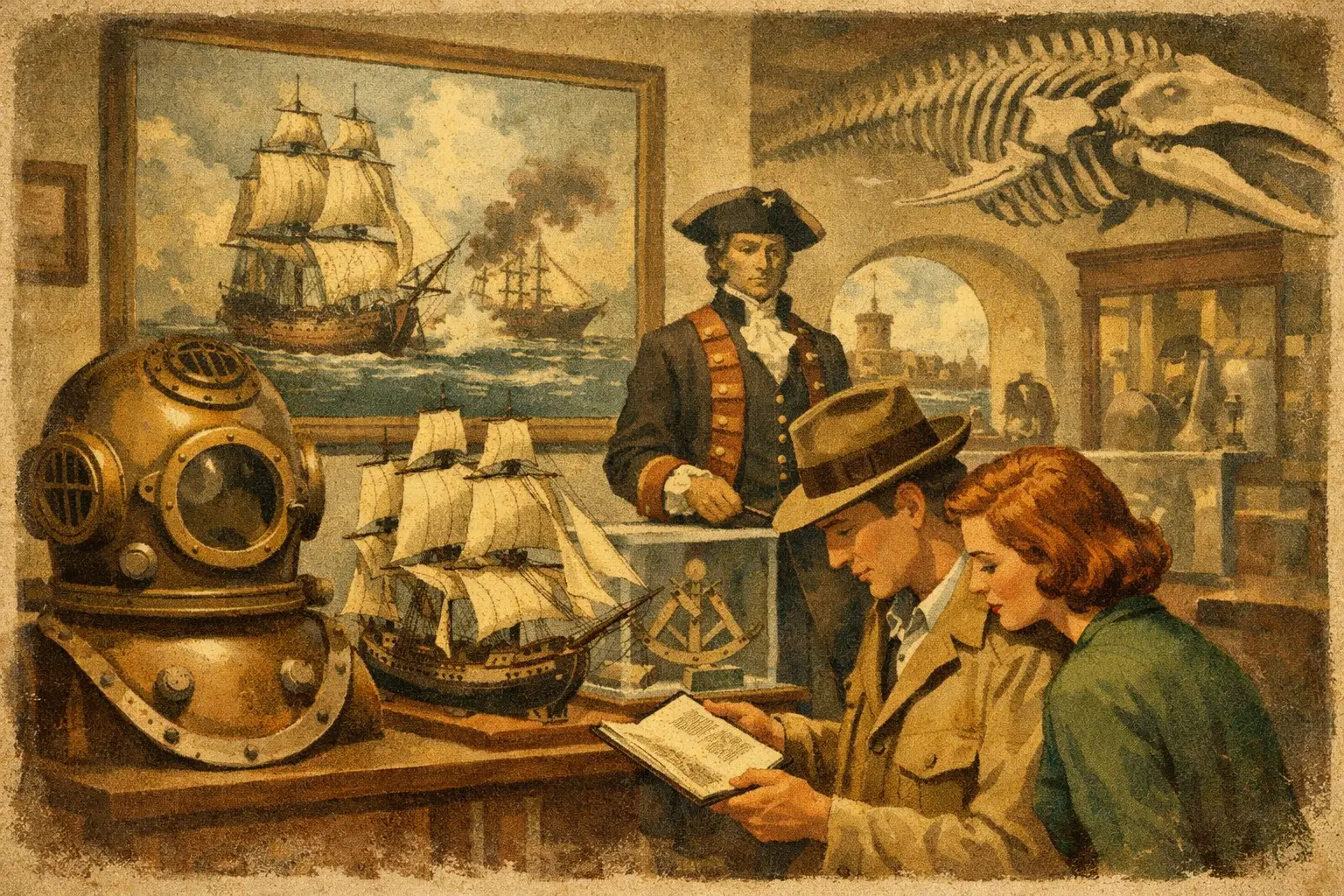
A museum is not only a collection. The order of rooms, lighting, display cases and accompanying art all shape the story being told. Notice whether the galleries move chronologically, geographically or by theme. This helps you understand the curator’s point of view and prevents a visit from becoming a series of disconnected highlights.
Give yourself permission to pause. Sit where seating is available, return to a case after reading a nearby panel, or compare two related objects before moving on. Families may find that one carefully chosen story – a lost cargo, a particular ship or a single trade route – holds children’s attention better than an attempt to see everything at speed.
Photography can be useful where permitted, especially for recording labels to revisit later. But do not let the camera take over. A photograph rarely captures the delicacy of a porcelain surface or the quiet impact of an artefact that has rested underwater for centuries. Look first; photograph second.
Make room for conversation and reflection
The most memorable museum visits continue beyond the final display. Discuss which object surprised you, what route you had not considered, or whether a piece feels different once you know it was recovered from the sea. Travelling companions often notice different aspects: one may be drawn to craftsmanship, another to commerce, another to the drama of a wreck.
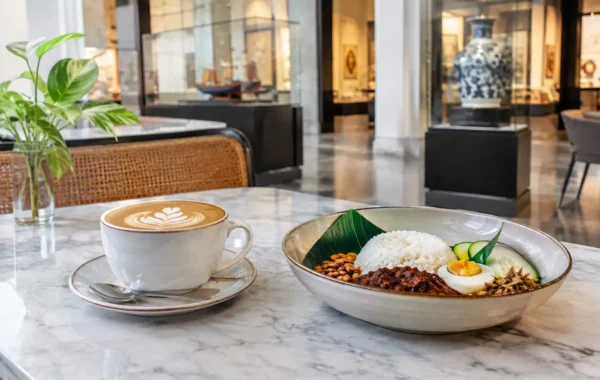
If the museum forms part of a wider cultural destination, extend the experience thoughtfully. A meal, a cup of tea, an exhibition or time spent browsing a gift collection can provide space to reflect rather than rush away. This is not a distraction from heritage when it is done well. Historic port cities have always brought together trade, hospitality, art and conversation.
Leave with one story worth carrying forward
You do not need to memorise every dynasty, ship name or date to have explored a maritime history museum well. Leave with one precise connection: perhaps the route that brought a vessel through a narrow strait, the workshop that produced a cargo, or the evidence that a small bowl carried a world of exchange within it.
That single story will make the sea look different the next time you stand by a harbour. Instead of an empty horizon, you may see a living passage of voyages, objects and human hopes still travelling through time.