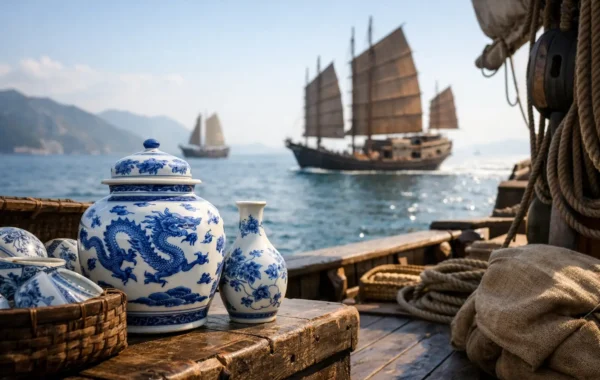
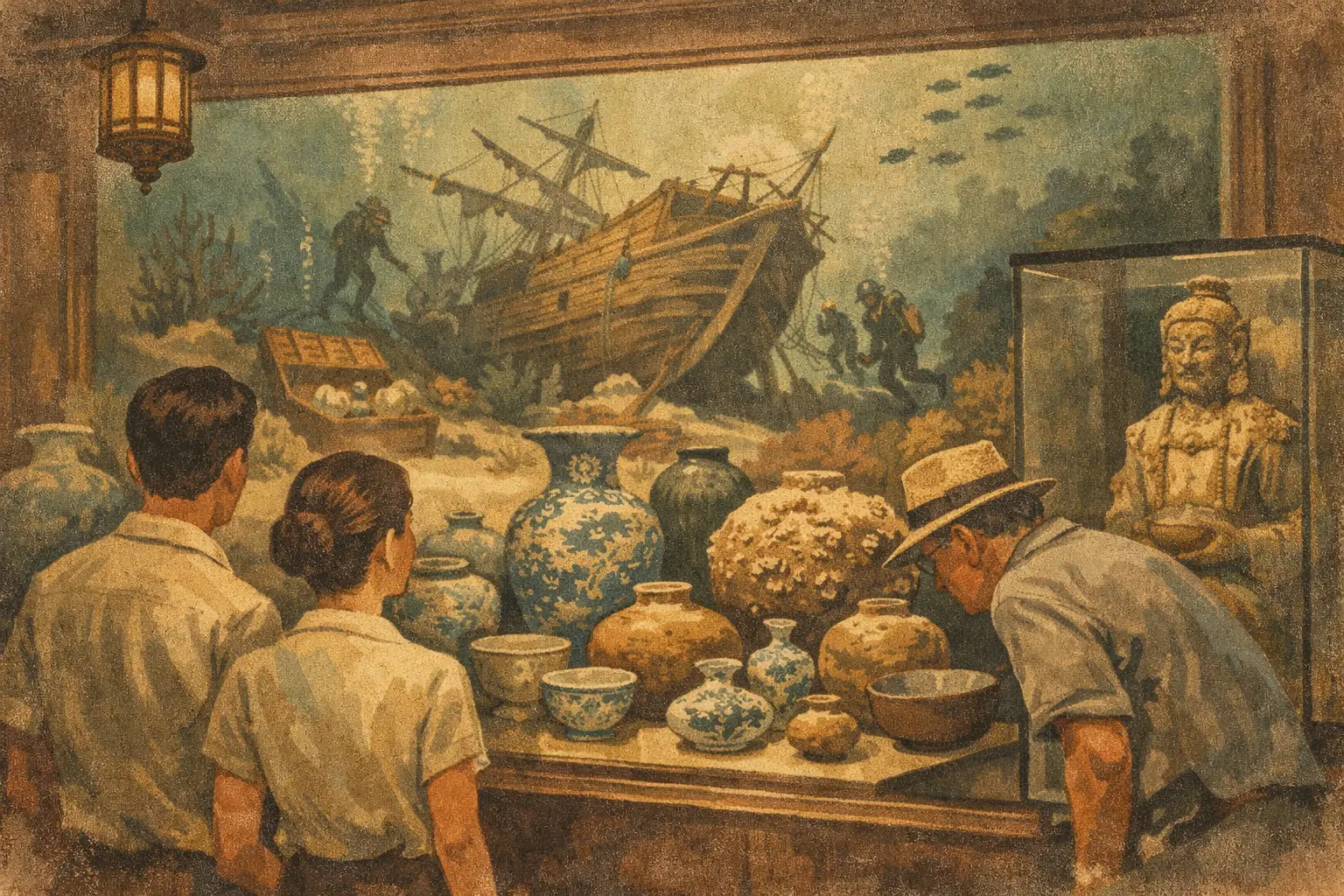

A shipwreck ceramics museum review should begin with the object that changes your sense of scale: a porcelain bowl made centuries ago, carried across Asian waters, lost beneath the sea and recovered with its story still intact. These are not simply decorative antiques. They are evidence of trade, taste, technology and the people who connected ports across the region long before modern tourism maps existed.
For visitors who want more from George Town than a quick photo stop and a meal, a museum devoted to maritime archaeology offers a more considered kind of discovery. The experience at Straits & Oriental Museum is built around authentic ceramics recovered from historic Asian shipwrecks, with art, hospitality and retail extending the visit beyond a conventional gallery walk.
A museum visit with genuine historical weight
The strongest reason to visit is the collection itself. Shipwreck ceramics hold an unusual power because their beauty is inseparable from their survival. A plate, jar or ewer may have been produced for everyday use, elite dining or export, yet its voyage was interrupted by a storm, navigational error or accident. Centuries later, it emerges as a rare witness to a lost journey.
The permanent displays bring together artefacts associated with significant wrecks including the Wanli, Turiang, Royal Nanhai, Nanyang, Xuande and Desaru. That range matters. Rather than presenting porcelain as a single, isolated category, the museum places it within the wider movement of goods and ideas across Asia’s sea routes.
Look closely and the differences become part of the pleasure. Forms, glazes, painted motifs and manufacturing styles offer clues to changing periods, markets and makers. Some pieces feel familiar in their practical simplicity; others have the detail and presence of objects made to impress. For collectors and design-minded visitors, this is an opportunity to see how enduring good craftsmanship can be.
Shipwreck ceramics museum review: what makes it different
Many museums ask visitors to separate culture from the rest of their day. Here, the intention is more expansive. As Malaysia’s first integrated heritage and lifestyle museum, the destination brings together a maritime museum, gallery and exhibition space with places to eat, drink and browse for a considered keepsake.
This approach suits travellers who prefer a day with texture. You can spend time with the historical displays, pause for refreshments and continue the conversation over food or a drink rather than feeling obliged to move straight on to the next attraction. It gives heritage a social setting without reducing the artefacts to background decoration.
That said, expectations should be set correctly. This is not a sprawling national museum designed to take an entire day, nor is it a conventional archaeological study centre aimed solely at specialists. Its appeal lies in curation, atmosphere and the chance to encounter a focused collection within a broader cultural outing. Visitors seeking exhaustive academic interpretation may want to allow time for slow reading and further independent research. Those looking for a memorable introduction to maritime history will find the format especially rewarding.
Why porcelain tells such a compelling maritime story
Ceramics travelled well, at least until a vessel did not. Durable, stackable and highly valued, porcelain and stoneware became major cargoes in the maritime trade that linked China, Southeast Asia and beyond. Their presence in a wreck can reveal commercial networks that written records only partly describe.
A ship’s cargo also complicates the idea that historic trade was only about luxury. Some wares were undoubtedly prestigious, while others were made for broad markets and daily rituals. The surviving objects point to an early international economy shaped by demand, practicality and the pleasures of the table.
For Penang, this perspective feels particularly resonant. The island’s identity has long been formed by movement across the Straits: merchants, migrants, foodways, languages and artistic traditions arriving and evolving together. A shipwreck collection does not merely look backwards. It offers context for the multicultural, outward-looking character visitors encounter in the city today.
An experience for curious travellers, families and collectors
The museum works best when visitors give themselves permission to linger. Families can approach the displays as a story of travel, cargo and discovery, allowing children to imagine the life of a ship and the surprise of an underwater find. Couples and independent travellers may be drawn to the visual calm of the porcelain, the details of the displays and the pleasure of combining a cultural stop with a refined break.
Collectors will naturally focus on provenance, condition, form and rarity. Even for those who do not collect, there is value in learning to look with greater care. A small foot ring, a brushstroke beneath a glaze or a repeated pattern can turn an object from a pretty souvenir of the past into a document of a particular place and period.
International visitors may also appreciate that the collection offers an Asian maritime story on its own terms. The exhibits foreground the region’s historic networks and the sophisticated trade in ceramics that passed through them. It is a useful counterpoint to heritage narratives that treat Asian ports merely as distant stops on someone else’s route.
Make time for the setting, not only the exhibits
A visit is most satisfying when treated as part of a fuller day in George Town. The gallery experience provides a quieter, more reflective contrast to the city’s bustling streets, and the integrated food, beverage and gift offerings make it easy to remain in the atmosphere a little longer.
This is more than convenience. A well-made meal, a thoughtful gift or a pause in an elegant setting can help a museum visit settle into memory. The important distinction is that the historical collection remains the anchor. The surrounding lifestyle elements should feel like an extension of hospitality, not a distraction from the reason you came.
If you are travelling on a tight schedule, choose a time when you will not need to rush. The artefacts reward close attention, and the experience is diminished if it becomes another box ticked between street art and dinner reservations. If you have more flexibility, combine the visit with a nearby heritage walk and let the museum sharpen your eye for the port city’s wider story.
Is the shipwreck ceramics museum worth visiting?
For travellers interested in authentic objects, regional history and well-curated cultural experiences, the answer is yes. The rarity of shipwreck ceramics gives the museum a clear point of difference, while the integrated setting makes it accessible to people who may not usually plan their day around a museum.
Its value depends on what you seek. If you want a loud, highly interactive attraction, the quieter pace of porcelain, archaeology and visual detail may not be your preferred choice. If you enjoy places where an artefact can lead into a bigger story about commerce, craftsmanship and the sea, it offers substance as well as style.
The most memorable museum visits leave you looking differently at the world outside their doors. After seeing ceramics that crossed oceans, disappeared into the depths and returned centuries later, the Straits cease to be a view on the horizon. They become a route filled with human ambition, fragile cargo and stories still worth carrying forward.