
George Town is best experienced at an unhurried pace. The most rewarding things to do here are not simply attractions to tick off, but encounters with a port city shaped by traders, artisans, faith communities and generations of travellers arriving by sea. Give the streets time to reveal their detail: a carved timber doorway, the scent of incense from a temple courtyard, a bowl of noodles prepared with quiet precision.
Things to do in George Town for a richer visit
1. Begin with the story of the port
Before wandering the lanes, take in the wider story of Penang as a meeting place between maritime routes and communities from across Asia and beyond. George Town’s architectural richness did not appear by accident. It grew from commerce, migration and exchange, with goods, ideas and people moving through the Straits of Malacca.
A sense of this history changes the way you see the city. Shop houses become evidence of enterprise and family life; clan houses become records of belonging; porcelain becomes more than decoration. It becomes a reminder of the voyages that connected this island to a much larger world.
2. Walk the heritage streets without a rigid itinerary
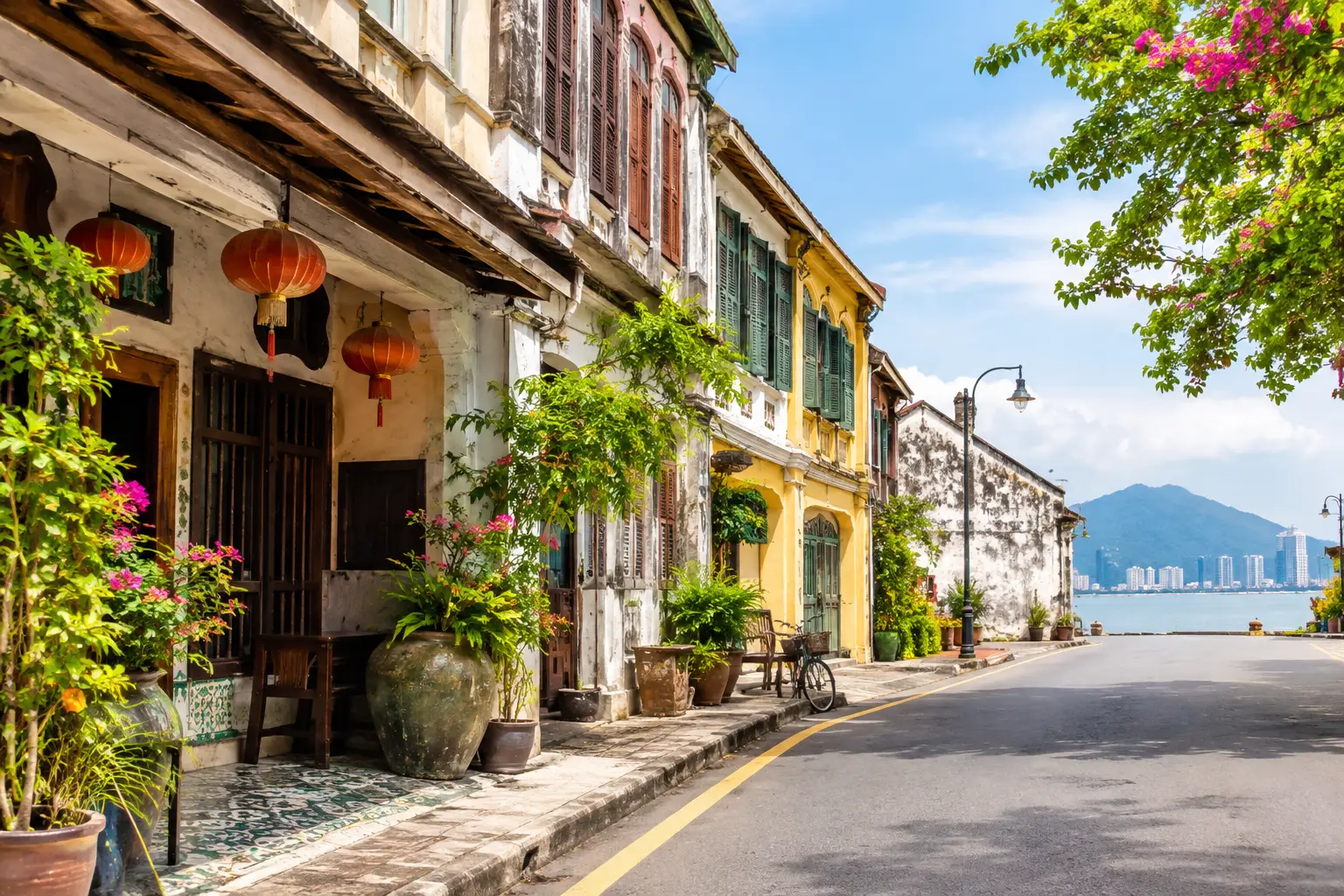
The historic centre rewards curiosity more than speed. Start early, when shutters are opening and the light catches the five-foot ways, then let yourself turn down streets that are not on a neat sightseeing route. Armenian Street, Lebuh Chulia and the lanes around the old commercial quarter each offer a different rhythm.
Look above street level as often as you look ahead. Decorative plasterwork, louvred windows, Chinese calligraphy and colonial façades reveal how many traditions found a home here. A self-guided walk is ideal for independent travellers, while a local guide can add family histories and details that are easy to miss.
3. Visit a living place of worship
George Town’s religious landmarks are among its most moving experiences, not because they are isolated monuments, but because they remain part of daily life. A temple, mosque, church or shrine may be preparing for a festival, receiving worshippers or simply carrying on with its ordinary rituals.
Dress respectfully, observe any guidance at the entrance and avoid treating sacred spaces as a backdrop for photographs. The reward is a more authentic understanding of a city where different faiths have lived side by side for generations. These places offer atmosphere, certainly, but also a valuable lesson in the everyday practice of coexistence.
4. Follow the trail of street art, then look beyond it
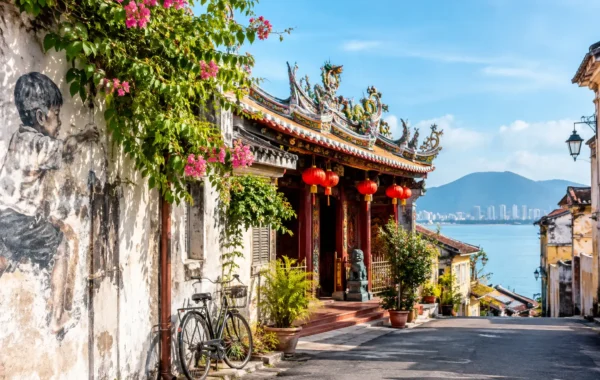
The murals and interactive installations have become a familiar part of a George Town visit, and they are genuinely enjoyable. They invite playfulness and make an excellent reason to explore side streets that might otherwise be overlooked. Go early if you prefer fewer crowds and softer light for photographs.
Yet street art is best treated as an opening chapter, not the entire story. Between one painted wall and the next, pause for the fading signboards, old provisions shops and hand-painted tiles. The city’s most lasting visual appeal often lies in the details that were never designed to be an attraction.
5. Make time for shipwreck ceramics and maritime history
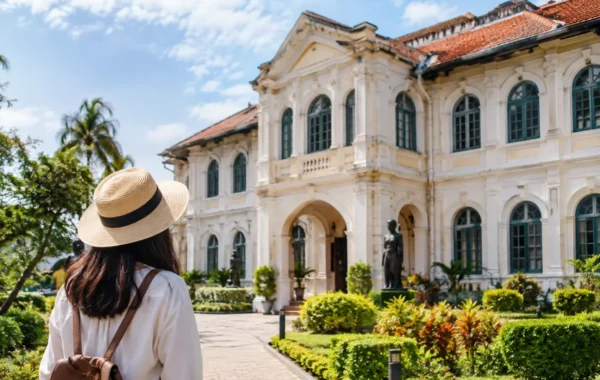
For visitors interested in the objects carried across the seas, a maritime collection offers a compelling change of pace from the street. At Straits & Oriental Museum, authentic porcelain and ceramic artefacts recovered from Asian shipwrecks bring centuries of trade into sharp focus. A bowl, jar or plate becomes evidence of craft, commerce and perilous passage.
This is a particularly rewarding stop on a hot afternoon, or for families looking to pair visual discovery with a story children can grasp: how did these objects travel, why were they valued, and what happened when a ship did not reach its destination? The experience gives tangible form to the maritime world that helped create Penang.
6. Eat at different times of day
Food is not a single item on an itinerary here. It is one of the ways the city tells its story. Begin with a simple breakfast in a traditional coffee shop, seek out a favourite hawker dish at lunchtime, and leave room for a more leisurely dinner where you can settle in and watch the evening gather pace.
The best choice depends on what you value. A busy stall may offer a celebrated local speciality and a lively queue; a quieter neighbourhood café may give you more time to linger. Ask what is prepared that day, be open to unfamiliar flavours, and order modestly at first. There is always another meal ahead.
7. Browse the old trades and independent shops
George Town is not a stage set. Among its galleries, cafés and design-led boutiques are businesses that continue older trades, from spice and tea sellers to makers, booksellers and family-run provision shops. Shopping with attention can be a form of cultural exploration, especially when you choose objects with a clear sense of place.
Rather than filling a bag with generic souvenirs, look for locally made pieces, thoughtfully selected books, prints, textiles or food gifts. Ask before photographing shop interiors, and remember that the most meaningful purchases often come with a short conversation about who made an item and how it is used.
8. Seek out the city after rain
A tropical downpour can interrupt the best-laid plans, but it need not spoil the day. Rain deepens the colours of the façades, cools the pavements and offers permission to slow down. Use the time for a museum, gallery, long lunch or a cup of local coffee beneath a covered five-foot way.
When the rain eases, the streets feel newly washed and less hurried. Carry a compact umbrella and wear shoes that can manage uneven pavements. This small adjustment gives you more freedom than attempting to organise every hour around the weather.
9. Spend an afternoon in a gallery or cultural space
The city’s heritage is not confined to the past. Contemporary artists, curators and makers continue to respond to Penang’s layered identity, often through exhibitions that connect local experience with wider regional conversations. A gallery visit offers a welcome counterpoint to architecture and food, particularly for travellers who want to understand what the city is creating now.
Take your time with one or two spaces rather than rushing through many. Read the exhibition text, notice the materials and ask about the artist if staff are available. Cultural travel becomes more memorable when it leaves room for reflection as well as activity.
10. Join the evening rhythm at the waterfront
As daylight softens, the waterfront and surrounding streets take on another character. This is a good time for a gentle stroll, a drink, or simply a place to sit and take in the movement of the city. The sea has always been part of George Town’s outlook, even when it is hidden behind warehouses, roads and redevelopment.
Choose your evening according to your mood. A lively bar may suit a social night; a quieter dining room or terrace allows more space to talk. For couples, it is an easy way to shift from sightseeing into something more relaxed without leaving the historic centre behind.
11. Look for a festival, market or cultural programme
If your dates are flexible, check what is happening during your stay. George Town has a calendar shaped by religious celebrations, arts programmes, food events and community occasions. These can bring colour and energy to the streets, but they also change practicalities: roads may be busier, venues fuller and accommodation in greater demand.
The trade-off is worthwhile for travellers who enjoy a city at its most animated. If you prefer quieter exploration, visit just before or after a major event, when the decorations and festive traces may remain but the crowds have thinned.
12. Leave room for an unscripted hour
The finest heritage destinations need breathing space. Set aside an hour with no fixed objective: sit in a café, return to a street you liked in the morning, browse a bookshop, or watch the late-afternoon light move across an old façade. This is often when George Town feels least like a destination and most like a living city.
A meaningful visit does not depend on seeing everything. Choose a few experiences that bring together history, flavour, craft and conversation, then let the rest unfold at the city’s own measured pace.