
George Town rewards the visitor who looks beyond a single landmark. A carved temple doorway, a row of weathered shophouses, the scent of incense and the clink of porcelain can all belong to the same afternoon. So, what cultural attractions are worth visiting in George Town? The strongest answer is not simply a list of famous sights, but a route through the communities, trade and rituals that made Penang a meeting point for the region.
This is a city best experienced at an unhurried pace. Its heritage is layered rather than neatly contained: Chinese clan houses stand near mosques, churches and Hindu temples; street art brings a contemporary voice to historic lanes; the sea remains present in the objects, food and architecture shaped by centuries of exchange. Choose a few places with care, leave room to wander, and George Town becomes far more than a photogenic old quarter.
What cultural attractions are worth visiting in George Town?
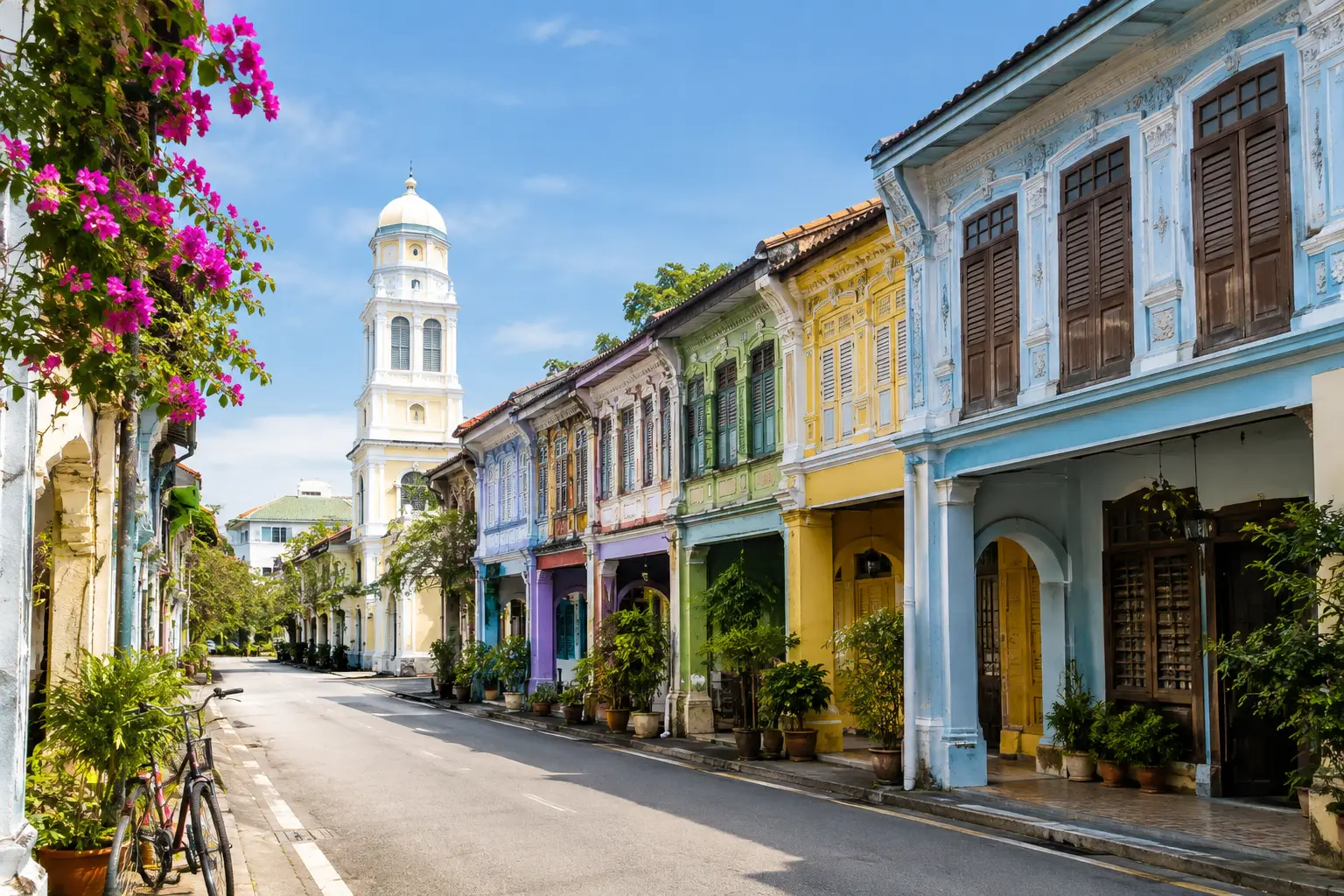
For a first visit, begin with the places that reveal how different communities made a home here. The George Town UNESCO World Heritage Site is itself the essential setting, but its value lies in its living fabric: five-foot ways, family businesses, courtyards, markets and places of worship that still form part of daily life.
A good cultural day should combine three kinds of experience. Seek one landmark of faith, one place that tells a family or trading story, and one encounter with Penang’s relationship to the sea. This balance gives context to the beautiful details that can otherwise blur together after a long walk in the tropical heat.
Khoo Kongsi: craftsmanship, kinship and ceremony
Khoo Kongsi is among the most memorable expressions of Chinese clan culture in the city. Its elaborate ancestral hall, richly ornamented rooflines and theatrical carvings speak to the prosperity of Hokkien merchant families and to the importance of kinship networks in nineteenth-century Penang.
Take time to look beyond the main façade. The scale and ornament are impressive, but the deeper story is communal: a kongsi was a place of ancestry, mutual support and identity for migrants building new lives far from southern China. It is particularly rewarding for visitors interested in architecture, decorative symbolism and the human stories behind George Town’s merchant past.
The Street of Harmony: faiths within walking distance
Along Jalan Masjid Kapitan Keling, distinct religious traditions sit remarkably close to one another. Kapitan Keling Mosque, Kuan Yin Temple, Sri Mahamariamman Temple and St George’s Church create a powerful portrait of a port city shaped by migration and coexistence.
This is not a corridor to rush through for photographs. Dress respectfully, observe each site’s visiting guidance and allow the atmosphere to lead the visit. At a temple, notice the offerings and the rhythm of worship; at the mosque, appreciate the calm geometry of its architecture; at the church, consider the colonial chapter of the town’s history. The proximity of these sites is meaningful, but each deserves to be approached on its own terms.
Cheong Fatt Tze and the art of the Straits Chinese home
The Cheong Fatt Tze Mansion offers a different scale of history: the domestic world of a wealthy Straits Chinese household. Its distinctive indigo exterior is instantly recognisable, yet it is the interior details and the story of its former owner that make a guided visit worthwhile. Feng shui, European materials, Chinese craftsmanship and local climate-conscious design meet in one carefully composed residence.
For those with limited time, this is a sensible choice over trying to visit every heritage house. It provides a focused introduction to the cosmopolitan taste and commercial confidence of the era. Booking arrangements and access can vary, so it is wise to plan this stop rather than treating it as an accidental drop-in.
Follow the maritime story beneath the city’s surface
George Town’s cultural wealth did not arrive by road. It came across the Straits of Malacca with sailors, merchants, missionaries and families, carrying ideas alongside cargo. A maritime perspective makes the city’s ceramics, cuisine and mixed architectural vocabulary feel connected rather than coincidental.
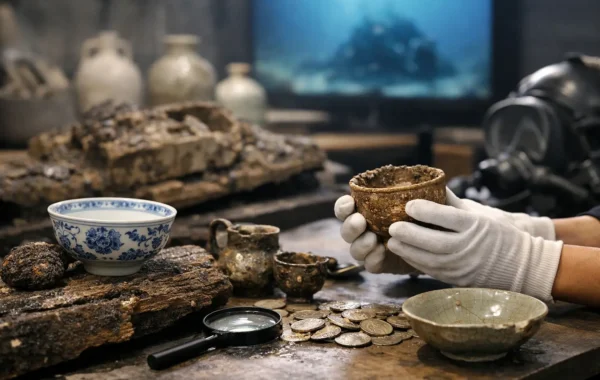
At Straits & Oriental Museum, authentic porcelain and ceramic artefacts recovered from Asian shipwrecks bring that story into tangible focus. The collections associated with vessels including the Wanli, Turiang, Royal Nanhai, Nanyang, Xuande and Desaru reveal both the splendour of porcelain and the risks of the historic sea routes that carried it. A bowl, jar or plate becomes more than a decorative object when viewed as cargo that travelled between trading worlds before resting beneath the water for centuries.
This is a particularly strong stop for collectors, design-minded visitors and families who want an encounter with history that feels immediate. As Malaysia’s first integrated heritage and lifestyle museum, it also invites guests to extend the experience through art, hospitality and considered browsing, rather than treating culture as a brief item to tick off an itinerary.
Clan Jetties: a living waterfront community
The Clan Jetties offer another view of the maritime city, this time at water level. These timber settlements were established by Chinese communities connected through dialect, family and occupation. Their walkways, houses and shrines are visually distinctive, especially in softer morning or late-afternoon light.
They are also residential neighbourhoods, not a themed backdrop. Visitors should keep voices low, avoid obstructing doorways and respect signs limiting access. The best visit is one that recognises the jetties as a continuing way of life, shaped by the waterfront and by the pressures of modern tourism.
Make room for art, texture and unexpected lanes
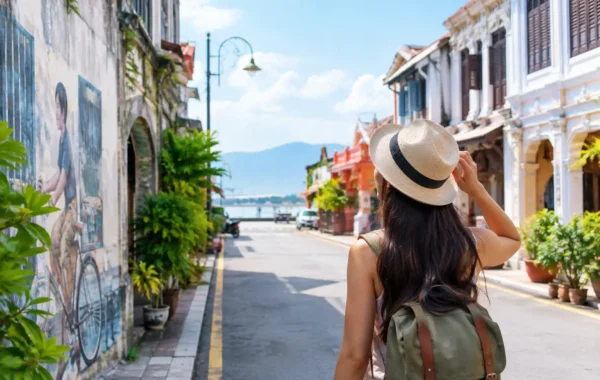
George Town’s mural trail is often the first cultural attraction visitors encounter, and it can be great fun. Ernest Zacharevic’s interactive works have helped introduce the city to a global audience, while local artworks and wrought-iron caricatures add humour and character to quieter corners. The trade-off is obvious: the most famous pieces can attract queues, particularly at midday.
Treat street art as a thread through the old town rather than the day’s sole purpose. Start early if photographs matter to you, then let the search lead towards Armenian Street, Cannon Street and the smaller lanes nearby. Between murals, look up at shutters, air wells, timber louvres and hand-painted signs. These details are often the more enduring cultural record.
A visit to the Pinang Peranakan Mansion can add valuable context here. Its rooms evoke the material world of Baba-Nyonya culture, where Chinese traditions were shaped by generations in the Malay Archipelago. The attraction suits visitors drawn to textiles, furniture, jewellery and ceremonial objects, though it may feel less essential if your time is very short and you have already chosen another heritage mansion. The deciding factor is interest: select it for the Peranakan story, not merely because it is popular.
A considered route for one memorable day
Begin in the morning around the Street of Harmony, when the air is more forgiving and religious sites feel especially alive. Continue to Khoo Kongsi, then take the lanes around Armenian Street at a relaxed pace. Stop for lunch somewhere that lets you appreciate Penang’s food culture as part of the journey, not an interruption from it.
In the afternoon, choose a more focused indoor experience: a heritage mansion for domestic and mercantile history, or a maritime museum for the wider trading networks that connected Penang to Asia. Finish by the Clan Jetties as daylight softens over the water. This order avoids trying to force every celebrated site into a single, exhausting circuit.
Families may prefer fewer stops with more time for stories and refreshments. Serious history enthusiasts can devote a second day to museums, galleries and guided walks. Travellers who care most about architecture should slow down around the old shophouses rather than chasing every mural. George Town does not ask everyone to see it in the same way.
The most rewarding cultural attractions are the ones that leave you seeing the next street differently: a temple as a gathering place, a tiled floor as evidence of trade, a porcelain shard as a survivor of a sea journey. Give those connections time to settle, and the city will continue telling its story long after you have left its lanes.