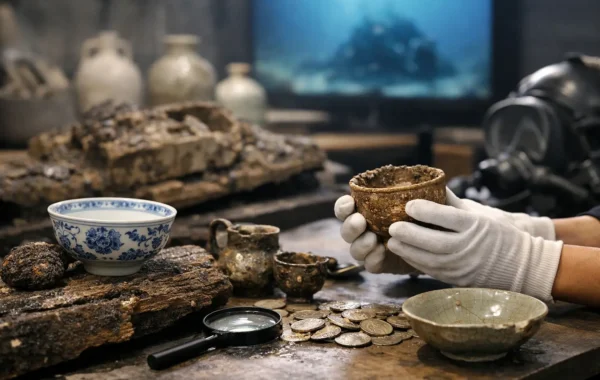
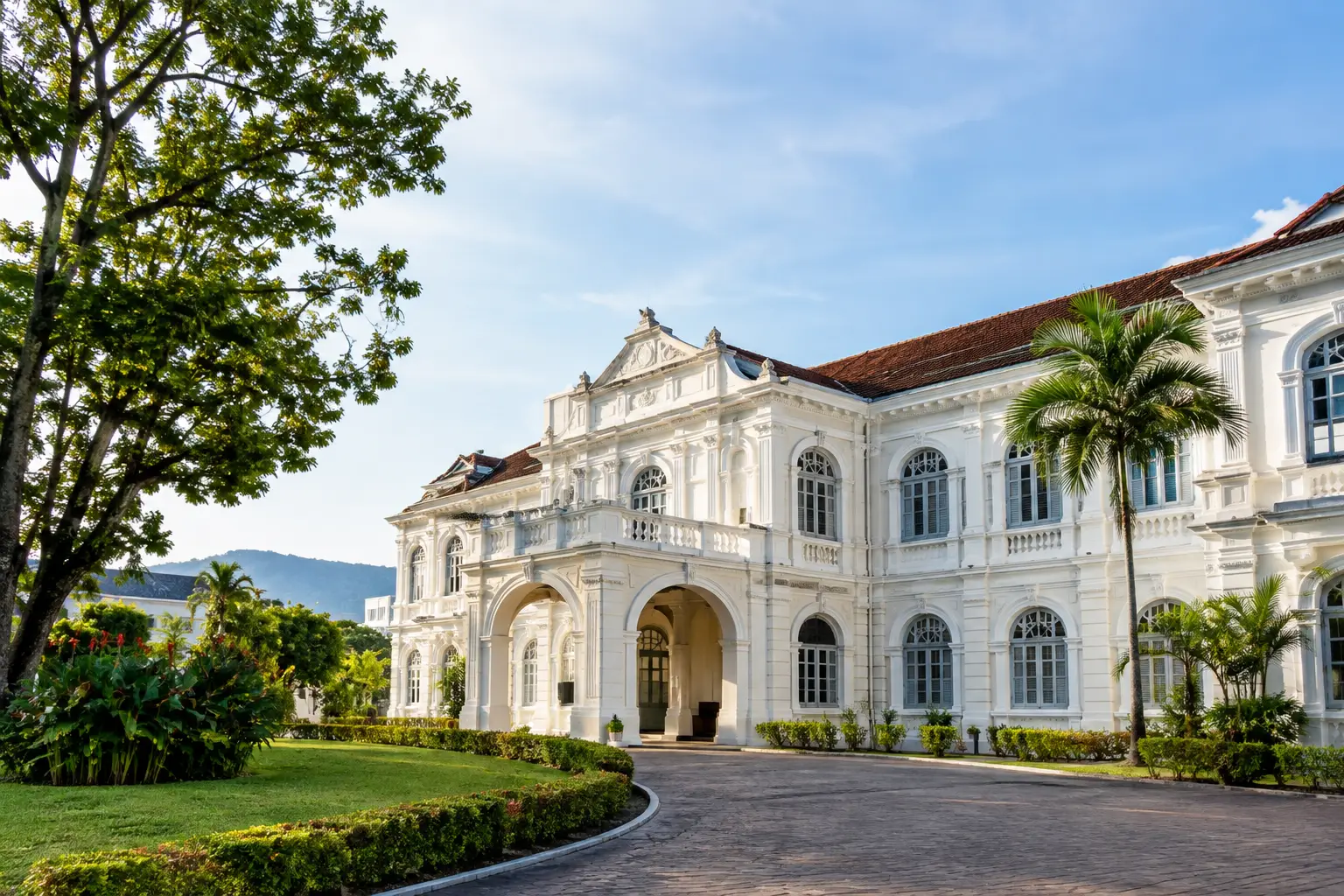

A porcelain bowl recovered from the seabed carries more than a beautiful glaze or decorative motif. It carries evidence of the people who made it, the merchants who commissioned it, the sailors who transported it and the ports that received it. The role of Straits & Oriental Museum in Penang and South East Asia begins with making these long-submerged stories visible again – placing rare shipwreck ceramics at the heart of a living cultural experience.
A maritime history written in porcelain
For centuries, the waters around South East Asia were among the world’s most important trading routes. Ships moved through the Straits of Malacca carrying ceramics, spices, textiles, metals and ideas between China, the Malay Archipelago, India, the Middle East and Europe. Penang’s place within this wider maritime world is not incidental. Its historic port city grew through the movement of goods, communities and cultures across the sea.
Shipwreck ceramics offer unusually direct evidence of that exchange. Unlike a written account that may describe a cargo in broad terms, a recovered collection can reveal what was carried, where it was made, how it was packed and which markets it was intended to reach. A single vessel may hold utilitarian bowls for everyday households alongside finely decorated wares for wealthy patrons, showing that maritime commerce connected many levels of society.
The museum’s permanent displays of authentic artefacts from shipwrecks including the Wanli, Turiang, Royal Nanhai, Nanyang, Xuande and Desaru bring this evidence into public view. Their value lies not only in rarity. Together, these objects create a material record of the centuries in which South East Asia was a meeting place of global trade.
The role of Straits & Oriental Museum in Penang
In George Town, heritage is often encountered through shophouses, temples, clan houses and food traditions. A museum devoted to maritime archaeology adds another essential perspective: the sea was not simply the backdrop to Penang’s history. It was the route through which the island and the region were connected to the wider world.
Straits & Oriental Museum gives visitors a way to encounter that history through original objects rather than reproductions alone. The delicacy of a porcelain form, the variation in its cobalt-blue decoration or the practical shape of a storage vessel can make a distant trading network feel immediate. These are not abstract symbols of commerce. They are survivals from journeys that ended unexpectedly beneath the waves.
This matters in a city celebrated for its layered heritage. Land-based architecture tells powerful stories about settlement, faith, enterprise and community. Shipwreck ceramics widen the frame. They encourage visitors to see George Town as part of a maritime crossroads, shaped by connections extending far beyond its shoreline.
The museum also serves a valuable interpretive role for travellers who may know Penang for its cuisine and colonial streets but have not considered the trading systems behind its cultural richness. A considered museum visit can turn a day of sightseeing into a clearer understanding of why this place developed such a distinctive identity.
A regional collection with a South East Asian perspective
The role of Straits & Oriental Museum in Penang and South East Asia is not to present porcelain as a decorative curiosity detached from its origins. It is to show how ceramics travelled through a region defined by exchange. Chinese kilns produced much of the cargo, but the story belongs equally to the sailors, brokers, port settlements and consumers across maritime Asia.
South East Asia was never merely a passage between larger powers. It was an active commercial and cultural sphere with its own demands, expertise and networks. Merchants understood local tastes. Ports organised supply, repair and redistribution. Communities adopted imported goods, adapted designs and incorporated foreign influences into local life.
The ceramics recovered from wrecks can illuminate these relationships. Their dates help trace changing trade patterns. Their forms can suggest intended use. Their decorative vocabulary reveals both the prestige of certain wares and the practical reality of mass commerce. For collectors, these details offer a more informed way to appreciate an object’s provenance and significance. For families and first-time museum visitors, they provide an accessible entrance to a much larger regional story.
There is also a necessary note of care. Shipwreck artefacts are compelling precisely because they are finite and vulnerable. Their historical meaning depends on responsible recovery, preservation and interpretation. A museum setting helps move them beyond the status of isolated antiques by placing them within the context of maritime archaeology, trade and shared heritage.
More than a static display
A great heritage destination gives visitors time and space to reflect. The integrated museum experience brings together exhibition, art, food, hospitality and curated retail, allowing history to remain part of the occasion rather than a brief stop between other plans.
This approach is especially suited to cultural travellers in Penang. Some visitors will want to study kiln traditions and cargo dates closely. Others may arrive with children, a limited itinerary or a general interest in beautiful objects. A multi-experience setting accommodates both. One person can linger over the details of a recovered dish while another enjoys the atmosphere, takes in an exhibition or continues the conversation over a meal.
The trade-off is clear: heritage must never become mere decoration for lifestyle experiences. The strongest model keeps authentic artefacts and credible storytelling at its centre, then uses hospitality to make the encounter more welcoming, memorable and shareable. When handled with care, dining, gallery experiences and a gift house do not dilute the museum’s purpose. They extend the time visitors spend with its stories and create a fuller cultural outing.
Why shipwreck ceramics still speak to modern visitors
Porcelain has a quiet power. It is made to be held, used, admired and passed on, yet shipwreck pieces often reach us after centuries of darkness and silence. Their survival invites imagination: the stacked cargo hold, the uncertainty of monsoon waters, the intended destination that was never reached.
That emotional connection is important because maritime history can otherwise feel immense and impersonal. Trade routes, dynasties and dates establish context, but individual objects offer a human scale. A small cup suggests hospitality. A plate suggests a table. A storage jar suggests provisions, trade and daily life. Visitors do not need specialist knowledge to respond to these forms, though deeper interpretation rewards those who wish to look further.
For international guests, the collection can provide a meaningful introduction to South East Asia’s place in world history. For Malaysian visitors, it offers another lens through which to understand the region’s longstanding openness, complexity and cultural confidence. For collectors, it is an opportunity to encounter historic ceramics as documented witnesses to maritime movement rather than simply as objects of aesthetic desire.
A cultural landmark with a continuing purpose
Museums earn regional significance when they do more than safeguard a collection. They create encounters between people, objects and place. By presenting ancient shipwreck ceramics in Penang, the museum connects a historic port city to the wider waters that shaped its fortunes and the civilisations that traded across them.
Its purpose is therefore both preservational and contemporary. It preserves tangible evidence of the past while giving today’s visitors a refined setting in which to consider how trade, migration, craftsmanship and appetite for beauty have always travelled together. The result is a heritage experience with genuine depth, yet one that remains open to the curious traveller as much as to the dedicated enthusiast.
The next time a piece of porcelain catches your eye, pause before admiring its surface alone. Consider the kiln, the ship, the sea and the many hands that made its journey possible. That small act of attention is where a museum visit becomes a lasting connection to Penang and South East Asia’s shared maritime story.