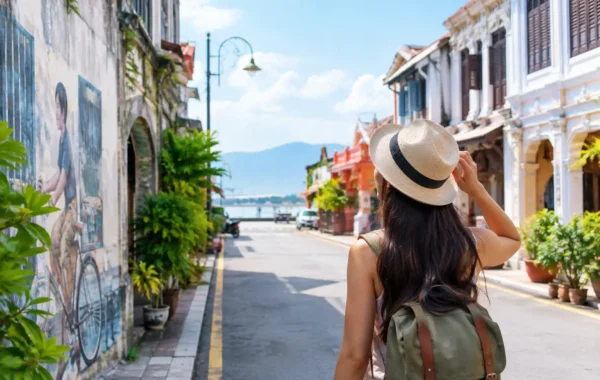

George Town rewards the visitor who looks beyond the street-art queue and the best-known heritage houses. So, what are the hidden museums in George Town? They are the smaller, more specialised places that reveal the city through particular lives, trades, collections and crossings: a camera’s lens, a Peranakan dining room, a revolutionary meeting place, or porcelain that spent centuries beneath the sea.
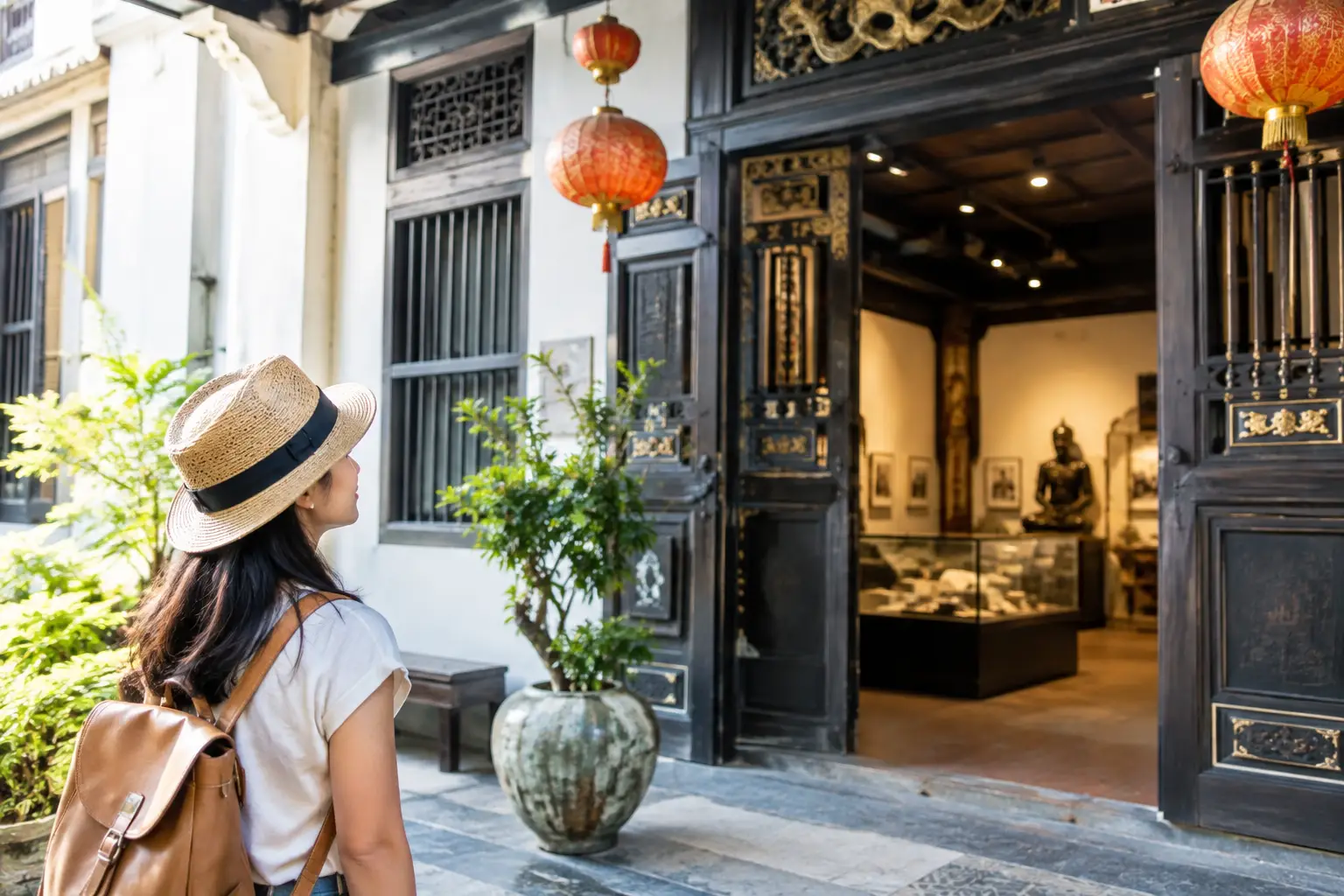
They are not always hidden in the literal sense. Many sit within the UNESCO World Heritage core, behind handsome shophouse façades that visitors may pass without a second glance. What makes them feel hidden is their intimacy. Rather than attempting to tell the whole story of Penang at once, they offer a precise doorway into it.
Why George Town’s smaller museums matter
George Town was shaped by movement. Merchants, migrant communities, religious traditions, colonial powers and seafarers all left traces here. The city’s most compelling museums often follow one of those threads closely, allowing an object or a room to carry the weight of a larger history.
This is particularly valuable for travellers with limited time. A large institution can provide broad context, but a focused museum can create a sharper memory. You may leave remembering the sheen of blue-and-white porcelain, the layout of a Straits Chinese home, or the mechanical ingenuity inside a vintage camera. These details make a heritage district feel lived in rather than merely admired.
The trade-off is that smaller museums can have more limited opening hours, changing displays or compact galleries. They are best approached as deliberate stops rather than places to rush through between lunch and a photograph. Check current admission arrangements before setting out, especially around public holidays.
Hidden museums in George Town worth seeking out
Straits & Oriental Museum: shipwreck stories beneath the surface
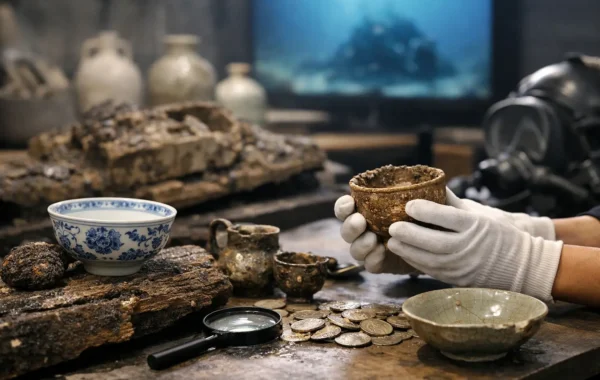
For a perspective that reaches far beyond the shoreline, Straits & Oriental Museum brings maritime archaeology into the heart of the city. Its collection centres on authentic porcelain and ceramic artefacts recovered from significant Asian shipwrecks, including the Wanli, Turiang, Royal Nanhai, Nanyang, Xuande and Desaru wrecks.
The appeal lies in the objects’ double lives. A bowl, jar or plate was once a practical item of trade, travelling across Asian waters as part of a commercial network. Centuries later, recovered from the seabed, it becomes evidence of craft, taste, risk and exchange. Decorative motifs and kiln techniques are fascinating in their own right, but the real drama is in the journey: what these pieces reveal about the routes that connected China, Southeast Asia and the wider region.
As Penang’s first museum of its kind and Malaysia’s first integrated heritage and lifestyle museum, it is designed as more than a sequence of display cases. The experience brings together museum storytelling, art, dining, refreshments and a gift house, making it well suited to visitors who want to give a cultural outing the time it deserves. For collectors, the chance to study historic ceramics at close range adds another layer of pleasure.
Sun Yat Sen Museum Penang: a house with a political afterlife
On Armenian Street, the Sun Yat Sen Museum Penang occupies a restored Peranakan townhouse with an unusually consequential past. It is associated with Dr Sun Yat Sen’s revolutionary activity and his efforts to mobilise overseas Chinese support in the years before China’s 1911 Revolution.
Its power comes from the contrast between domestic scale and international consequence. Visitors move through rooms that retain the atmosphere of a prosperous early twentieth-century home, while learning how George Town served as a meeting ground for ideas that travelled far beyond the island. The carved timber, tiled floors and household objects are not simply decorative. They place a global political story inside the rhythms of everyday life.
This is a rewarding choice for history-minded visitors who prefer a personal setting to a conventional political museum. Allow time to look closely at the house itself. Architecture often tells as much as the labels do.
Asia Camera Museum: seeing the city through a different lens
A camera museum may sound like a niche diversion, but that is precisely its charm. The Asia Camera Museum traces the development of photography through historic equipment, from early cameras and studio tools to familiar formats from the analogue age.
Photography transformed how places such as George Town were remembered, marketed and understood. Old cameras make that shift tangible: their weight, bellows, lenses and mechanisms remind us that every image once required patience and technical judgement. The museum’s interactive elements make it an especially good option for families, mixed-age groups and anyone who enjoys a playful pause between more contemplative heritage visits.
It is not a substitute for a deep history of Penang. Instead, it offers an engaging side route into visual culture, memory and the technology behind the images that fill our mobile phones today.
Penang Batik Painting Museum: colour, line and local imagination
Batik is often encountered as cloth, but batik painting gives the wax-resist tradition a different form. At the Penang Batik Painting Museum, visitors can encounter works that treat this familiar regional technique as fine art, with colour and pattern used to depict landscapes, figures and scenes of Malaysian life.
The museum is compact, and that is part of its appeal. It can be enjoyed in less time than a major gallery, yet it offers a useful corrective to the idea that heritage belongs only to the distant past. Batik painting developed in the twentieth century and continues to speak to questions of identity, place and artistic experimentation.
For those interested in collecting, the visit can also sharpen the eye. Look for the relationship between the fluid lines created by wax and the layered dyes that give each work its depth. The best pieces reward a slower gaze.
Penang Peranakan Mansion: not obscure, but still often misunderstood
The Penang Peranakan Mansion is better known than the museums above, so it may not qualify as hidden for every visitor. Yet it deserves a place on a thoughtful itinerary because many people admire its lavish interiors without fully understanding what they represent.
The mansion evokes the world of the Baba-Nyonya, or Straits Chinese, community, whose customs drew on Chinese, Malay, European and local influences. Furniture, jewellery, ceramics, embroidery and domestic spaces reveal a culture expressed through ceremony and exceptional craftsmanship.
Visit early or later in the day if possible, when the rooms are easier to absorb. It is an excellent counterpart to the smaller museums: where a specialist collection isolates one story, the mansion surrounds you with a richly layered way of life.
How to build a more meaningful museum day
Choose two museums with different viewpoints rather than trying to see everything. Pair maritime ceramics with Peranakan domestic culture, for example, or combine photography with a political heritage house. The contrast helps each visit stand out.
Give yourself space between stops. George Town’s lanes, clan houses, places of worship and coffee shops are not merely the route between museums. They provide the setting that makes the collections intelligible. A porcelain cargo tells a different story after you have walked past old trading streets; a revolutionary meeting house feels more immediate when you recognise the city’s long history as a port of arrivals and departures.
If you are travelling with children, balance object-led museums with those that offer visual or interactive appeal. If you are drawn to antiques, begin with shipwreck ceramics or Peranakan material culture, then let the questions raised by particular objects guide the rest of your day. There is no single correct route through George Town.
The pleasure of looking twice
The hidden museums in George Town are not side attractions for a rainy afternoon. They are invitations to look twice: at a shophouse doorway, a trading route, a family ritual or a small ceramic vessel that survived the sea.
Leave room in your itinerary for one museum you had not planned to visit. In a city built from many journeys, the most memorable encounter is often the one waiting quietly behind an unassuming façade.