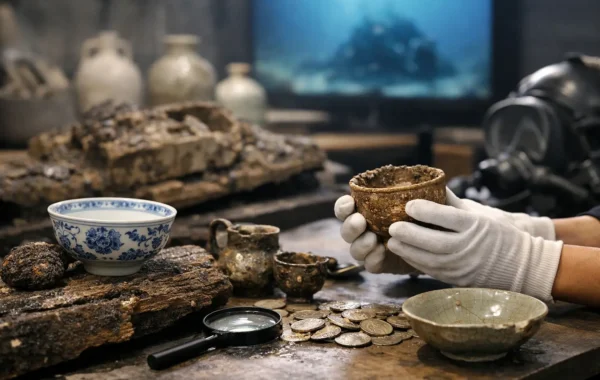
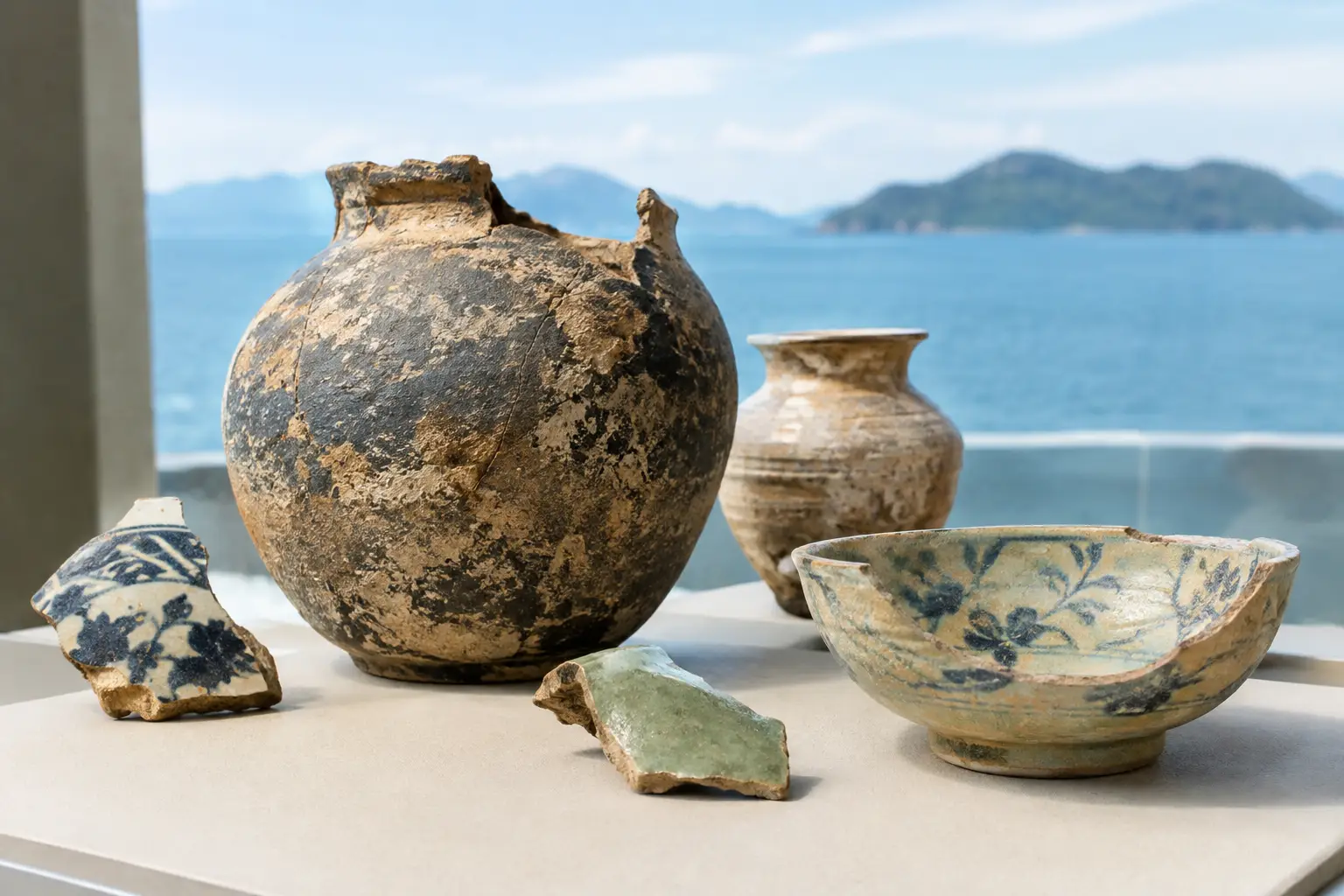

The question, “where can I see ancient shipwreck ceramics in Malaysia?”, leads to George Town, Penang – a historic port city with the ideal setting for objects that once travelled the seas of Asia. At Straits & Oriental Museum, authentic porcelain and ceramic artefacts recovered from significant Asian shipwrecks are presented as more than beautiful antiques. They are witnesses to centuries of trade, taste, travel and exchange across the maritime routes that connected China, Southeast Asia and beyond.
For visitors drawn to objects with a genuine past, shipwreck ceramics offer a rare kind of encounter. A bowl, jar or blue-and-white dish may have been packed as cargo hundreds of years ago, carried through difficult waters, lost beneath the sea, and recovered long after its original destination had vanished from memory. Seeing these pieces in person gives their colour, scale and finely worked details the attention photographs cannot quite provide.
Where to See Ancient Shipwreck Ceramics in Malaysia
In George Town, Straits & Oriental Museum offers a permanent display centred on ancient shipwreck porcelain and ceramics. As Penang’s first museum of its kind and Malaysia’s first integrated heritage and lifestyle museum, it brings maritime archaeology into a setting designed for an unhurried cultural outing.
The collection includes artefacts associated with celebrated wrecks such as the Wanli, Turiang, Royal Nanhai, Nanyang, Xuande and Desaru. Together, these names represent different moments in Asian maritime history and different chapters in the long movement of ceramics by sea. Rather than treating porcelain as a distant academic subject, the museum places it at the heart of a story that feels particularly resonant in Penang: a place shaped by merchants, harbours, migration and the meeting of cultures.
This is not simply a room of old objects. It is an opportunity to see how luxury goods, everyday tableware and trading cargo travelled across the region long before modern shipping lanes. A visit suits dedicated history enthusiasts and collectors, but it is equally rewarding for families and travellers who want one memorable experience beyond the familiar streetscape of George Town.
Why Shipwreck Ceramics Matter
Ceramics survived the sea in remarkable numbers because fired porcelain and stoneware are durable. Yet survival does not make them ordinary. Each piece can reveal something about the world from which it came: the kiln traditions that made it, the period style that shaped its decoration, and the markets that created demand for it.
A single wreck assemblage may contain vessels made for different purposes. Some were practical containers for food and drink; others were prized for their refined glaze, painted motifs or unusual forms. Taken together, they demonstrate that the maritime trade was not confined to elite treasures. It involved households, dining tables, religious customs, gifts and the daily rituals of people living across a vast connected world.
There is also a compelling contrast between fragility and endurance. Porcelain is associated with delicacy, yet these pieces endured a disaster at sea and centuries underwater. Their presence invites visitors to consider not only what was recovered, but what was interrupted: crews, voyages, intended customers and ports that never received their cargo.
A Journey Through the Wrecks
The pleasure of viewing shipwreck ceramics lies partly in comparison. Different wrecks can reveal shifts in design, production and commerce over time. A visitor may notice changes in the shape of plates and bowls, the tone of a glaze, or the confidence of a painted line. These details are not merely decorative. They can help place an object within a particular period and trading context.
The Wanli wreck, for example, evokes the grandeur of late Ming porcelain and the international appetite for Chinese wares. The Xuande name recalls an earlier era of exceptional imperial and export ceramic traditions. Other wreck groups, including the Turiang, Royal Nanhai, Nanyang and Desaru, broaden the picture, showing that maritime trade was sustained through many routes, vessels and destinations rather than one simple journey from maker to buyer.
You do not need specialist knowledge to appreciate the collection. Begin by looking closely. Notice the balance of a vessel, the colour beneath the glaze, the repeated floral pattern or the small irregularity that suggests a human hand. Then imagine it stacked among hundreds of other pieces in a ship’s hold, protected for a time by straw, crates and careful packing before the sea claimed it.
For collectors, this is also a valuable chance to develop the eye. Museum viewing helps distinguish the qualities that make historic ceramics so compelling: proportion, potting, glaze, decoration and the quiet presence that comes with age. The strongest experience is not about rushing to identify every dynasty or motif. It is about allowing the objects to speak before reading the label.
More Than a Museum Stop in George Town
Ancient shipwreck ceramics deserve time, and the setting matters. A visit works particularly well as part of a slower day in George Town, where the story of maritime Asia can be felt in the city’s architecture, food culture and port heritage. The museum’s integrated approach brings together exhibitions, art, hospitality and retail, giving visitors space to extend the experience rather than treating history as a brief diversion between other plans.
That distinction is useful for different kinds of visitors. Couples can make it part of a cultured afternoon, followed by refreshments and conversation. Families can use the displays as a tangible starting point for discussing maps, trade and life at sea. Travellers with limited time can choose it as a focused introduction to the wider history behind Penang’s cosmopolitan character.
There is a trade-off worth recognising. Visitors seeking a large national-collection format with galleries devoted to every archaeological period may prefer to combine several cultural stops during their Malaysian holiday. Those seeking a concentrated, visually engaging encounter with authentic maritime ceramics, however, will find that a specialist collection offers something more immediate: a clear story, rare objects and a sense of place.
How to Make Your Visit More Meaningful
Give yourself permission to linger over a few pieces rather than trying to absorb every display at once. Start with the question of use: was this vessel made for serving, storing, drinking or display? Then move to its journey. Where might it have been made, who might have handled it, and where was it heading when the ship went down?
It also helps to view the objects as part of a wider network rather than as isolated Chinese exports. Maritime Southeast Asia was an active participant in this trade, not simply a destination on a map. Ports supplied provisions, welcomed merchants, exchanged goods and ideas, and shaped the tastes that kept ships moving. Penang’s own position along the Straits makes this perspective especially vivid.
If you are visiting with children, invite them to choose one object and invent its voyage, using the real evidence of its material and decoration as a starting point. If you are visiting as a collector or design lover, compare the restraint of one form with the exuberance of another. The collection rewards both curiosity and close looking.
The most memorable heritage visits leave you seeing a place differently when you step outside. After encountering ceramics raised from the sea, the Straits no longer feel like a distant expanse of water. They become a route of human ambition, artistry and exchange – and every carefully preserved vessel becomes a small, luminous fragment of that journey.