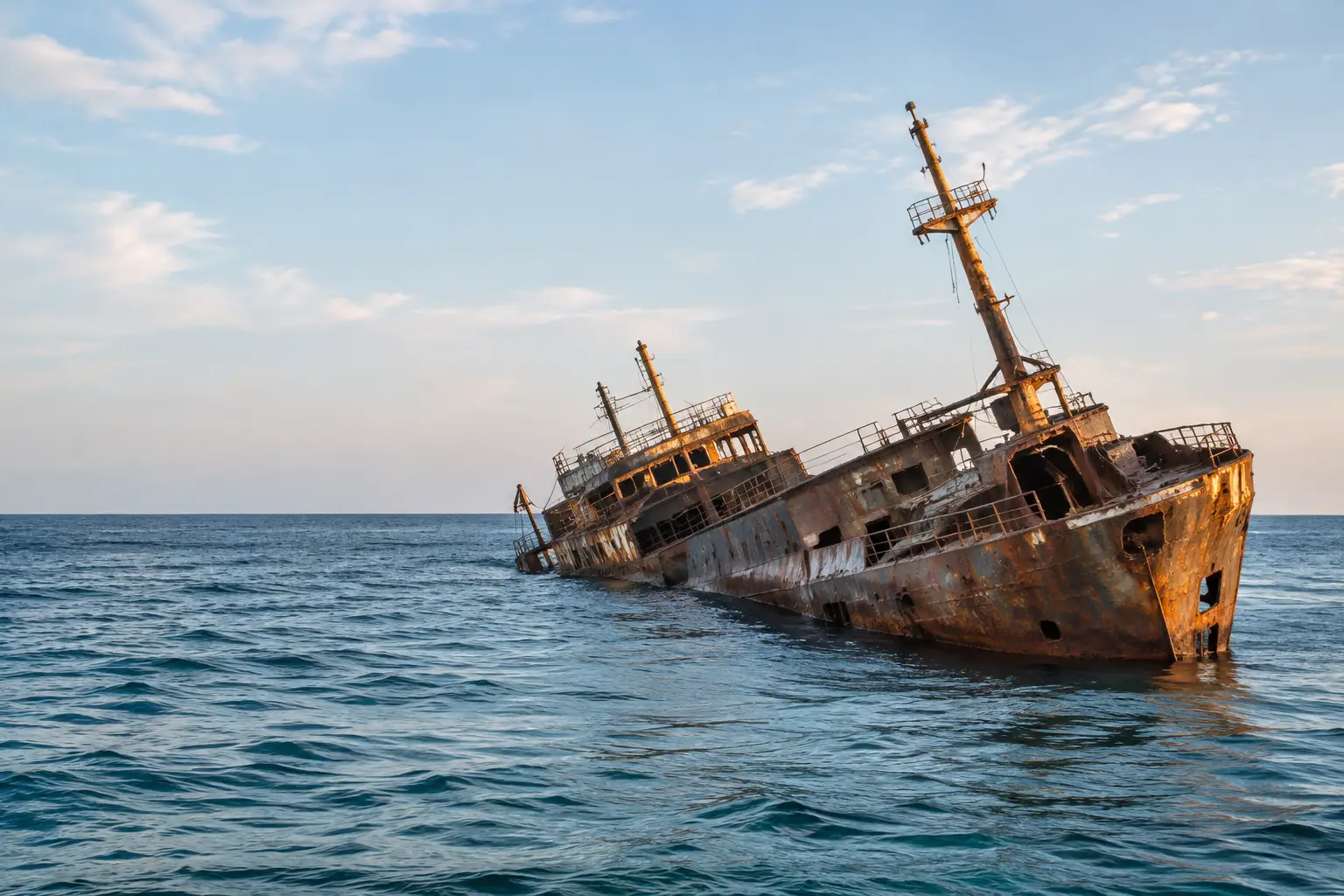

The question, where did Royal Nanhai sink, leads to a stretch of the South China Sea off the east coast of Peninsular Malaysia. The wreck lay on a historic maritime passage rather than at the edge of the trading world – a route once crossed by Chinese merchants, regional sailors and vessels carrying goods between ports across Southeast Asia.
The Royal Nanhai is remembered not simply because it went down, but because its cargo survived. The ceramics recovered from the wreck offer a rare, tangible record of the Ming-era trade that connected China with the Malay Archipelago and beyond. For visitors drawn to shipwreck porcelain, the site gives every bowl, jar and blue-and-white dish a powerful sense of place.
Where Did Royal Nanhai Sink?
Royal Nanhai sank in the South China Sea, off the Malaysian coast. Public descriptions of the wreck commonly place it in waters off Peninsular Malaysia, on the eastern side of the peninsula, where sea routes linked the South China Sea with key regional trading centres.
This is the clearest useful answer, though it deserves a little care. Underwater archaeological sites are not always presented with precise public coordinates. That restraint helps protect vulnerable wrecks from disturbance and illicit salvage, while historical records and modern accounts can describe locations at different levels of detail. One source may refer broadly to the South China Sea; another may emphasise the Malaysian coast or nearby island routes.
What remains constant is the wreck’s setting: Royal Nanhai lay along one of Asia’s great maritime corridors. Its position tells us why such a vessel was there in the first place. These waters were not empty expanses between destinations. They were working seaways, shaped by monsoon winds, local knowledge, coastal stopovers and commercial ambition.
A Wreck on a Maritime Highway
During the Ming period, trade across Southeast Asia depended on seasonal movement. Sailors read the monsoon winds and timed voyages accordingly. A ship leaving southern China could travel south through the South China Sea, call at ports in the Malay world and continue towards markets in what are now Indonesia, Thailand, Vietnam, India and further west.
The east coast of Peninsular Malaysia formed part of this wider geography. It faced the South China Sea directly and sat within a network of ports, islands and sheltered passages known to generations of seafarers. A vessel could carry Chinese ceramics southwards while taking on local products, information and passengers at different stages of its journey.
Royal Nanhai’s loss is a reminder that this commerce was never guaranteed. Wooden ships faced shifting weather, reefs, strong currents, navigational errors and the sheer strain of a long voyage. A cargo that had been carefully packed for sale could become, in a single disaster, a sealed historical deposit on the seabed.
Why the exact point matters – and why it is not the whole story
It is natural to want a pin on a map. Yet the meaning of Royal Nanhai does not rest on a single coordinate. Its location matters because it places the wreck within a route, and the route is what explains the cargo.
The South China Sea was an active commercial environment, not a boundary between isolated cultures. Chinese kilns produced goods for customers with varied preferences. Traders moved those wares through Southeast Asian waters. Local ports connected seaborne trade with inland communities, courts and households. The cargo aboard Royal Nanhai belongs to that shared story.
For maritime archaeologists, a wreck site also preserves context. The way objects were arranged, the type of vessel carrying them and the materials found beside them can reveal far more than an individual ceramic displayed alone. Recovery brings remarkable objects to light, but it also changes the site. That is why responsible interpretation must acknowledge both the beauty of the finds and the importance of their original setting.
What Royal Nanhai Carried
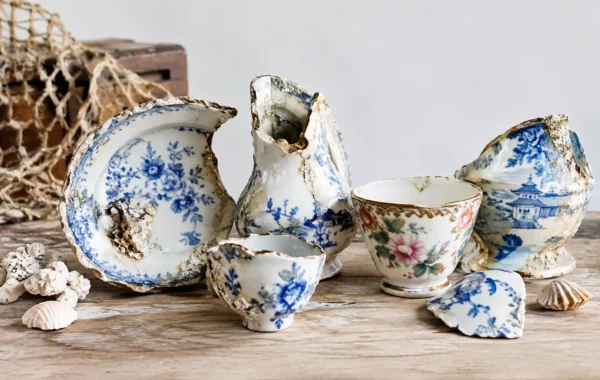
Royal Nanhai is especially valued for its Chinese ceramic cargo, associated with the fifteenth-century Ming world. Such shipwreck collections can include practical wares for everyday use alongside pieces made with finer decoration and greater visual appeal. Their survival gives modern audiences an unusually direct encounter with objects that were once intended for trade, dining, gifting and display.
Porcelain and stoneware travelled well compared with many perishable goods, although they were far from indestructible. Ships’ holds were packed with care, often using nesting forms and protective materials to make transport more efficient. When a vessel sank, those packed layers could help preserve large groups of related objects beneath sediment.
The resulting assemblage is valuable because it shows trade at scale. A palace collection can reveal elite taste; a shipwreck cargo reveals movement, supply and demand. Repeated forms may indicate popular export goods, while unusual pieces may hint at specialist buyers or particular market preferences. Marks, glazes, shapes and decorative motifs can all help specialists connect wares to production regions and approximate dates.
There is also a more human reading. A small bowl may have been made by skilled hands in China, loaded by merchants, carried through unpredictable seas and destined for a table hundreds or thousands of miles away. Its journey was interrupted off Malaysia, then resumed centuries later when it emerged as evidence of a connected Asian past.
How a Shipwreck Changes the Way We See Porcelain
In a gallery, it is easy to admire porcelain for its colour, sheen or delicate painted detail. Royal Nanhai asks us to look further. These objects are not only works of material culture. They are survivors of a voyage.
That changes the questions worth asking. Why were so many pieces made in related forms? Who was expected to buy them? Which ports might the ship have visited before it sank? How did monsoon patterns shape the rhythm of trade? The most rewarding encounter with shipwreck ceramics begins with visual appreciation, then opens into questions of craft, commerce and seafaring.
It also introduces a necessary trade-off. The recovery of a wreck can preserve objects that might otherwise deteriorate or remain unknown, and it allows them to be studied and shared with the public. At the same time, removal from the seabed separates artefacts from part of their archaeological context. Provenance, careful documentation and responsible stewardship therefore matter greatly, especially when rare maritime artefacts enter museum or private collections.
Seeing Royal Nanhai in Penang
For travellers in George Town, Royal Nanhai provides a compelling entry point into the maritime history that helped shape the region. The Straits of Melaka often receive much of the attention, rightly, but the South China Sea routes were equally significant to the wider movement of people and goods across maritime Asia.
At Straits & Oriental Museum, shipwreck ceramics can be encountered not as distant textbook illustrations, but as physical witnesses to these crossings. Their surfaces still carry the visual language of their time: deep cobalt blue, quiet celadon tones, patterned rims and forms designed for use. Seen together, they make the scale of regional exchange easier to grasp.
This is particularly rewarding for families and first-time museum visitors. A shipwreck offers an immediate story – a vessel, a cargo, a lost journey – while the objects encourage closer looking. Collectors may be drawn to kiln traditions and dating; history enthusiasts may follow the trade routes; younger visitors may simply be captivated by the thought that these ceramics rested beneath the sea for centuries. Each response is a valid beginning.
The Royal Nanhai’s Continuing Journey
Royal Nanhai sank off Peninsular Malaysia in the South China Sea, but its significance reaches far beyond the site of its loss. The wreck gives form to a world of monsoon voyages, skilled ceramic production and exchange between communities separated by water yet connected by trade.
When you stand before a shipwreck ceramic, pause over more than its age or rarity. Consider the port it left, the hands that packed it, the sea it crossed and the unfinished journey that made its survival possible. That small act of attention turns an object into a passage through time.