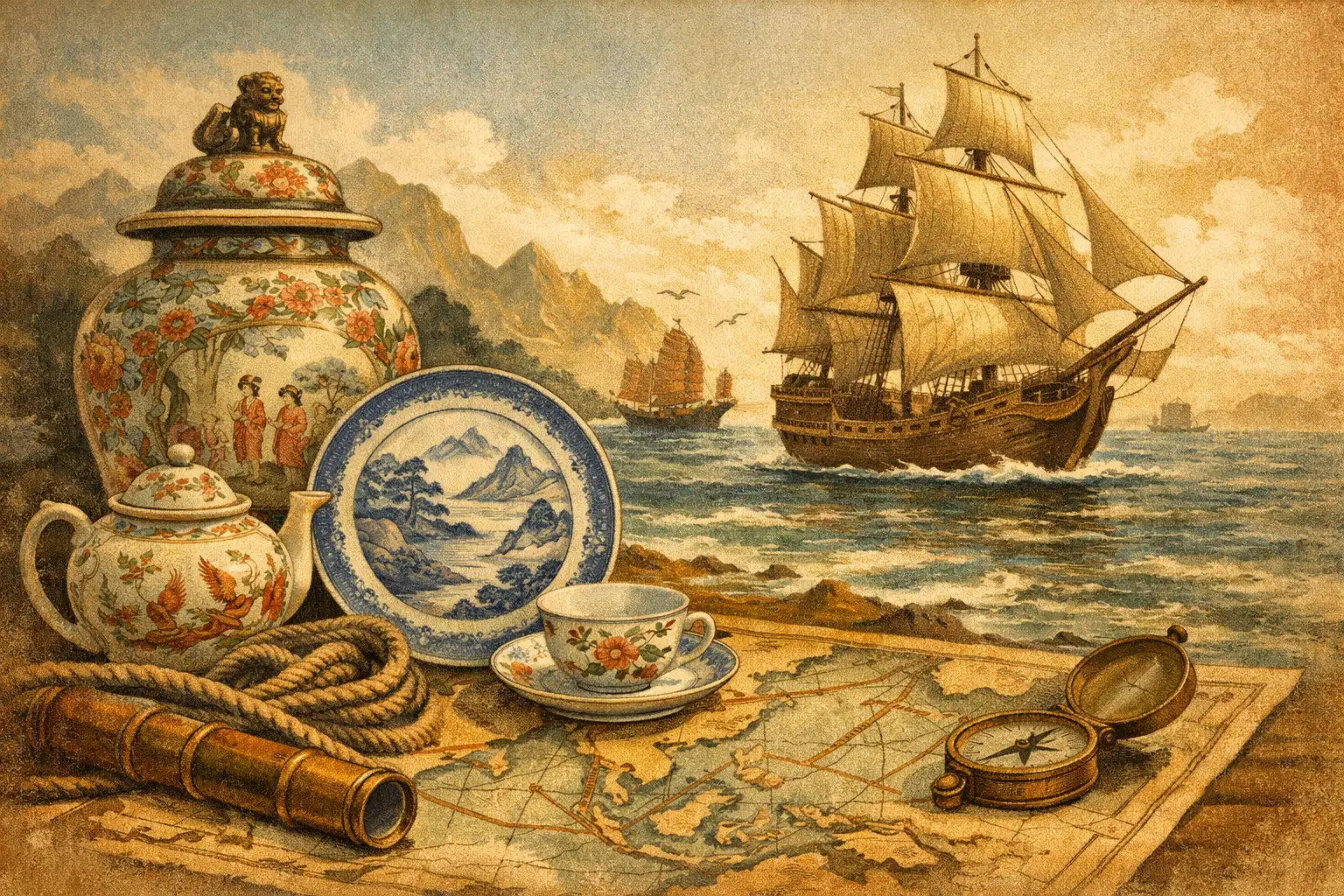

A bowl lifted from a shipwreck can carry more than a painted pattern. It may hold evidence of a kiln in southern China, a merchant’s order, a port call in Southeast Asia and a journey interrupted beneath the sea. Chinese export ceramics make that extraordinary chain of exchange visible, piece by surviving piece.
For centuries, Chinese ceramics travelled farther than almost any other crafted object. Their forms were practical, their surfaces visually compelling, and their production was sophisticated enough to serve markets across Asia, the Middle East, Africa and, later, Europe. To encounter them is to see the Indian Ocean and South China Sea not as empty stretches of water, but as busy cultural highways.
What Are Chinese Export Ceramics?
Chinese export ceramics are wares made in China and traded beyond its borders. The phrase is often associated with porcelain made for European buyers during the Ming and Qing dynasties, but its story is far broader. It encompasses stoneware, celadon, white wares, blue-and-white porcelain and other ceramics that moved through Asian maritime networks from much earlier periods.
Not every exported piece was designed specifically for a foreign customer. Many objects were valued abroad precisely because they were Chinese: bowls, jars, dishes and ewers made in established forms, carrying familiar glazes and decorative traditions. Others were adapted to distant tastes, with shapes, colours, inscriptions and heraldic motifs reflecting the preferences of patrons far from the kilns.
That distinction matters. Export ware was not a single style, nor was it simply a European story. Long before European trading companies entered Asian waters, merchants, sailors and communities across Southeast Asia were buying, using and redistributing Chinese ceramics. The region was not merely a passage between China and the West. It was an influential market, meeting place and trading world in its own right.
From Kiln to Port: A Maritime Achievement
The success of Chinese ceramics began with mastery of materials and fire. China’s potters developed remarkable technical control over clay bodies, glazes and high-temperature kilns. A fine vessel had to be beautiful, but it also needed to endure handling, packing, humidity and months at sea.
Production was often highly organised. Major kiln centres could make large quantities of standardised wares, while merchants and middlemen linked workshops to ports. At coastal embarkation points, ceramics were packed in nested stacks, padded with organic material or placed within larger jars and containers. Their compact forms made them well suited to cargo holds, although the sea remained an unforgiving partner.
Maritime archaeology reveals just how substantial this trade could be. Shipwreck cargoes sometimes contain thousands of ceramic objects, from humble bowls to finely decorated vessels. Together, they offer a rare record of what was available, what was desired and what merchants considered worth risking on the open water.
A shipwreck, however, is not a perfectly preserved shop shelf. Cargoes may represent several customers, different loading ports or goods added at the last moment. Breakage, marine conditions and later disturbance can also alter what survives. Yet this very complexity gives shipwreck ceramics their power: they are direct witnesses to trade in motion.
The changing language of colour and form
Across the centuries, shifting tastes created an evolving ceramic vocabulary. Song-era celadons, admired for their quietly luminous green glazes, travelled widely through Asian markets. White and pale blue qingbai wares offered another refined expression of technical skill. By the Yuan and Ming periods, cobalt blue decoration under a clear glaze brought a new visual confidence to porcelain and became one of the most recognisable languages of global trade.
Later export wares could be exuberantly tailored to overseas demand. European-style forms, armorial designs and decorative scenes entered the repertoire, particularly as global commerce intensified. But the allure of Chinese ceramics was never only about novelty. Their appeal rested on craftsmanship, durability and the prestige of owning objects connected to an esteemed ceramic tradition.
Why Shipwreck Finds Change the Story
Ceramics found in homes, graves and collections tell us how objects were kept and valued after arrival. Shipwreck ceramics reveal an earlier chapter: the moment before the market. They preserve cargoes at sea, sometimes with their original groupings still partly intact.
This can transform our understanding of a vessel’s voyage. The range of wares may suggest intended markets; the dating of particular forms can help establish a ship’s period; and the presence of ceramics alongside metal, spices, glass or other goods shows the variety of maritime commerce. A small dish, viewed alone, may seem decorative. Viewed among hundreds of related objects, it becomes part of an economic and cultural system.
There is also a human dimension. Every cargo depended on makers, packers, brokers, crews, pilots, financiers and buyers. Chinese export ceramics were objects of beauty, but they were also working goods. A storage jar might have served a household for generations. A plate could have appeared on a merchant’s table in a port thousands of miles from the workshop where it was fired.
The sea gave these objects a second life. Once recovered and carefully studied, they can document trade routes that written records only partly describe. Their marine encrustation, occasional firing flaws and signs of use make them feel less remote than pristine display pieces. They remind us that history is not only made by courts and capitals, but also by cargoes, ports and everyday acts of exchange.
Reading a Ceramic Object with Care
A close look rewards patience. Begin with the body and glaze. Is the vessel porcelain, stoneware or a coarser utilitarian ceramic? Is its glaze glassy, crackled, opaque or translucent? These details can point towards a technical tradition and, sometimes, a likely production region.
Then consider form. A wide dish, a covered box, a pouring vessel and a large storage jar each answered different needs. Decoration offers further clues, though it should not be treated as a simple code. Floral scrolls, landscapes, auspicious symbols and geometric borders may reflect Chinese visual traditions, foreign preferences or a conversation between both.
Provenance is equally important. A ceramic without a recorded history can still be visually impressive, but an object linked to an archaeological excavation or documented collection has a fuller story to tell. Context helps distinguish a beautiful antique from evidence with wider historical significance.
This is why authentic shipwreck collections hold such enduring fascination. They allow visitors to look beyond the surface and ask meaningful questions: Who might have ordered this? Which port was it bound for? What did it mean to the people who used it? The answers are not always certain, and responsible interpretation leaves room for that uncertainty.
A Living Heritage of the Sea
In Penang, a historic entrepôt shaped by movement across the Straits of Malacca, this maritime perspective feels especially immediate. The sea has long carried people, ideas, ingredients, beliefs and objects between shores. Ceramics are among its most enduring passengers.
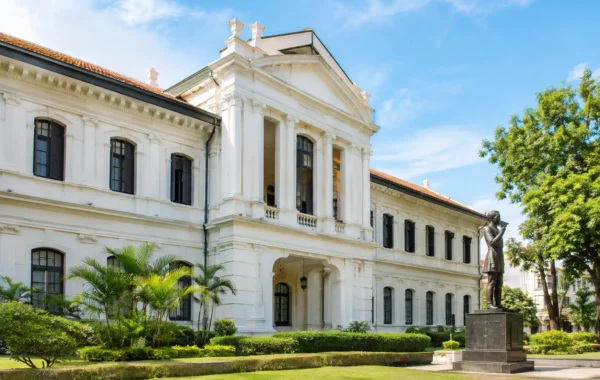
At Straits & Oriental Museum, shipwreck artefacts offer a tangible route into this shared history. Their presence invites visitors to see porcelain not as a distant luxury, but as part of a vibrant regional exchange that helped shape homes, tastes and communities across Asia.
The next time you stand before a blue-and-white dish or a quietly glazed bowl, look past its surface. Imagine the hands that made it, the hold in which it was packed and the horizon it was meant to cross. That journey is still there, waiting to be read.