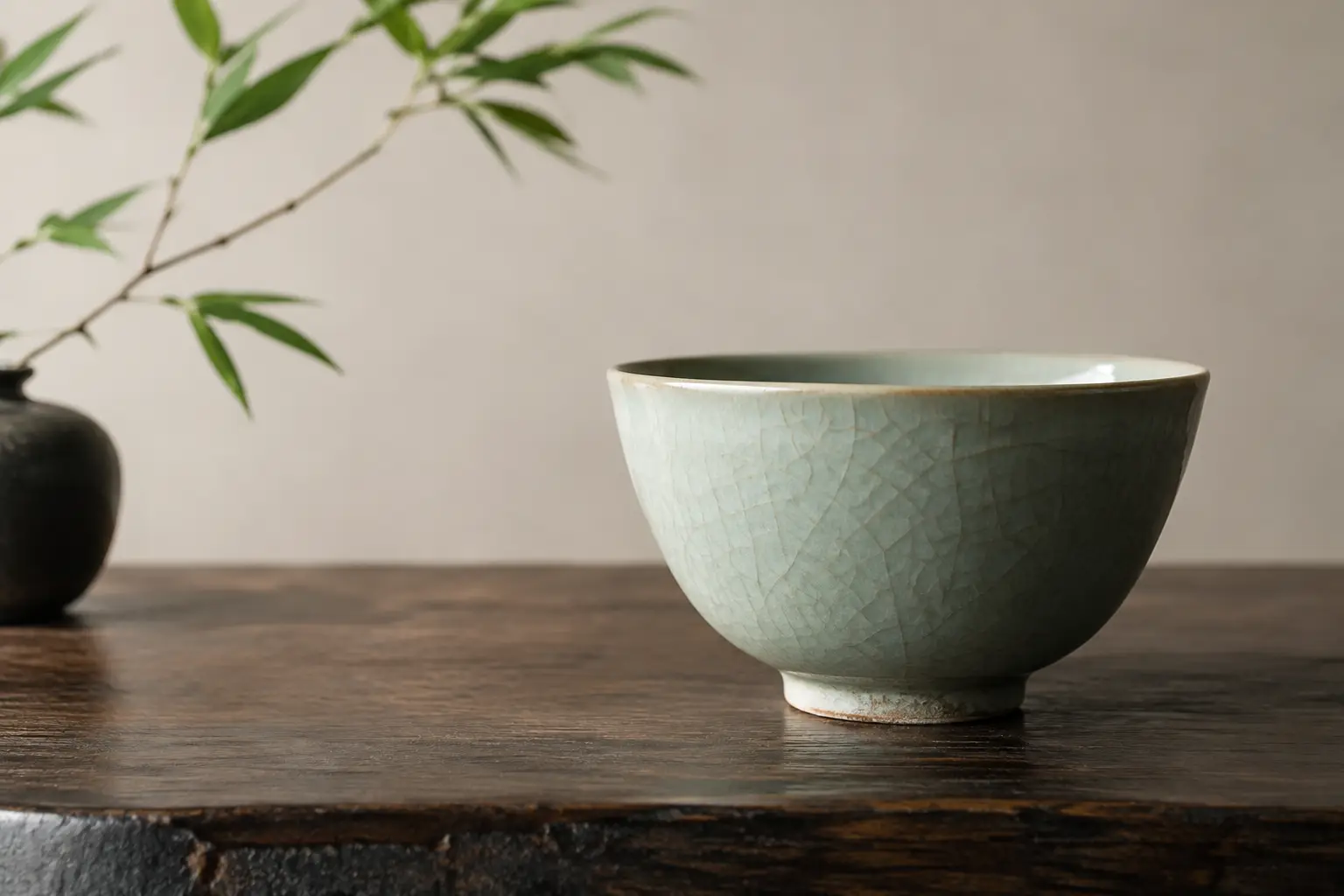

A Song bowl can appear almost disarmingly simple: a pale surface, a balanced curve, perhaps the faintest trace of crackle beneath its glaze. Yet Song dynasty ceramics hold an extraordinary world within those quiet details. They speak of imperial taste, accomplished kiln communities, tea culture and the maritime networks that carried Chinese wares across Southeast Asia and beyond.
For modern viewers accustomed to ornament and spectacle, the restraint of these works can be their greatest surprise. Their beauty is not announced loudly. It emerges in the way light settles on a celadon dish, in the deep blue-black sheen of a tea bowl, or in a form so perfectly proportioned that it feels inevitable.
Why Song Dynasty Ceramics Feel So Modern
The Song dynasty, which ruled China from 960 to 1279, is often regarded as one of the great high points of Chinese ceramic production. This was an age of urban prosperity, scholarly culture and sophisticated connoisseurship. Potters responded with wares that prized material sensitivity over decorative excess.
Rather than covering every surface with painted scenes, many Song potters allowed clay, glaze and fire to become the principal artists. A single glaze might pool darker at the foot of a vessel, turn milky at the rim, or reveal a fine network of crazing created as the body and glaze cooled at different rates. These effects were not always predictable, which is part of their enduring appeal.
The result feels remarkably contemporary. A Song vessel can sit comfortably beside modern design because it understands the power of space, silhouette and texture. Its elegance comes not from scarcity of effort, but from immense technical control.
A Culture of Looking Closely
Song ceramics reward patience. The first impression may be of stillness, but closer looking reveals movement in the surface: iron-rich speckles, ash deposits, subtle shifts in colour and the imprint of the potter’s hand.
This quality made such wares particularly suited to the rituals of tea, incense and the scholar’s table. A vessel was not merely a container. It helped create an atmosphere of contemplation. In a tea bowl, for example, the glaze could intensify the colour of whisked tea and turn an everyday act into a moment of attention.
The Great Kilns of the Song Dynasty
The term Song ware covers a wide range of objects, regions and techniques. No single style defines the period. Its strength lies in the distinct character of its kiln traditions, each shaped by local materials, firing methods and patrons.
Ru ware is among the most revered. Made for a brief period for the Northern Song court, it is known for its soft blue-green glaze and fine crackle. Surviving examples are exceptionally rare, and their restrained presence has made them touchstones of Chinese ceramic connoisseurship.
Guan ware, associated with imperial workshops after the Song court moved south, often features layered crackle patterns. These lines were not treated as flaws. They became part of the visual language of the object, giving the surface an aged, almost geological character.
Ge ware is celebrated for its pronounced network of dark and light crackle, while Ding ware is admired for its creamy white body and elegantly moulded decoration. Jun ware, with its opalescent blue glazes and occasional violet splashes, shows a more dramatic side of Song experimentation. Meanwhile, the kilns of Longquan produced celadons in luminous greens that would become especially important for export.
These categories are useful, but they should not encourage overly rigid viewing. Kiln identification can be complex, and later copies were made with great skill. For collectors and museum visitors alike, the pleasure begins with careful observation rather than quick labels.
Glaze, Fire and the Beauty of Imperfection
A Song ceramic is the result of a demanding collaboration between earth and heat. Clay had to be selected and refined; vessels were thrown, moulded or carved; glazes were mixed from mineral ingredients; and kilns were fired at carefully managed temperatures. A small variation in atmosphere could transform the final colour.
Celadon, for instance, gains its green tone from iron in the glaze fired in a reduced-oxygen environment. The colour may range from a cool bluish green to an olive or warmer jade-like shade. Its charm often lies in this variation. The finest pieces are not flatly uniform but full of depth.
Black-glazed wares from the Jian kilns offer a striking contrast. Their surfaces can show patterns known as hare’s fur or oil spot, produced by minerals moving through the glaze during firing. These bowls were prized in tea culture, where their dark interiors set off pale foam beautifully.
It is tempting to call these effects imperfect, but that misses the point. Song potters understood that controlled variation could make a vessel feel alive. The goal was not mechanical sameness. It was a finished object in which technical mastery allowed natural processes to remain visible.
From Chinese Kilns to Southeast Asian Seas
Song ceramics were never confined to palaces or scholars’ studios. They travelled widely through maritime trade, reaching ports across Southeast Asia, the Indian Ocean and the wider world. Durable, desirable and relatively compact, ceramics became one of the most significant cargoes of the period.
This trade transformed the history of porcelain and stoneware. A Longquan celadon bowl could be used in a coastal settlement far from its kiln of origin, appreciated both as a practical object and as a marker of connection to a prestigious trading culture. Local tastes mattered too. Export wares were not simply domestic Chinese goods sent abroad unchanged. Shapes, sizes and decoration could respond to the preferences of overseas markets.
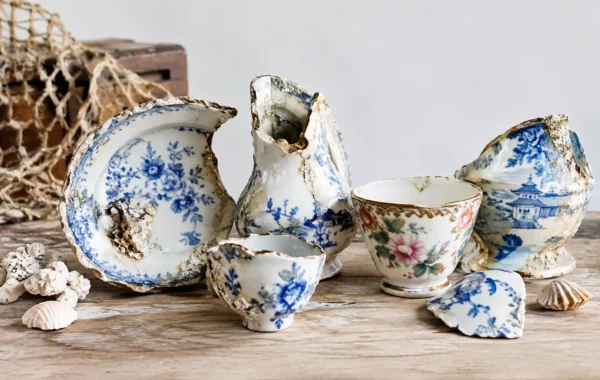
Shipwreck archaeology has made this story tangible. Ceramic cargoes recovered from wreck sites offer a rare snapshot of commercial life: stacks of bowls packed for transport, jars intended for storage, and modest everyday wares alongside finer examples. These finds reveal that maritime exchange was not an abstract route on a map. It was a demanding enterprise involving merchants, sailors, port communities and consumers across the region.
At Straits & Oriental Museum in George Town, shipwreck ceramics provide an especially compelling way to encounter this wider history. Objects once carried across dangerous waters are presented not simply as antiques, but as witnesses to the movement of people, taste and ideas through Asian seas.
How to Look at a Song Vessel
When standing before a Song bowl, dish or jar, begin with its silhouette. Is the rim gently flared, sharply cut or softly rounded? Does the foot lift the form lightly from the surface, or does the vessel feel weighty and grounded? Song potters were exceptional designers, and proportion is often the first clue to their confidence.
Then look at the glaze in changing light. Notice whether it gathers at carved lines or pools around the base. Look for tiny bubbles, crackle, iron flecks or a darker edge at the rim. These are not distractions from the object. They are its biography, recording the encounter between clay, mineral and flame.
Finally, consider use. Could the piece have held tea, food, flowers or precious materials? Was it made for courtly display, a household table or an export cargo? Context does not reduce beauty. It gives beauty a human scale.
Why These Ceramics Still Matter
Song ceramics challenge a modern habit of equating luxury with abundance. Their lesson is quieter: refinement can reside in a single curve, a difficult glaze, or the confidence to leave a surface largely unadorned. That lesson has travelled far beyond China, influencing collectors, artists and designers for centuries.
They also remind us that beauty has always moved across borders. A vessel shaped at a Chinese kiln, carried by ship through the Straits, and recovered centuries later carries more than aesthetic value. It carries evidence of exchange, risk, skill and shared taste.
The next time you encounter a Song piece, resist the urge to glance and move on. Give it a little time. In the soft green of a celadon glaze or the dark shimmer of a tea bowl, an entire maritime and cultural world begins to come into view.