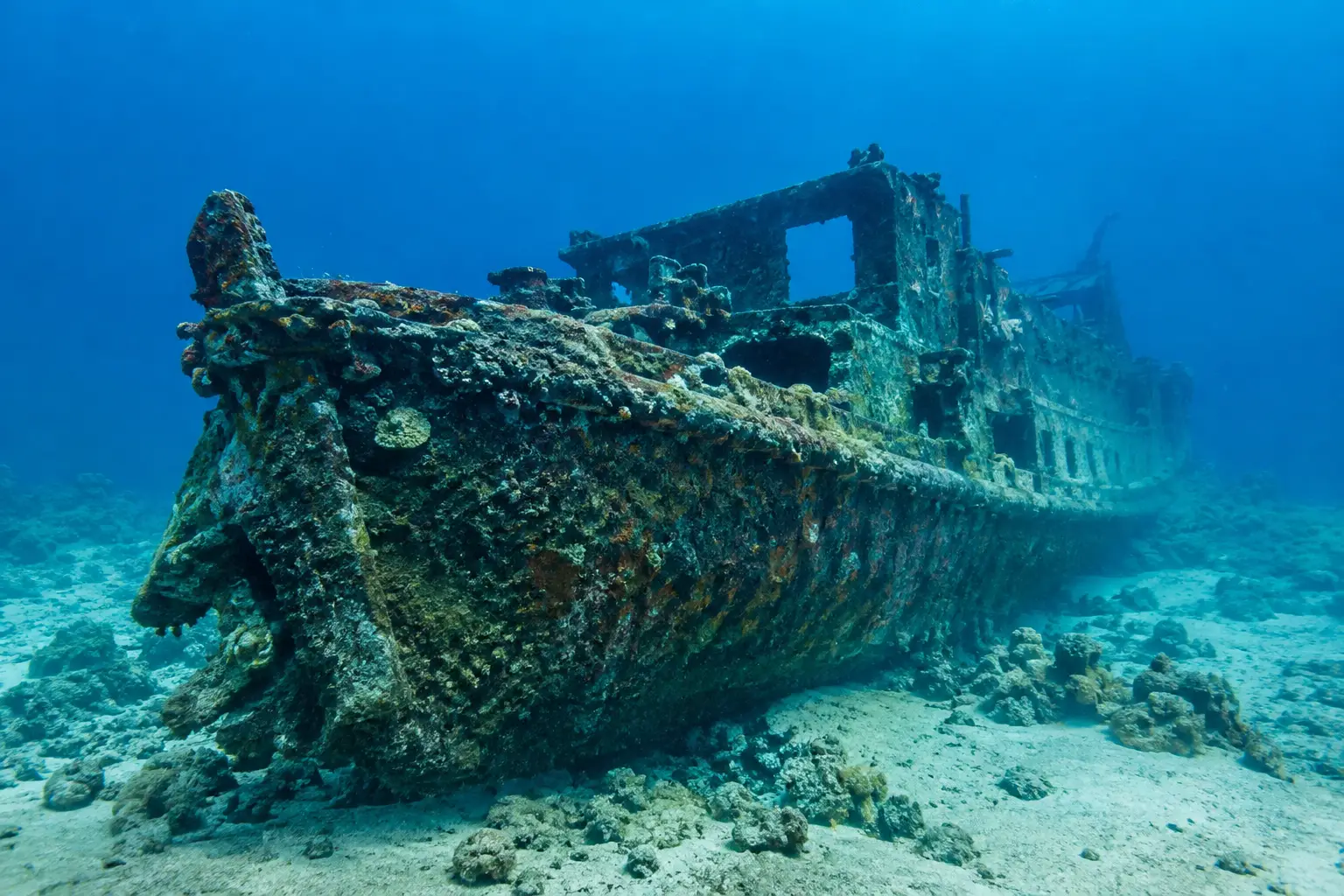

The question of when was Desaru wreck discovered has a clear answer: the wreck was found in 2001, off the coast of Desaru in Johor, on Malaysia’s south-eastern shoreline. Yet the date is only the opening chapter. Beneath the water lay the remains of a trading vessel whose cargo carries the visual language of a changing Asia: finely made Chinese ceramics, destined for buyers far beyond the kilns where they were formed.
For visitors drawn to maritime history, the Desaru Wreck offers something unusually immediate. A bowl, jar or blue-and-white dish is not simply an antique. It is evidence of taste, commerce, craftsmanship and risk – a surviving passenger from a sea journey that did not reach its intended end.
When Was the Desaru Wreck Discovered?
The Desaru Wreck was discovered in 2001. Its location, in waters off Desaru, places it close to one of the region’s most consequential maritime corridors. For centuries, vessels moving between China, Southeast Asia, the Indonesian archipelago, India and Europe passed through connected routes shaped by monsoon winds, ports of call and commercial demand.
The discovery brought a substantial ceramic cargo to public attention. The wreck is generally associated with the early nineteenth century, a period when Chinese export wares continued to travel widely across Asian markets. Its objects are especially valuable because they preserve a cargo in context: not ceramics selected much later by a collector, but goods assembled for trade, packed aboard a vessel, and held together by the accident of a shipwreck.
There is a useful distinction between a wreck being discovered and its artefacts being recovered, researched, conserved and displayed. These stages may take years. A discovery date tells us when the site entered the modern historical record; careful study is what allows the objects to begin telling their fuller story.
Why a 2001 Discovery Matters
A shipwreck is a time capsule, but not a perfect one. The sea can move cargo, damage hulls and scatter objects across the seabed. Even so, the relationship between the surviving pieces can reveal patterns that a single ceramic on a shelf cannot. Quantities, forms, decoration and manufacturing techniques all help specialists consider where goods were produced, who might have bought them and how they travelled.
The Desaru cargo belongs to a period of energetic regional exchange. Chinese porcelain and stoneware were valued not only for their beauty but also for their practicality. Glazed surfaces were durable and hygienic; bowls and dishes could be used every day; larger jars served storage and transport needs. At the same time, decoration signalled refinement. Blue-and-white wares, floral motifs and carefully balanced forms brought status to dining tables and homes across the trading world.
That combination of utility and desirability helps explain why ceramics were such a significant maritime commodity. They were fragile, certainly, but they were also portable, recognisable and prized. Their recovery from the Desaru Wreck gives modern audiences a direct view of what was being carried across the sea when the vessel was lost.
A Maritime Story Written in Porcelain
Porcelain is often admired for its surface: its luminous glaze, crisp painted detail or delicately potted body. The Desaru Wreck asks us to look further. Each object was part of a commercial system that depended on potters, merchants, packers, sailors, intermediaries and coastal communities. A piece may have begun in a Chinese kiln town, passed through a merchant network, been loaded at a port and then faced weeks or months at sea.
Its intended destination cannot always be stated with absolute certainty. Maritime archaeology works through material clues, historical comparisons and informed interpretation rather than convenient certainties. The mix of shapes within a cargo can suggest the preferences of particular markets, while decorative styles can indicate a production era. However, trade routes were rarely simple. Cargoes could change hands, ships could call at several ports, and goods might have been intended for more than one market.
This is precisely what makes wreck ceramics so compelling. They speak of a connected region without pretending that the past was neat or predictable. The sea linked communities, but it also introduced delay, danger and loss. The Desaru vessel did not complete its voyage. Its cargo, however, survived long enough to offer a remarkable account of that world.
What the objects reveal
The most evocative artefacts from shipwreck cargoes are often the most familiar: a small cup, a serving dish, a lidded box or a storage jar. Their familiarity makes their age more affecting. These were not made as museum pieces. They were made to be used, gifted, sold and admired.
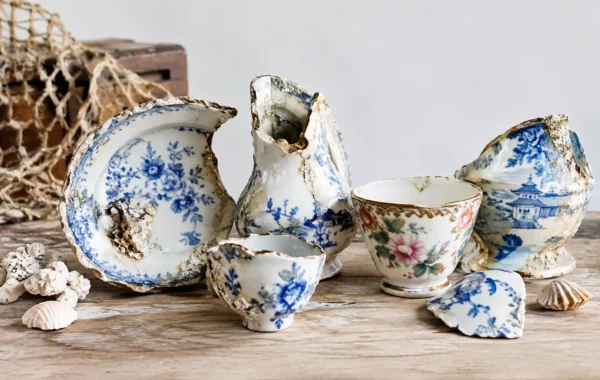
When viewed together, ceramics from the Desaru Wreck show the range of wares that travelled through nineteenth-century Asian commerce. Variation in form matters. A large jar has a different domestic and commercial purpose from a tea bowl; a carefully decorated plate speaks to display as well as dining. The cargo therefore gives us a textured view of daily material life, not merely a catalogue of luxury objects.
Condition matters too. Sea burial can leave marine accretions, staining or wear, while conservation can stabilise an artefact without erasing its journey. Those marks are part of the object’s biography. They remind us that the beauty of shipwreck porcelain is inseparable from the water that concealed it.
From Seabed Find to Cultural Heritage
The journey from recovery to display requires patience and judgement. Artefacts must be documented, cleaned where appropriate, conserved and studied. Provenance matters deeply. It gives an object its historical setting and helps distinguish a meaningful archaeological assemblage from a beautiful but disconnected antique.
For collectors, this context adds a different kind of value. Rarity and condition remain relevant, but a shipwreck ceramic carries an additional narrative: it belonged to a documented cargo and survived a particular maritime event. For families and first-time museum visitors, that same context turns an object into an accessible story. A child can understand that the dish before them once travelled underwater for generations; a history enthusiast can begin asking where it was made and whom it was meant to reach.
This is why shipwreck collections deserve to be encountered slowly. The finest displays do not reduce ceramics to decorative treasure. They restore the human scale of maritime exchange: the hands that made the pieces, the crews who sailed with them and the communities whose tastes shaped the trade.
Seeing the Desaru Wreck in a Wider Regional Context
The Desaru Wreck does not stand alone. Southeast Asian waters have yielded vessels from many eras, each preserving a different moment in the long history of exchange across the South China Sea and beyond. Together, these finds show that the Malay Peninsula was never at the edge of Asian maritime history. It was close to its currents.
In George Town, Straits & Oriental Museum presents authentic shipwreck ceramics as part of a wider journey through the region’s seafaring past. Seeing Desaru material alongside artefacts associated with other wrecks encourages useful comparison. Some cargoes reflect earlier tastes and technologies; others reveal later commercial networks. The continuity is striking: for centuries, ceramics crossed the sea as both practical goods and objects of cultural prestige.
The comparison also guards against a common misconception. Shipwreck finds are not simply treasures retrieved from the deep. They are historical archives. Their significance lies in their capacity to connect object, ship, route, market and moment in time.
The Date Is an Invitation to Look Closer
So, the Desaru Wreck was discovered in 2001. Remembering that date matters because it marks the return of an interrupted voyage to public memory. But the more rewarding question may be what the discovery allows us to see: a nineteenth-century trading world rendered in porcelain, still vivid in its colour, form and quiet evidence of human ambition.
The next time you stand before a wreck-recovered bowl or jar, pause before admiring its decoration alone. Consider the distance it travelled, the sea that kept it hidden and the remarkable chance that lets its story be told today.