
A bowl raised from the seabed can hold far more than a beautiful glaze. It can reveal where a ship was loaded, which ports it may have called at, what its merchants expected to sell, and how far an object travelled before disaster interrupted its voyage. Shipwreck trade routes turn scattered ceramic cargoes into remarkably vivid evidence of the maritime networks that connected China, Southeast Asia, India and beyond.
For centuries, the seas around the Malay Peninsula were not a distant edge of the world. They were a vital passage between oceans. Seasonal winds, narrow straits and thriving port settlements shaped the movement of goods and people, creating a maritime world in which porcelain could be made in China, exchanged through Southeast Asian entrepôts and prized in households thousands of miles away.
Why Shipwreck Trade Routes Matter
Written records tend to preserve the voices of courts, officials and powerful merchants. A shipwreck tells another kind of story. Its cargo can include everyday bowls alongside finely painted dishes, storage jars, cooking wares, metal goods and personal possessions. Together, these objects show what was actually travelling across the water, not merely what was intended to be traded.
Ceramics are especially revealing. They survive beneath the sea more readily than textiles, timber and foodstuffs, and their forms, glazes and decorative styles often help specialists identify where and when they were produced. A ship carrying large quantities of similar wares may point to organised commercial demand. A more varied cargo can suggest that merchants were supplying several markets along one journey.
The value of these finds lies in context. One recovered jar is intriguing; hundreds of objects found together can illuminate an entire commercial system. Their arrangement in the hold, their condition and the presence of other materials all contribute to the historical picture.
The Monsoon Highways of Asia
Before steam engines made regular schedules possible, wind governed maritime commerce. The monsoon system provided a dependable, if demanding, rhythm. Mariners planned departures around seasonal wind patterns, sailing in one direction during one part of the year and waiting in port for favourable conditions to return.
This made coastal settlements and sheltered harbours essential. Ships did not always travel from one grand destination to another without pause. They stopped to replenish water and provisions, repair hulls, meet local brokers, sell part of a cargo or take on new goods. Trade routes were therefore not simple lines on a map. They were a web of coastal exchanges, personal relationships and calculated risks.
The Strait of Malacca was among the most consequential corridors in this network. Its position between the Indian Ocean and the South China Sea made it a natural gateway for vessels moving between China, the Indonesian archipelago, the Indian subcontinent and the wider western Indian Ocean. Control of a port along this passage could bring considerable influence, while safe anchorage and local knowledge were just as valuable as a ship’s cargo.
For visitors to George Town, this history gives the surrounding waters a new significance. Penang sits within a region long shaped by maritime movement, where languages, cuisines, craft traditions and commercial ambition arrived by sea as surely as porcelain did.
Porcelain as Trade, Status and Daily Life
Chinese porcelain was one of the most recognisable commodities carried along Asian sea routes. Its appeal was practical as well as aesthetic. Fired at high temperatures, it was durable, relatively hygienic and often beautifully finished. It could serve at a grand table, in a shrine, or in an ordinary household.
Yet porcelain was never one uniform luxury. Fine blue-and-white pieces and carefully decorated wares could signal status, while simpler bowls and jars served broad markets. Kilns adapted forms and decoration for overseas buyers, responding to local tastes and patterns of use. A vessel’s cargo may therefore reveal the preferences of consumers far from the place where the ceramics were made.
This is why shipwreck collections complicate the familiar idea of luxury trade. Some cargoes contained rare objects intended for elite patrons. Others carried substantial quantities of practical tableware, evidence that maritime commerce reached well beyond courts and palaces. The same sea lanes carried prestige, utility and aspiration together.
What a Wreck Can and Cannot Tell Us
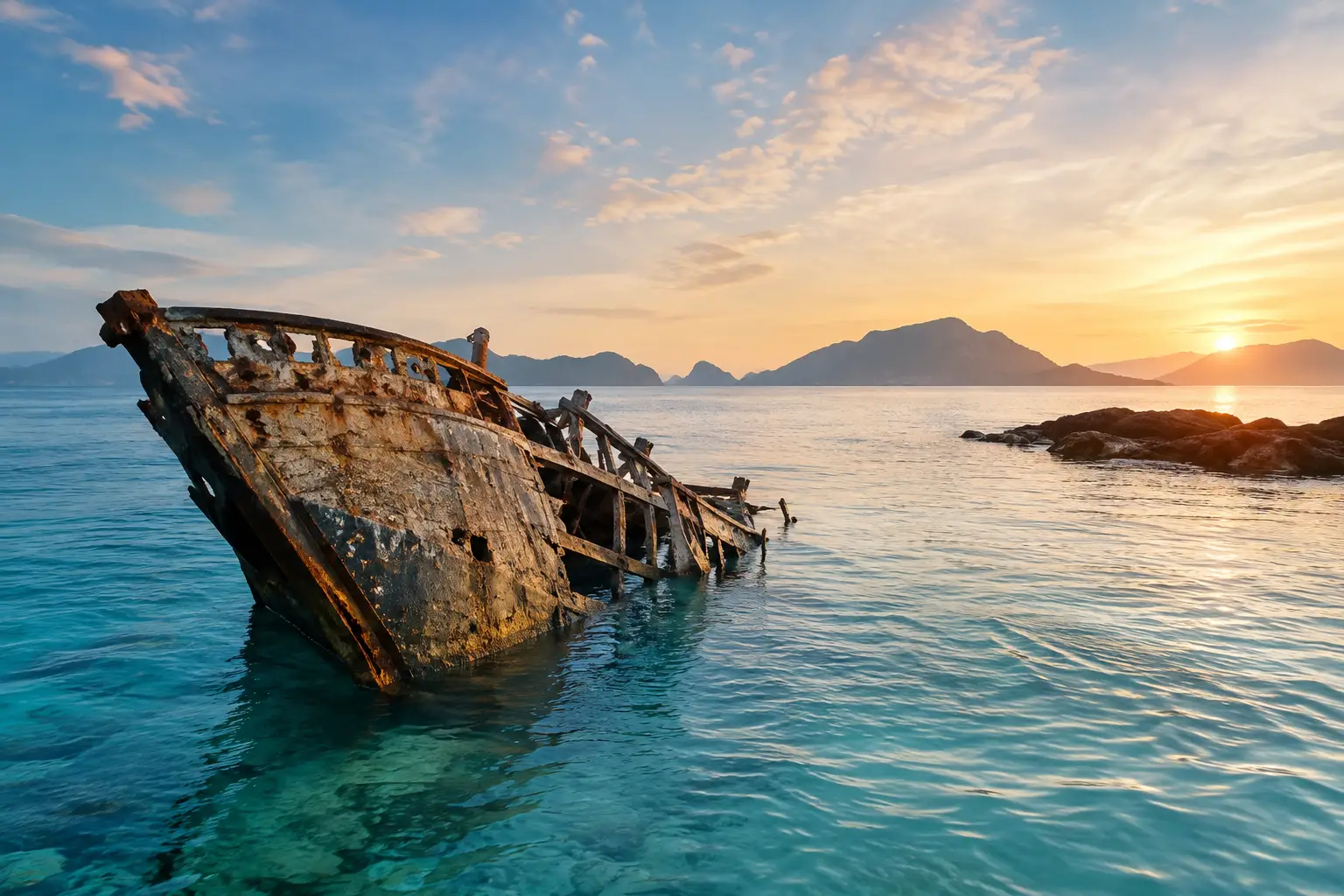
There is understandable romance in a sunken ship: a sudden storm, a reef unseen at night, a vessel overwhelmed by waves. But maritime archaeology calls for restraint. A wreck may preserve a moment in time, yet it rarely provides every answer.
A cargo shows what was aboard when the ship sank, not necessarily its complete itinerary. Some goods may have been loaded at an earlier port, others acquired shortly before the loss. Objects might have been intended for a final destination, for sale at intermediate ports, or as provisions for those on board. The absence of a commodity is not proof that it was never traded on that route.
Dating also requires care. Ceramics can remain in circulation for years, and styles may overlap between periods. Archaeologists compare multiple kinds of evidence: ceramic typology, coins, ship construction, inscriptions, timber analysis and the find location. The strongest interpretations emerge when these clues support one another.
That measured approach makes the stories more compelling, not less. Rather than forcing a neat narrative onto the past, it honours the complexity of ancient trade. Every recovered piece is both evidence and invitation: evidence of a world already connected, and an invitation to ask who made it, handled it, bought it and used it.
A Maritime Network, Not a Single Silk Road
The phrase Maritime Silk Road is useful, but it can imply one tidy route and one dominant commodity. The reality was more diverse. Ships carried ceramics, spices, aromatics, forest products, metals, textiles and foodstuffs. They also carried skills, religious ideas, artistic motifs and communities whose lives crossed linguistic and political boundaries.
Routes shifted with weather, warfare, taxation, piracy, changing port fortunes and demand. A harbour could flourish because it offered fresh water, skilled labour or a ruler willing to protect merchants. Another could decline when sediment altered its access or when traders found a more favourable place to exchange goods. Maritime history is a history of movement, but also of adaptation.
The wrecks known today as Wanli, Turiang, Royal Nanhai, Nanyang, Xuande and Desaru each belong to this larger story. Their ceramics are not simply treasures recovered from the sea. They are material witnesses to different moments in Asian commerce, when tastes changed, kilns responded and seafarers navigated the opportunities and dangers of long-distance exchange.
Reading the Sea Through Ceramic Collections
A museum encounter restores scale to objects often admired only for their surface beauty. To stand before a group of shipwreck ceramics is to see repetition as well as rarity: stacks of bowls made for trade, jars designed for transport, decorative wares created to catch a buyer’s eye. Their collective presence suggests a bustling commercial world with standards, supply chains and customers.
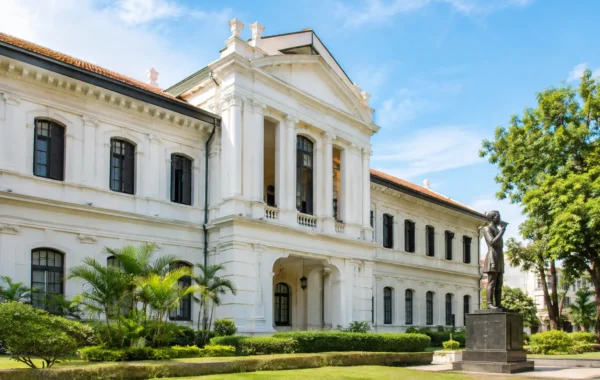
At Straits & Oriental Museum, authentic artefacts recovered from notable Asian shipwrecks offer a tangible way to read these connected histories. The experience is not limited to identifying dynasties or decorative patterns. It is about recognising that a porcelain vessel, preserved beneath the sea, once travelled through a living world of sailors, merchants, port communities and households awaiting goods from afar.
Look closely at the evidence of use and movement. A small imperfection in a glaze, a familiar floral motif, or the sheer number of near-identical bowls can prompt a more human question: who was this made for? Such questions bring the past within reach, without reducing its mystery.
The next time you encounter a shipwreck ceramic, pause before admiring it merely as an antique. Trace its possible journey in your mind: from kiln to warehouse, from port to ship, through monsoon seas and across a route that connected whole societies. That quiet act of imagination is where maritime history becomes personal.