
A porcelain bowl raised from the seabed can carry the imprint of a kiln, the ambition of a merchant and the memory of a voyage cut short. That is the enduring power of an antique gallery collection: it turns beautiful objects into evidence of the lives, exchanges and ideas that shaped our world.
For visitors, collectors and curious families alike, antiques are most compelling when they are not treated as isolated treasures behind glass. A considered collection gives each piece a place in a larger story. It reveals where an object was made, how it travelled, who may have used it and why it survived long enough to reach us.
An Antique Gallery Collection Is a Living Record
The word “antique” can suggest rarity, age and refinement. All are part of its appeal, but they are not the whole picture. The finest collections also preserve context. A blue-and-white dish, for example, is not simply an attractive decorative object. Its clay, glaze, painted motifs and form may point towards a particular workshop, dynasty, market or route of exchange.
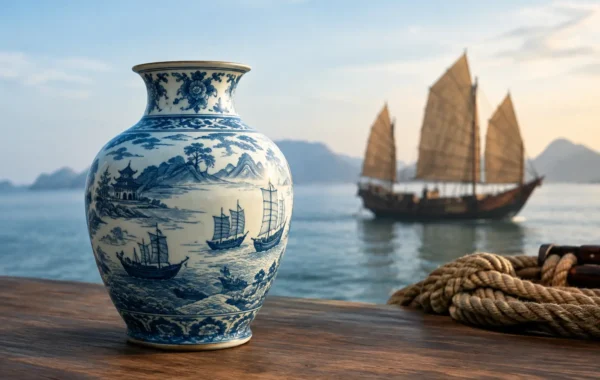
This matters especially in Southeast Asia, where the sea connected communities long before modern borders and airports. Merchant vessels moved ceramics, spices, textiles, metals and beliefs between China, the Malay Archipelago, India, the Middle East and Europe. When a shipwreck is rediscovered, its cargo offers an unusually vivid record of this movement. Objects intended for trade become a time capsule of taste, technology and commerce.
Shipwreck ceramics hold a particular fascination because they were both practical and precious. They were made in quantity, yet their quality could be extraordinary. They travelled vast distances, often packed tightly in a ship’s hold, and many remained untouched beneath the water for centuries. Their survival allows us to see global trade not as an abstract idea, but in the weight of a jar, the curve of a ewer and the luminous surface of porcelain.
Looking Beyond Age and Ornament
It is easy to be drawn first to colour and pattern. A celadon vessel has a quiet, jade-like glow; a painted plate can feel unexpectedly modern in its confidence and rhythm. Visual pleasure is a valid place to begin. Yet a gallery experience becomes richer when visitors pause to ask a few simple questions.
Who made this? Where was it intended to go? What did it mean to the people who bought it? Was it a luxury object, an everyday vessel or a diplomatic gift? These questions bring historical objects closer rather than making them remote. They remind us that every artefact began as something made by human hands for human use.
The answer is not always certain. Maritime archaeology works with evidence, comparison and careful interpretation. A fragment may identify a cargo’s origin but not its individual owner. A decorative motif may suggest an intended market without proving that it arrived there. This uncertainty is not a weakness. It is part of the discipline’s integrity, and it invites visitors to recognise the difference between a compelling story and a claim supported by research.
Why Provenance Deserves Attention
For collectors, provenance is the documented history of an object’s ownership, discovery or exhibition. For the public, it is equally significant. Provenance helps establish whether an artefact has been acquired and presented responsibly, while also adding depth to its story.
An object with a known archaeological context can tell us far more than one removed from its original setting without record. On a shipwreck, the placement and quantity of ceramics can reveal trading patterns and packing methods. Associated finds, from coins to navigational equipment, can help date a vessel and illuminate the conditions of its final journey.
There is a practical distinction to make here. Not every old object has complete documentation, and gaps are common in historic collecting. Age alone does not guarantee importance, nor does a prestigious-looking appearance guarantee authenticity. Visitors and prospective buyers should value transparency, scholarly attribution and clear descriptions over dramatic claims.
A responsible gallery does not diminish wonder by supplying this information. It strengthens it. The more clearly an object’s route to the present is understood, the more confidently its beauty can be appreciated.
The Craft Behind the Cargo
Porcelain is often admired for its delicacy, but its production required formidable skill. Potters selected and refined materials, formed vessels, applied glazes and controlled kiln conditions with remarkable precision. A slight variation in heat or minerals could transform the finished colour. The results ranged from soft, misty celadons to crisp white bodies painted with cobalt blue.
These technical achievements were recognised far beyond their place of manufacture. Ceramics became desirable across oceans because they combined utility with status. A bowl was a vessel for food, but it could also signal prosperity, taste and access to far-reaching commercial networks.
When displayed together, pieces from different periods and wrecks show both continuity and change. One can observe familiar forms adapted for new markets, motifs reshaped by cultural exchange, and the steady refinement of firing and glazing techniques. This is where an antique gallery collection becomes more than a display of individual masterpieces. It becomes a conversation across centuries.
A Collection Should Reward Slow Looking
A museum visit need not be rushed to be memorable. The most rewarding encounters often happen when one object receives a little more time than expected. Notice the unevenness of a hand-painted line, the tiny firing mark beneath a foot ring or the way a vessel’s shape guides the hand. Such details restore a sense of the maker’s presence.
For families, slow looking can become a shared game. Compare two dishes and ask which travelled farther, which might have been harder to make, or which design feels closest to something used at home today. Children do not need a formal lesson to engage with heritage. They need an invitation to notice.
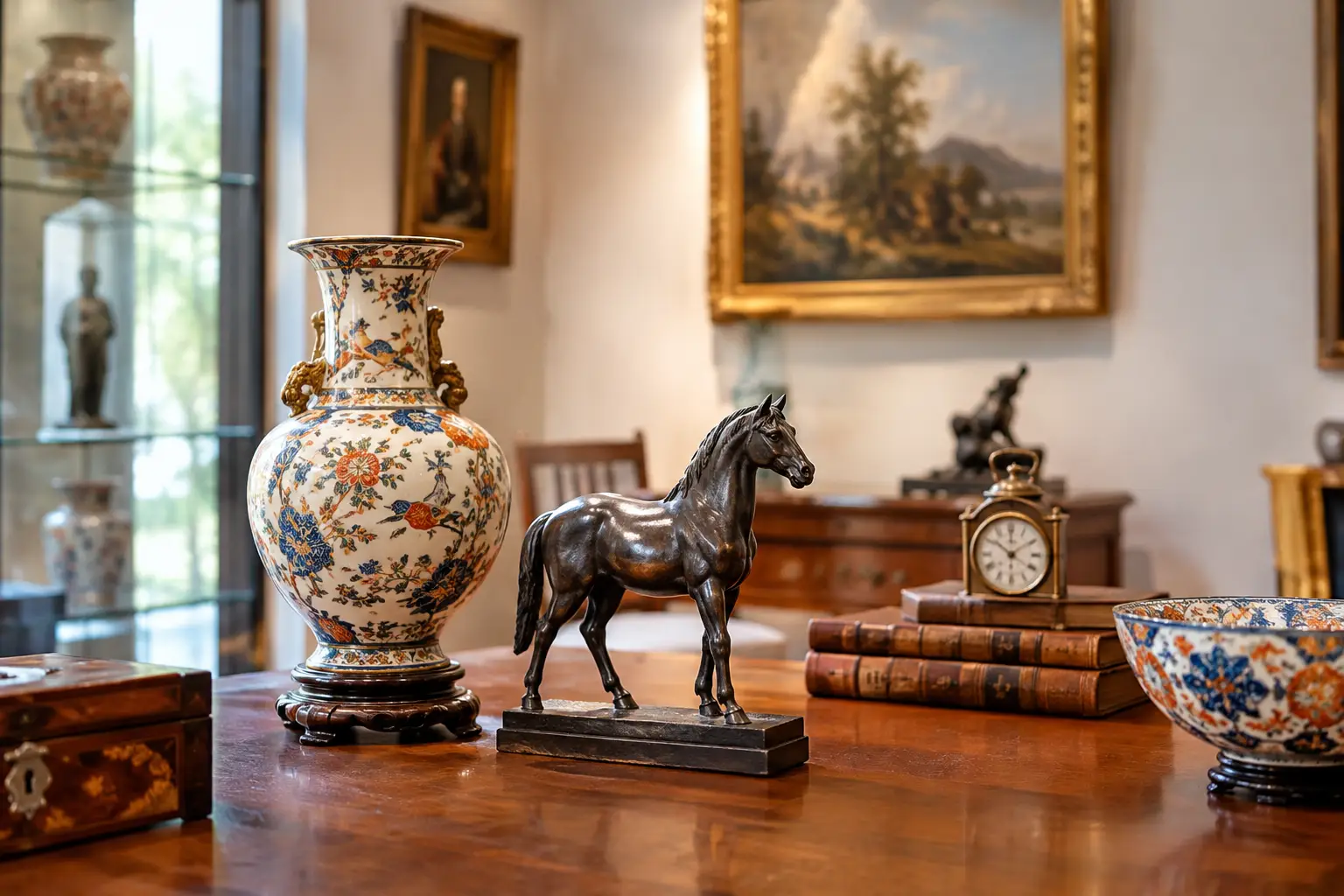
For seasoned collectors, the pleasure may lie in distinctions of form, kiln, condition or period. But even expertise benefits from a broader setting. A single piece can be appreciated for its rarity; a collection allows it to be understood through relationships. Similar objects reveal variation, while contrasting pieces reveal the reach of trade and the changing preferences of buyers.
Heritage With a Sense of Place
George Town is particularly suited to this kind of encounter. Its historic streets speak of migration, trade and layered cultural influence, making maritime collections feel connected to the city beyond the gallery walls. A visit can move naturally from artefacts of seaborne exchange to the living food, architecture and hospitality of a port city shaped by those same currents.
At Straits & Oriental Museum, shipwreck ceramics from notable Asian wrecks offer this wider perspective. The experience places porcelain within the story of the sea, while allowing visitors to extend their cultural outing through art, dining and conversation. It is heritage presented not as a closed chapter, but as something that continues to inform how we gather, trade and tell stories.
What to Bring Home From a Visit
The best souvenir from an antique collection is not simply a photograph of a beautiful object. It is a changed way of seeing. A ceramic plate at a market, a pattern on a café cup or a cargo vessel crossing the horizon can become a reminder of the long histories contained in ordinary things.
When you next stand before an ancient bowl or jar, look past its surface before admiring it again. Consider the hands that made it, the ship that carried it and the chance that allowed it to endure. That small act of attention is where a historic object begins to feel wonderfully alive.