
George Town rewards the curious traveller. Ask what should tourists visit in George Town? and the best answer is not a single monument, but a sequence of places that reveals how a trading port became one of Southeast Asia’s most characterful historic cities. Here, Chinese clan houses, Indian temples, colonial civic buildings, living jetties and quietly remarkable collections sit within walkable streets shaped by centuries of exchange.
A satisfying visit is less about ticking off every landmark than allowing time for the details: carved timber screens, incense drifting from a shrine, porcelain set into a courtyard wall, a mural glimpsed down a lane, and a meal that reflects several communities at once. Begin early, walk with purpose, then leave room for an unhurried cultural pause.
What should tourists visit in George Town first?
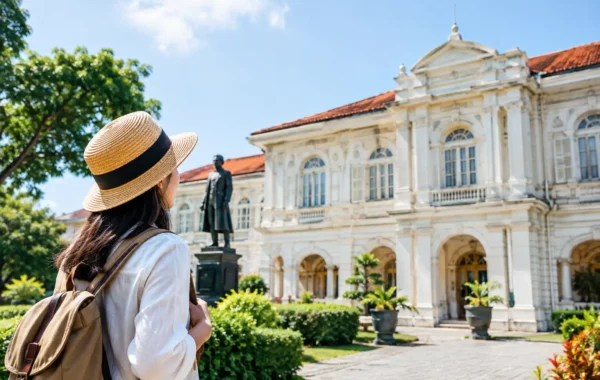
Start in the UNESCO World Heritage core, where the city’s historic architecture is most concentrated. George Town is best understood on foot, particularly in the morning before the heat rises and the streets become busy. Its great pleasure lies in contrast: an ornate temple may stand minutes from an Art Deco façade, while a traditional shophouse opens onto a contemporary gallery or café.
Khoo Kongsi and the world of clan heritage
Khoo Kongsi is one of the essential stops. More than a beautiful building, it is a monumental expression of Chinese community life in Penang. The richly decorated clan house, with its gilded carvings, painted panels and imposing courtyard, speaks of migration, mutual support and mercantile success. Look beyond the main hall: the surrounding lanes and terraces help explain how family, trade and neighbourhood were once closely intertwined.
This is an especially rewarding visit for travellers who enjoy architecture with a human story. Arrive when it opens if possible, as the craftsmanship is easier to appreciate before the crowds gather.
Armenian Street and the art of looking closely
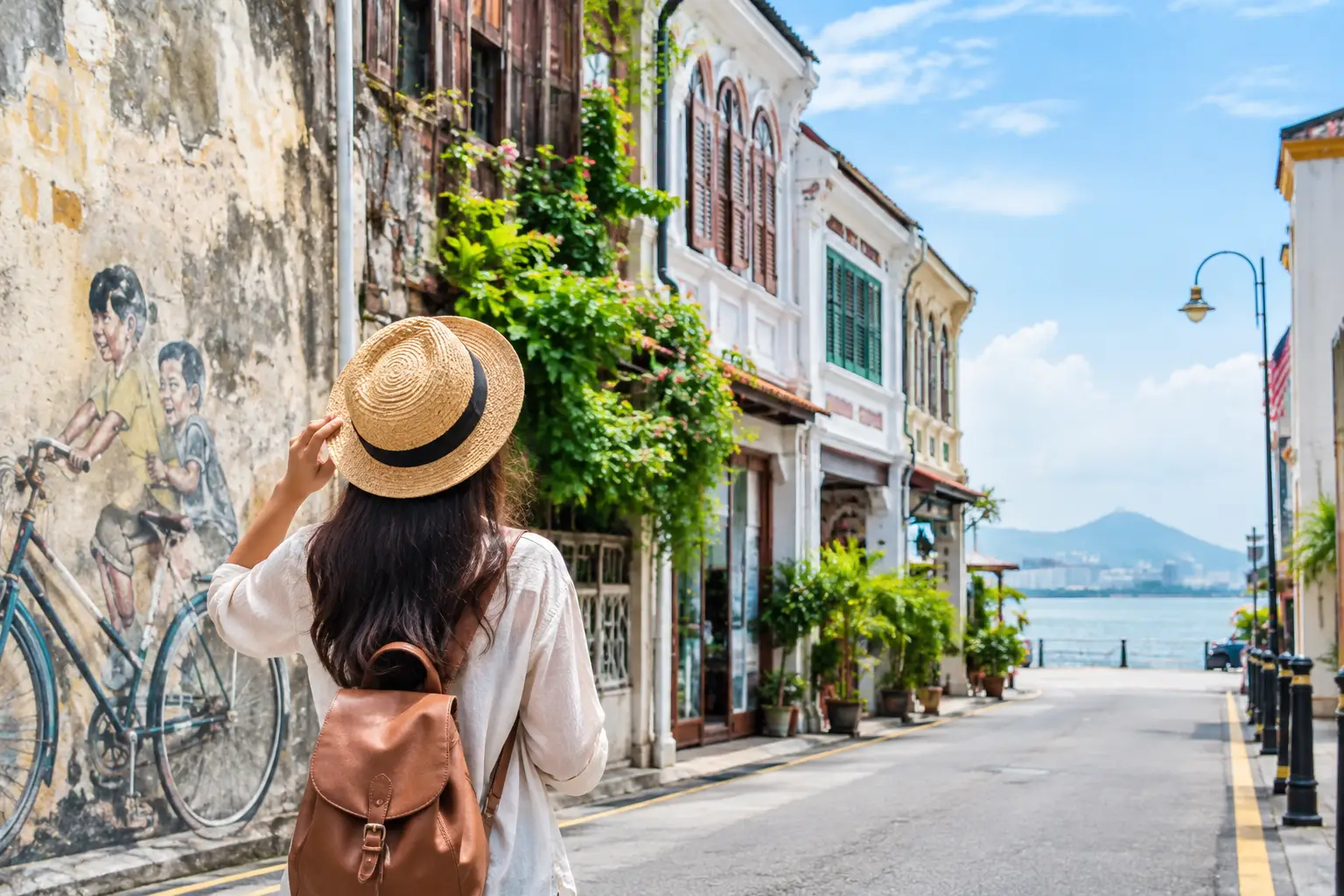
From the clan houses, wander towards Armenian Street and its adjoining lanes. This area is known for street art, but it deserves more than a quick photograph. The murals are part of a wider urban fabric of workshops, restored shophouses, small galleries and former merchant premises. The best approach is to treat the artworks as prompts to explore rather than the sole destination.
The area can become crowded in the middle of the day. If your holiday itinerary allows, visit in the morning for architecture and atmosphere, then return later for its livelier evening character. Those travelling with children may enjoy the playful artworks; serious photographers will prefer the softer light and quieter streets at either end of the day.
Visit George Town’s great houses and collections
George Town’s heritage is not confined to public monuments. Its private houses and specialist museums reveal the tastes, trade networks and domestic rituals that shaped Penang’s cosmopolitan identity.
The Cheong Fatt Tze Mansion, often recognised by its distinctive indigo-blue exterior, offers a particularly vivid introduction to the world of a late nineteenth-century merchant household. Visits are generally structured around guided entry, so it is wise to check the day’s arrangements before building your route around it. Its value lies in the detail: Feng Shui principles, imported materials and carefully restored interiors turn an elegant residence into a story of regional commerce and ambition.
For a different perspective, the Pinang Peranakan Mansion presents the decorative richness of Peranakan life. Furnishings, costume, tableware and family objects illuminate a culture shaped by Chinese heritage, Malay influences and colonial-era trade. It is a useful counterpoint to the city’s religious and civic landmarks because it shows how history was lived at home.
For visitors drawn to objects with a longer voyage behind them, Straits & Oriental Museum offers a distinctive cultural interlude. As Penang’s first integrated heritage and lifestyle museum, it presents authentic porcelain and ceramic artefacts recovered from Asian shipwrecks, including the Wanli, Turiang, Royal Nanhai and Nanyang. These pieces are not merely decorative remnants. They are evidence of the sea routes that carried craft, wealth and ideas across Asia, and they place Penang’s maritime setting in a far wider historical story.
Temples, mosques and the city’s living faiths
George Town’s religious buildings are not a heritage backdrop. They remain active places of devotion, and visitors should enter with consideration: dress modestly, follow any instructions at the entrance and avoid interrupting worship.
Kapitan Keling Mosque is among the most recognisable landmarks, its pale domes and graceful frontage reflecting the long-established Indian Muslim community. Nearby, Sri Mahamariamman Temple brings colour, sculpture and ceremony to Little India, while the Goddess of Mercy Temple offers a more intimate encounter with Chinese religious tradition. Seen together, these places make the city’s plural identity tangible.
Little India is worth visiting for more than its temples. Its spice shops, textile displays and sweet counters create a sensory change of pace from the quieter heritage lanes. It is an excellent place to pause for a drink or a simple meal, particularly if you want your sightseeing to include the everyday life of the city rather than only its photographed façades.
Walk to the water and the Clan Jetties
No answer to what tourists should visit in George Town is complete without the waterfront. Penang’s fortunes were built on the sea, and the Clan Jetties offer one of the most immediate reminders of that relationship. These wooden settlements, reached by narrow walkways, were established by Chinese communities connected through family and occupation. They are homes first and visitor attractions second.
Chew Jetty is the best known and easiest for first-time visitors to find. Go respectfully, keep voices low and do not treat private doorways as photo props. The experience is strongest when you notice the practical details of waterside life: shrines, drying laundry, small boats and the changing view back towards the city.
Continue along the waterfront to absorb a different chapter of Penang’s history. Fort Cornwallis, near the Esplanade, recalls the early British colonial period and makes sense as part of a wider walk rather than a full-day destination on its own. The surrounding open space is welcome after the dense streets of the old town, particularly near sunset.
Make time for George Town’s food culture
A heritage itinerary without food misses a central part of the city’s character. George Town’s cooking reflects the same movement of people that shaped its architecture: Chinese, Malay, Indian, Peranakan and other traditions meet in dishes that are proudly local.
There is no single correct place to eat. Hawker centres offer variety and energy, while older coffee shops often excel at one or two signature dishes. A more refined dining room may suit travellers looking to slow the pace between museum visits. The sensible choice depends on your appetite, dietary needs and tolerance for queues. Rather than attempting every celebrated dish in one day, choose a few flavours and give them your attention.
For a late-afternoon pause, seek out a café or bar within a restored shophouse. George Town is particularly good at turning historic interiors into hospitable contemporary spaces, and this is where the city’s heritage and lifestyle sides meet most naturally.
A considered one-day route through George Town
If you have just one full day, begin with Khoo Kongsi and the lanes around Armenian Street. Continue to a house museum or maritime collection before lunch, then spend the afternoon between Little India, the religious quarter and the waterfront. Finish at the Clan Jetties or the Esplanade as the light softens.
With two days, resist the urge to simply add more stops. Use the extra time to revisit a district at a different hour, take a guided tour of a historic house, browse independent shops or settle over a longer meal. George Town is not a city that gives up its character at speed.
The most memorable visit is likely to be the one that combines a celebrated landmark with a quieter discovery: a piece of shipwreck porcelain that has crossed centuries, a temple bell sounding from an alley, or a sea breeze at the end of an old wooden jetty. Leave space in your plans for those moments. They are often where George Town stays with you.