
A single landing in 1786 changed the destiny of an island and, in time, the wider Straits. The founding of Penang by the British was not a decorative episode of imperial pageantry. It was a calculated maritime move – driven by trade, rivalry, and the search for a secure harbour – that transformed Penang into one of Southeast Asia’s most important port settlements.
To understand why Penang matters, it helps to begin at sea. Long before formal British rule, the waters around the Malay Peninsula carried merchants, pilgrims, soldiers, ceramics, spices, textiles, and silver. Penang entered British hands because it occupied a strategic position within those older Asian trading worlds. The British did not create maritime exchange here from nothing. They inserted themselves into a region already shaped by movement, negotiation, and competition.
Why the British wanted Penang
By the late eighteenth century, the British East India Company needed a stronger presence in the Straits. Its merchants were looking for a port that could serve several purposes at once: a naval station, a repair point for ships, a trading base free from Dutch interference, and a convenient stop on the route between India and China.
At the time, the Dutch were a major commercial rival in the region. Their influence over existing ports made British trade vulnerable. The Company therefore wanted a harbour it could control more directly, especially one that could support the lucrative China trade. Tea, silk and porcelain were all part of this wider commercial web, and maritime routes through Southeast Asia were essential to it.
Penang offered clear advantages. The island sat near the northern entrance to the Strait of Malacca, close enough to major sea lanes to be useful, yet distinct enough to be developed as a British base. It had a natural harbour and access to fresh water, timber, and provisions. Above all, it offered strategic convenience. For an expanding maritime power, convenience often becomes destiny.
The founding of Penang by the British and Francis Light
The name most closely associated with the founding of Penang by the British is Captain Francis Light. He was not simply a naval adventurer planting a flag on an empty shore. He was a trader, negotiator and political intermediary who had spent years in the region and understood that diplomacy with local rulers would be decisive.
At the time, Penang formed part of the Sultanate of Kedah. Kedah faced serious regional pressures, particularly from Siam and Burma, and sought alliances that could strengthen its position. Light recognised this vulnerability and saw an opportunity. He entered into negotiations with Sultan Abdullah Mukarram Shah of Kedah, offering the prospect of British protection in exchange for the cession of Penang.
This is where the story becomes more complicated than the familiar founding legend. The Sultan believed British military support would follow. Light either implied this more strongly than he was authorised to do or assumed the Company would later approve it. In practice, the East India Company was far less willing to guarantee Kedah’s defence than the Sultan expected. That gap between promise and policy would have lasting consequences.
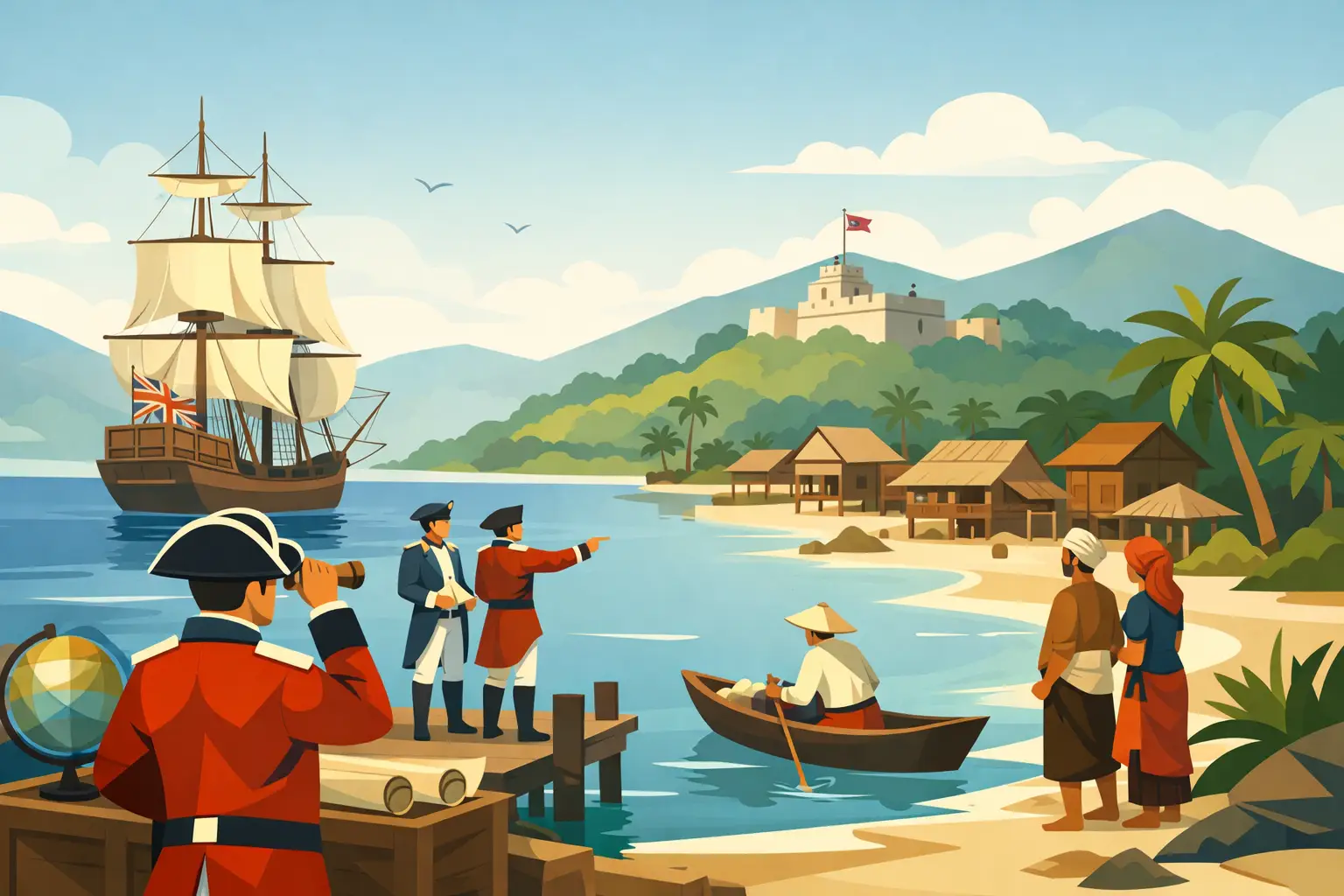
On 11 August 1786, Light formally took possession of the island on behalf of the British East India Company. He renamed it Prince of Wales Island, while the new settlement at the north-eastern point became George Town, named after King George III. The ceremonial language was British; the realities were regional, commercial and deeply contested.
A port is founded, not merely claimed
Taking possession was only the beginning. For Penang to succeed, it had to attract people, cargo and capital. Light understood this better than many imperial administrators. He moved quickly to establish Penang as a free port, a decision that proved far more important than the renaming ceremonies.
A free port meant trade could flow with fewer duties and fewer restrictions than at rival ports. In a region where merchants constantly weighed cost, safety and convenience, that policy gave Penang a powerful advantage. Traders from across Asia came not because of British symbolism, but because the port made commercial sense.
This changed the island rapidly. Malays, Chinese, Indians, Armenians, Arabs and Europeans all became part of the emerging settlement. Labourers, shipowners, brokers, craftsmen and merchants helped build an economy tied to both local production and long-distance exchange. Penang’s early growth was therefore multicultural from the outset. Its society was not a by-product of empire alone, but of maritime mobility.
The port also needed practical infrastructure. Warehouses, roads, anchorage facilities and administrative buildings followed. Fort Cornwallis began as a defensive measure, though its earliest form was modest. Markets appeared. Residential quarters developed. What had been an island on the edge of Kedah’s domain became a commercial frontier of empire.
The dispute with Kedah
Any polished account of Penang’s origins should pause here, because the island’s transfer was never as clean or mutually settled as later colonial narratives suggested. The Sultan of Kedah expected the British to honour the implied promise of military support. When this failed to materialise, relations deteriorated.
In 1790, Kedah attempted to retake Penang. The effort failed, and the British position hardened. A settlement was eventually reached, but on terms that reflected British strength rather than balanced agreement. Kedah received annual payments, yet the political reality was clear: the British had secured the island while avoiding the full obligations the Sultan had anticipated.
This episode matters because it reveals the transactional nature of early colonial expansion. Penang was not founded through straightforward consent. It emerged through negotiation marked by unequal power, strategic ambiguity and commercial urgency. That does not make its history less significant. It makes it more truthful.
Why Penang grew so quickly
Penang prospered because it answered a real need in regional trade. It linked the Bay of Bengal to the South China Sea and offered an alternative to ports constrained by stricter monopolies. Merchants value predictability, low duties and access to wide networks. Penang offered all three, at least more effectively than many of its rivals.
Its rise also coincided with broader shifts in British imperial trade. The East India Company wanted stronger nodes between India and China, and Penang fitted that ambition well. The island became useful not only for moving goods, but for projecting influence. Ships could replenish here, information could circulate here, and alliances could be managed from here.
Yet growth came with trade-offs. Penang never held the same commanding position that Singapore later would. It faced competition, administrative challenges and the limits of island resources. Even so, its early success established an enduring pattern: Penang as a crossroads where commerce, migration and culture meet.
From British outpost to Straits settlement
Penang’s importance did not end with its first decade. In 1800, the British acquired a strip of mainland territory opposite the island, later known as Province Wellesley, to strengthen food supply and security. This showed that the island alone was not enough. Maritime power often depends on mainland support, especially for agriculture and defence.
In 1805, Penang was elevated to the status of a presidency within British India, underlining its growing importance. Although that status did not last unchanged, it reflected the island’s value in imperial planning. Later, in 1826, Penang joined Malacca and Singapore to form the Straits Settlements. That administrative shift placed Penang within a larger British framework, but it did not erase the island’s earlier role as the first major British foothold in the Malay world.
For visitors interested in heritage today, this is where Penang becomes especially compelling. The founding story is not only about treaties and governors. It is about how a maritime station evolved into a cosmopolitan port city, where goods from across Asia circulated alongside people, languages, beliefs and artistic traditions.
What the founding still means today
The most enduring legacy of Penang’s founding lies in its layered identity. British rule left obvious marks in urban planning, architecture and administration. But the island’s character was never solely British. It was formed in the meeting of regional trade, local society and global ambition.
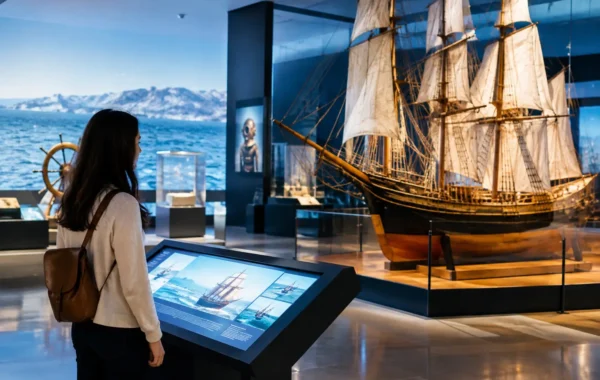
That is why the story should be read through objects as well as documents. Ceramics, cargoes, harbour records and ship routes all reveal a Penang connected to a far older maritime world. The island became a British possession in 1786, but it remained part of a wider Asian seascape in which commerce and culture had been moving for centuries.
Seen this way, the founding of Penang by the British was less the birth of history than the redirection of it. A strategic island became a free port, a port became a town, and a town became one of the great cultural crossroads of the region. To walk through Penang with that knowledge is to see not just colonial traces, but the deeper currents of trade and exchange that made the island worth claiming in the first place.
For those who want to understand Penang fully, the founding is only the opening chapter. The richer story lies in what followed – the ships that arrived, the communities that settled, the goods that changed hands, and the world that converged on its shores.