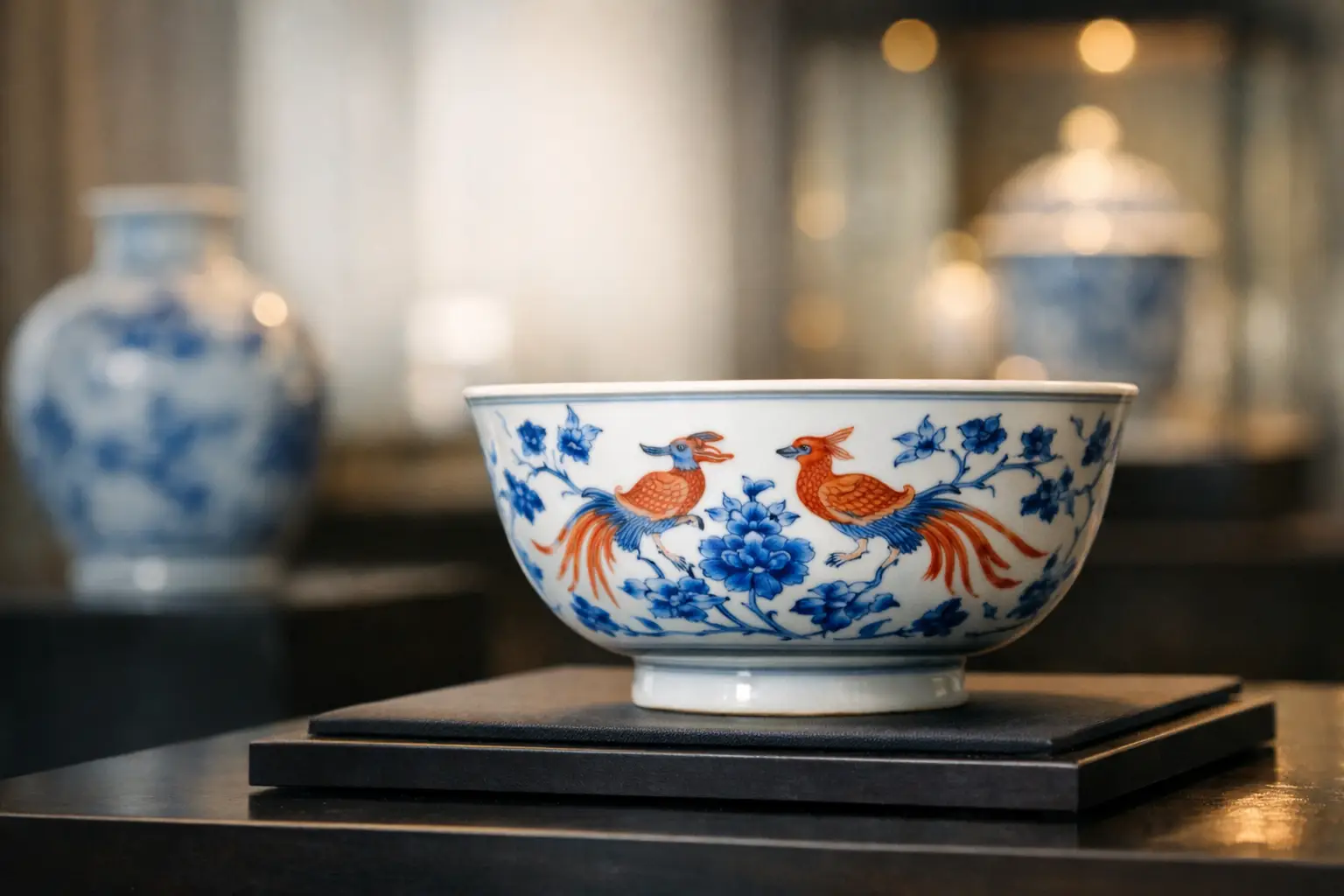

A bowl can fit in two hands, yet carry the weight of an empire, a kiln tradition and centuries of maritime exchange. The Ming dynasty Chenghua blue and white bowl at Straits and Oriental Museum offers precisely this kind of encounter: an intimate object whose restrained beauty opens onto one of the most admired periods in Chinese porcelain history.
For visitors drawn to George Town’s layered stories of trade, taste and travel, Chenghua porcelain is more than a beautiful collectible. It is a reminder that the seas linking China, Southeast Asia and the wider world once moved objects of astonishing refinement alongside spices, textiles and people. Its value lies not only in rarity, but in the skill, sensitivity and historical world it represents.
Why the Chenghua reign matters
The Chenghua reign, which lasted from 1465 to 1487 during China’s Ming dynasty, is celebrated for porcelains of unusual delicacy. Produced principally at the imperial kilns of Jingdezhen, wares associated with this period are admired for their fine potting, gentle glaze and balanced painted decoration. They often feel less imposing than later imperial porcelains, but no less assured.
That restraint is central to their appeal. Chenghua blue and white wares are frequently characterised by a soft, luminous white ground and cobalt-blue painting that appears composed rather than forceful. A small bowl may carry only a modest band of flowers, fruit, waves, birds or auspicious motifs, yet each element is placed with extraordinary control. The painter was working on a curved surface, where even the smallest hesitation would disturb the whole design.
Such qualities help explain why Chenghua pieces have long commanded respect among collectors and scholars. The period is often associated with the celebrated doucai palette as well, but blue and white porcelain remains an essential part of its visual language. It reveals how much could be said through a limited range of colour: the cool blue of cobalt, the warm translucency of porcelain and the quiet space left deliberately unpainted.
Looking closely at a Chenghua blue and white bowl
A bowl invites close looking. Unlike a large vase, it does not demand attention through scale. Its power is revealed gradually, in the relationship between its foot, walls, rim and interior. When viewing a Chenghua blue and white bowl, begin with the silhouette. Is it broad and open, gently rounded, or shaped to sit close in the hand? The form is never merely practical. It creates the stage on which the decoration is read.
Then look at the blue. Underglaze blue decoration is painted directly onto the body before a transparent glaze is applied and the piece is fired. In the heat of the kiln, the painted design becomes permanently fused beneath the glassy surface. The colour can range from a soft grey-blue to a deeper tone, depending on the cobalt, firing conditions and glaze. Variation is part of its character, not necessarily a flaw.
The painted motifs deserve patience. A flower may refer to renewal or prosperity; a bird may suggest harmony; a scrolling vine may turn the entire bowl into a continuous garden. Meanings can change according to the precise motif and period, so it is wise not to force a single interpretation. What remains clear is the union of symbolism and design. Decorative detail in Chinese porcelain was often made to reward both immediate admiration and repeated viewing.
Finally, notice the spaces between motifs. Chenghua design is admired because it breathes. The white porcelain ground is not empty background but an active part of the composition, giving the blue painting clarity and poise. This visual economy is one reason a small bowl can appear so complete.
The Ming Chenghua bowl within a maritime story
At a museum dedicated to the ceramic legacies of Asian shipwrecks, a Ming bowl carries a further resonance. Porcelain was one of the most recognisable goods moving through historical maritime routes. It travelled as tableware, trade ware, diplomatic gift, household treasure and, eventually, archaeological evidence.
Every surviving ceramic object prompts questions. Who selected it? Was it made for a courtly setting, an affluent household or a trading network with customers far from China? How was it packed for a voyage? What port was it intended to reach? The bowl itself cannot answer every question, but its survival makes those questions tangible.
This is where shipwreck ceramics change the way we see porcelain. A piece displayed in a gallery may be exquisite on its own terms, yet its maritime context reveals a larger story of risk and connection. Cargoes crossed monsoon seas in vessels exposed to storms, reefs and shifting politics. When ships sank, their contents became sealed records of commercial life. Centuries later, recovered ceramics allow us to look beyond dynasties and kilns towards the routes that connected them.
For Penang, a historic meeting point in the Straits, these stories feel especially immediate. The region’s cultural richness has always been shaped by movement: of merchants, communities, ingredients, ideas and precious objects. A Chenghua bowl belongs to this wider history of exchange, even when its first appearance suggests only refinement and stillness.
Rarity requires care, not assumptions
The word “Chenghua” carries great prestige, and that prestige has encouraged imitation for centuries. Later Chinese potters, collectors and dealers admired the period so deeply that Chenghua-style forms and motifs were copied in subsequent reigns. Some copies are historical works of considerable interest in their own right; others demand careful assessment.
For this reason, dating and attribution are not based on one visual feature alone. Specialists consider the clay body, footrim, glaze, cobalt, painted style, firing characteristics, marks, condition and, where available, archaeological context. A mark may offer useful evidence, but it is not a verdict by itself. So too, a design that appears “right” may still require comparison with documented examples and technical study.
This caution enriches rather than diminishes the viewing experience. It teaches us to value connoisseurship as a discipline of attention. The best response to a historic bowl is not simply to ask what it might be worth, but to ask what its material, craftsmanship and journey can tell us.
A more memorable way to experience porcelain
Porcelain is sometimes treated as a distant luxury, placed behind glass and admired only for its age or price. That misses its human quality. A bowl was made to be held, seen from above, turned in the light and brought into the rhythms of dining and hospitality. Even an imperial example retains the familiarity of its form.
When you stand before the Chenghua bowl, take a moment to imagine the sequence of hands behind it: the potter who shaped the vessel, the decorator who painted its surface, the kiln workers who managed its firing and the merchants or owners who gave it a life beyond Jingdezhen. Its journey may have involved courts, markets, ports and collections, but its visual language remains remarkably immediate.
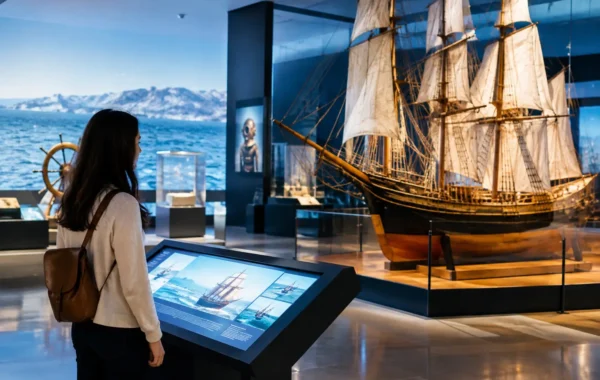
At Straits & Oriental Museum, that immediacy sits within a broader journey through porcelain, maritime archaeology and the cultures shaped by the sea. Allow time to look slowly. The finest ceramics do not need spectacle to hold the room; a single bowl, finely made and carefully observed, can make centuries feel unexpectedly close.