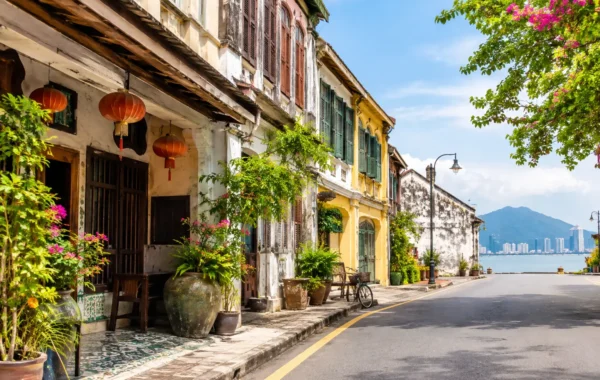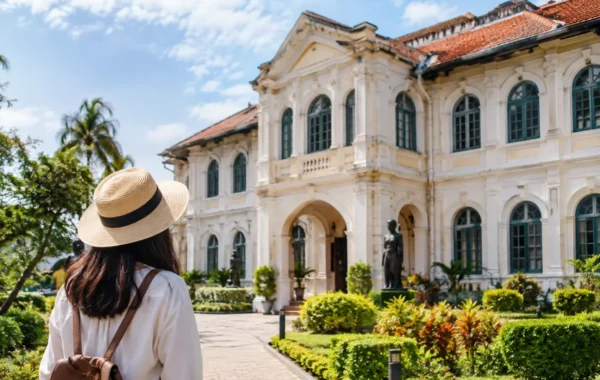
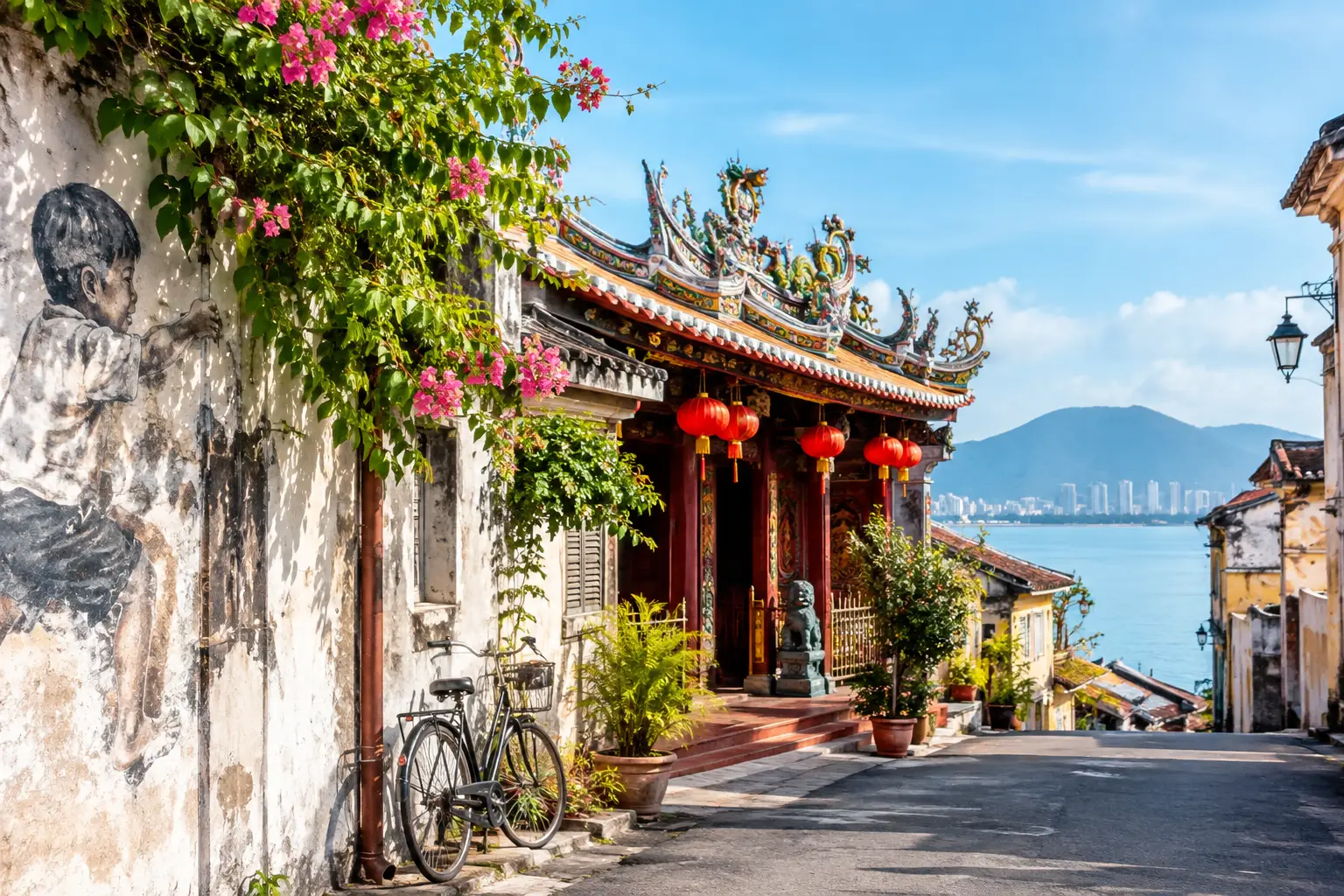

The first glimpse of George Town can be deceptively simple: a row of shophouses, a temple roof rising above the traffic, the aroma of coffee and incense sharing the same street. Visitors asking, “what are the best cultural attractions in Penang?” are really asking how to experience these layers with meaning, rather than merely collecting photographs. The answer lies in giving the city time – and choosing places that reveal the communities, trade routes and traditions that shaped it.
What are the best cultural attractions in Penang?
Penang’s strongest cultural attractions are not confined to one museum district or a single heritage trail. They span the Chinese, Malay, Indian, Eurasian and Peranakan histories that made George Town a port of consequence, as well as the religious and domestic spaces where those histories remain visible. A thoughtful day might move from a clan house to a place of worship, from a restored residence to a collection of objects that crossed the seas centuries ago.
For first-time visitors, the most rewarding approach is to select a handful of experiences and linger. George Town is compact enough to explore on foot, but its details are easily missed when every stop is treated as a quick tick-box.
Khoo Kongsi: a masterclass in clan heritage
Khoo Kongsi is among Penang’s most striking expressions of Chinese community life. Its richly ornamented ancestral hall, set within the old streets of George Town, was built by the Khoo clan and remains a remarkable record of craftsmanship, kinship and social standing. Look closely at the carved timber, gilded decoration and painted scenes: they were designed to communicate both reverence for ancestors and the prosperity of a community connected to regional trade.
This is not simply an attractive building. It offers a useful introduction to the kongsi system, through which Chinese immigrant families organised welfare, business and belonging in a new port city. Visit early if you prefer a quieter atmosphere, when the details of the courtyard and roofline are easier to appreciate.
Cheong Fatt Tze – a house shaped by global trade
The indigo façade of Cheong Fatt Tze’s mansion is instantly recognisable, but its cultural value is deeper than its colour. The residence reflects the ambitions of a prominent 19th-century merchant whose world extended across China, Southeast Asia and Europe. Its design brings together Chinese principles, local building knowledge and imported materials, demonstrating how Penang’s wealth was formed through movement across borders.
A guided visit is particularly worthwhile here, because the house’s proportions, ventilation and decorative choices become more legible with context. It is an excellent choice for travellers interested in architecture, Peranakan society and the private lives behind George Town’s handsome streetscapes.
Pinang Peranakan Mansion: a world of ceremony and style
For a vivid introduction to Peranakan culture, the Pinang Peranakan Mansion offers rooms filled with furniture, jewellery, textiles and household objects associated with the Straits Chinese community. The Peranakans developed a distinctive cultural language over generations, blending Chinese ancestry with Malay customs, local craft and colonial-era influences.
The appeal is visual, certainly, but it also lies in the domestic stories. Wedding traditions, dining rituals and family heirlooms reveal how identity was expressed at home. Those drawn to design will find much to admire, while families often find the room-by-room format an accessible way to understand a complex cultural inheritance.
Cultural attractions in Penang beyond the grand houses
George Town’s heritage is also lived in its sacred buildings and working neighbourhoods. These sites deserve attention not as exotic backdrops, but as places of devotion and community. Dress respectfully, keep voices low and be mindful of worshippers, particularly during prayer times and religious festivals.
Kapitan Keling Mosque speaks to the long presence of Penang’s Indian Muslim community and to the island’s connections across the Bay of Bengal. Nearby, Sri Mahamariamman Temple brings colour, sculpture and Hindu worship into the historic streets, while Kuan Yin Temple remains an enduring centre of Chinese religious life. Seen together, they make a compelling case for walking slowly: in a few blocks, the city’s plural history becomes tangible.
The Clan Jetties offer another perspective. These waterside settlements, established by Chinese families whose livelihoods were linked to the harbour, show how maritime trade shaped both work and home. Some jetties are busy with visitors, and the experience can feel more commercial at peak times. Even so, a respectful visit helps place George Town’s land-based heritage within the wider story of the sea.
A maritime story beneath the surface
Penang’s cultural identity cannot be separated from the waters that brought people, ideas and goods to its shores. This is where shipwreck ceramics offer a particularly powerful encounter with history. A bowl, jar or dish recovered from the seabed is not merely an antique: it is evidence of an interrupted voyage, a trade network and the extraordinary reach of Asian porcelain.
At Straits & Oriental Museum, authentic ceramics recovered from notable Asian shipwrecks – including the Wanli, Turiang, Royal Nanhai, Nanyang, Xuande and Desaru – document this maritime world with unusual immediacy. As Penang’s first museum of its kind and Malaysia’s first integrated heritage and lifestyle museum, it frames archaeological treasures within a fuller cultural outing, bringing together exhibition, art, dining and considered hospitality.
For collectors and history enthusiasts, the value lies in the objects’ provenance and material beauty. For younger visitors, the idea of cargo lying beneath the sea can be an immediate doorway into trade, archaeology and the lives of sailors whose journeys connected distant ports. Allow time to look beyond the decorative surface. Variations in glaze, form and motif can reveal period, place of manufacture and intended market.
Make room for art, food and the everyday city
Penang’s murals and street art have become a familiar part of the visitor experience. They can be enjoyable, especially for families, but they should not be the entire cultural itinerary. Treat them as a light interlude between deeper visits, rather than a substitute for heritage. The more memorable images are often not painted at all: a signwriter’s fading lettering, a five-foot way busy with conversation, or a shop selling the same speciality across generations.
Food is equally central to the cultural landscape. A plate of nasi kandar, a bowl of assam laksa or a carefully prepared Peranakan meal carries histories of migration, spice routes and adaptation. Choose a meal that slows the day down. The point is not to chase every famous dish, but to notice how flavours and cooking traditions echo the multicultural city around you.
If your visit coincides with a festival, be prepared for altered opening hours and larger crowds. The trade-off is worthwhile: celebrations such as Chinese New Year, Thaipusam, Hari Raya and the Nine Emperor Gods Festival can bring Penang’s living traditions into vivid public view. Check etiquette locally and avoid assuming every ceremony is staged for visitors.
Plan a cultural day with intention
A satisfying route begins in the morning with a heritage house or clan hall, followed by a short walk through the historic core. Pause for lunch rather than rushing between venues, then devote the afternoon to a museum or gallery where objects can give context to the streets you have just walked. Finish at a café, bar or restaurant with a view of the city settling into evening.
The best cultural attractions in Penang reward curiosity more than speed. Ask why a building faces a particular direction, whose goods travelled through the harbour, or how a family preserved a tradition across generations. Penang becomes most generous when you allow its stories – in porcelain, prayer, architecture and food – to unfold at their own pace.