
A porcelain bowl raised from the seabed can hold more than a beautiful glaze. It can reveal where a ship sailed, what its merchants expected to sell, and how Penang maritime trade connected this island to a far wider world. Long before George Town became known for its shophouses, street food and layered cultural life, the Straits of Malacca carried vessels laden with ceramics, spices, textiles, metals and ideas.
For visitors, this history makes Penang more than a handsome stop on a holiday itinerary. It offers a way to see the island as a meeting point: a place shaped by the movement of people and goods across the sea, then transformed by the communities that made a home here.
Why Penang’s Position Changed Everything
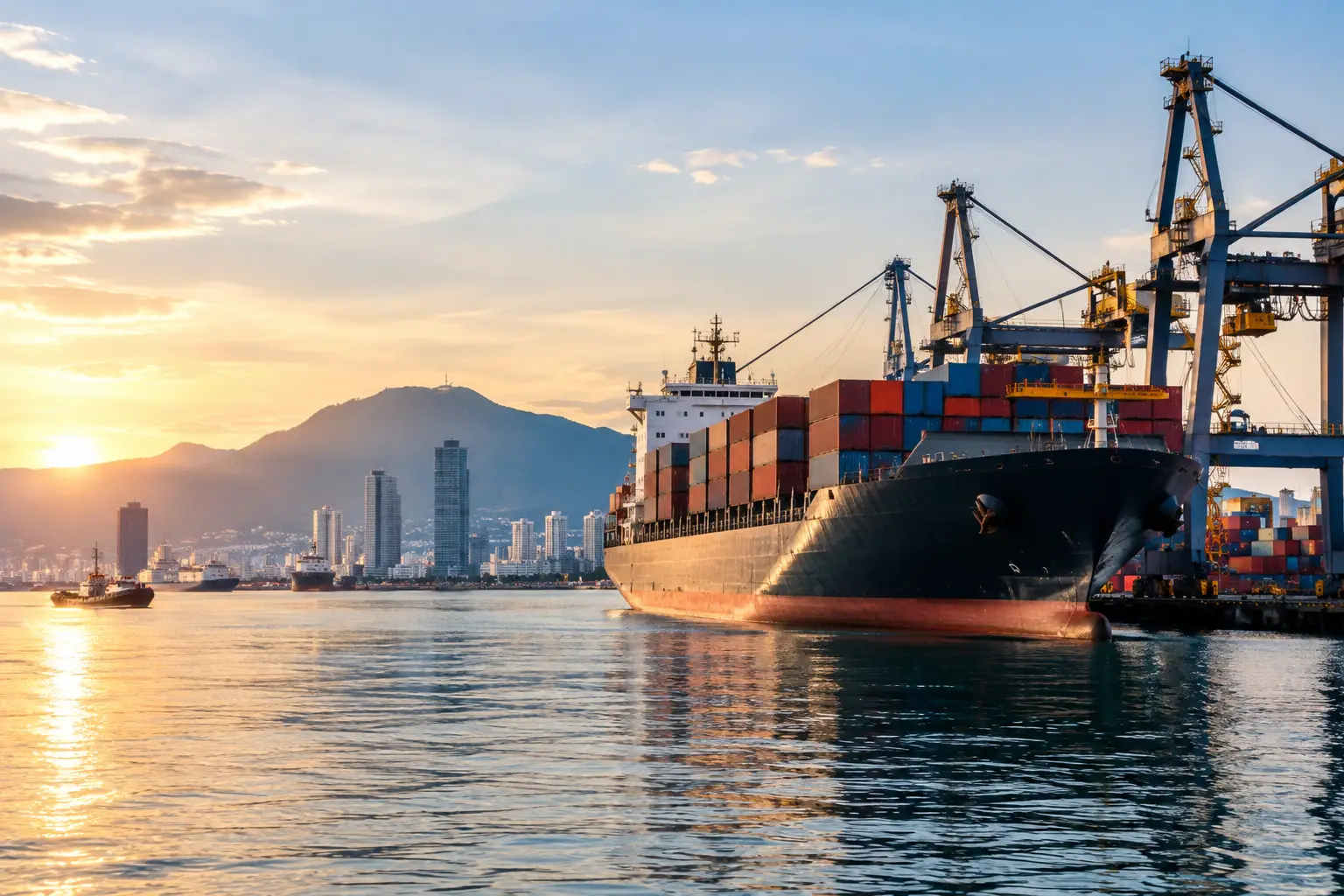
Penang sits beside one of the world’s most consequential waterways. The Straits of Malacca provided a comparatively sheltered passage between the Indian Ocean and the South China Sea, linking ports in China, Southeast Asia, the Indian subcontinent and, eventually, Europe. Ships did not simply pass through this region. They paused, repaired, replenished supplies, exchanged cargo and waited for favourable winds.
The monsoon was the great clock of this commerce. Seasonal winds determined when a journey was practical and when a captain should remain in port. That waiting period created opportunity. Harbour settlements became places where sailors, brokers, craftsmen and merchants encountered one another, carrying languages, beliefs, recipes and commercial intelligence alongside their wares.
Penang’s natural harbour and position on these established routes gave it strategic promise. When George Town was founded as a British trading settlement in the late eighteenth century, it entered a maritime network that was already centuries old. Its success was not created from nothing; it was built on the enduring logic of the straits and the regional trading worlds that preceded colonial rule.
A Port Built on Exchange
The story of Penang maritime trade is not merely about ships arriving with cargo and departing with profit. It is also the story of a port economy that drew together diverse communities. Malay, Chinese, Indian, Arab, Armenian, Siamese and European traders, among others, participated in overlapping networks of exchange. Their presence helped shape the commercial character of George Town and its distinctive urban fabric.
Goods moved in many directions. Chinese ceramics were prized across Asian markets, while tea, silk and other luxury products travelled south and west. Pepper, tin, rattan, spices, rice and forest products were traded according to season, demand and political conditions. Cotton textiles from India circulated widely, while local produce fed ships and settlements. No single commodity explains Penang’s rise. Its strength lay in its ability to serve as an adaptable entrepôt, bringing cargoes, credit and people into contact.
That adaptability came with uncertainty. Trade could be interrupted by conflict, shifting imperial policies, piracy, storms, disease or a poor harvest. Merchants had to judge prices, weather and risk at once. A port was prosperous not because it was immune to these pressures, but because it could respond to them.
The human side of a trading port
Behind every manifest was a web of relationships. Trust mattered, particularly when credit travelled farther than a merchant could. Family firms, clan associations, interpreters, warehouse keepers and ship agents all helped make trade possible. So did cooks, boatmen, labourers and artisans whose work rarely appears in grand commercial accounts.
This is one reason Penang’s maritime history still feels so immediate. It survives not only in formal records, but in neighbourhoods, religious buildings, food traditions and objects that bear the marks of exchange. A port leaves its imprint on daily life.
What Shipwreck Ceramics Tell Us
Ceramics are among the most eloquent witnesses to maritime commerce. Fired clay can survive where wood, fabric and paper perish, allowing cargoes lost beneath the sea to speak centuries later. A single wreck may preserve thousands of bowls, jars, dishes and storage vessels, often packed for export and sometimes never used.
These objects are valuable for their artistry, but their significance reaches further. Their forms, kiln styles and decorative motifs can indicate where they were made and when. Their quantity suggests the scale of a commercial venture. Their destination can illuminate the taste of distant consumers. A modest dish may therefore be evidence of an immense system of production, transport and demand.
Shipwreck cargoes also correct a common assumption: that historical trade was limited to rare luxuries for elites. Fine porcelain certainly moved through prestigious markets, yet many ceramics were made for everyday use. They were durable, desirable and suited to broad regional demand. The sea carried both splendour and practicality.
At Straits & Oriental Museum, authentic ceramics recovered from Asian shipwrecks bring this story into close view. Collections associated with wrecks such as the Wanli, Turiang, Royal Nanhai, Nanyang, Xuande and Desaru offer a tangible encounter with the routes that connected ports across Asia. Seen in person, the hand-painted surface of a bowl or the quiet weight of a storage jar makes maritime history feel less distant than a date in a textbook.
Beauty, evidence and responsibility
Shipwreck artefacts invite admiration, but they also require care in interpretation. An object detached from its archaeological context can lose much of its historical meaning. Where it was found, what it was packed beside, and how it relates to the wreck site all matter. Responsible display asks visitors to appreciate an artefact’s beauty while recognising it as evidence.
This balance is particularly relevant to collectors. Provenance, conservation and documentation should matter as much as condition or rarity. The most compelling object is not simply an attractive antique. It is an object whose journey can be understood with respect.
The Sea Route Was Never One-Way
It is tempting to picture Asian maritime commerce as goods moving neatly from famous production centres to grateful markets. The reality was more dynamic. Merchants adjusted routes, re-exported cargoes and responded to local preferences. Ceramics from China might pass through Southeast Asian ports before reaching another buyer; locally sourced products could be shipped onward through several intermediaries.
Penang flourished in this fluid environment because it was a point of connection rather than an isolated endpoint. It offered access to the Malay Peninsula and northern Sumatra, while remaining tied to longer routes across the Bay of Bengal and the South China Sea. Its traders worked within local, regional and global systems at the same time.
This perspective also gives greater depth to George Town’s heritage. The city’s architecture and communities were shaped by the wealth, migration and cultural exchange that maritime commerce encouraged. Yet trade did not distribute its rewards evenly. Port economies could generate opportunity alongside inequality, and imperial trade brought control as well as connection. A fuller history makes room for both achievement and consequence.
Seeing Penang’s Past in the Present
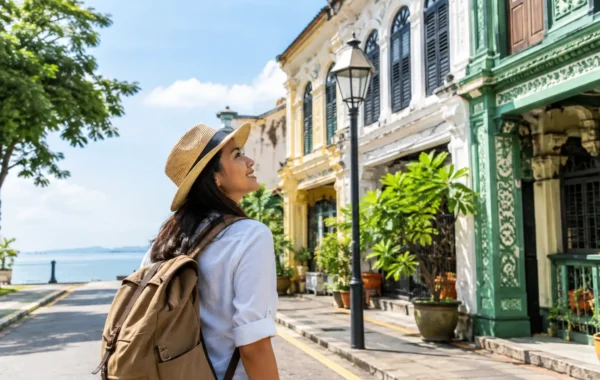
For a visitor walking through George Town, the sea may not always be visible from every street. Its influence, however, is everywhere. It can be sensed in the mixture of cuisines, in mercantile shophouses, in sacred spaces built by travelling communities and in the cosmopolitan confidence of the city itself.
A museum visit can add another layer to that experience. Rather than treating shipwreck ceramics as isolated treasures, consider the questions they raise. Who made this piece? Who loaded it aboard? Which winds carried it forward? Who was expected to buy it? And what changed when that voyage ended beneath the water rather than at its intended port?
Those questions turn a display case into a journey through time. They remind us that the objects before us were once part of living commercial worlds, shaped by ambition, skill, chance and the rhythm of the monsoon.
When you next encounter a piece of recovered porcelain, pause over its voyage as well as its surface. In that small, enduring object, Penang’s relationship with the sea becomes something you can almost hold.