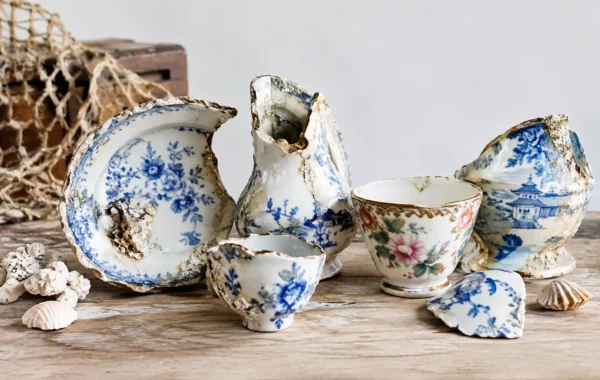

A shipwreck ceramic has already travelled farther than most visitors ever will. It has crossed seas, survived centuries below water and arrived carrying evidence of trade, taste, craftsmanship and human ambition. Museum technology trends are most compelling when they help that object speak more clearly, rather than competing for attention.
For museums, technology is no longer confined to an audio guide or a screen at the end of a gallery. It is becoming part of the visitor journey: how people plan a visit, understand an artefact, share a discovery, pause for a meal and remember the experience afterwards. The finest use of it is discreet. It creates context, curiosity and confidence while leaving the authentic object at the heart of the encounter.
Museum technology trends with cultural purpose
The most significant shift is away from technology as spectacle. Visitors may enjoy an impressive projection or an interactive display, but novelty has a short life. What endures is interpretation that answers the questions a remarkable object naturally raises: Who made it? Who used it? How did it travel? Why has it survived?
This matters especially for maritime archaeology. A porcelain bowl recovered from a wreck is not merely a beautiful example of kiln work. It is part of a wider story about monsoon routes, port cities, merchant networks and the fragile fortunes of life at sea. Digital interpretation can reveal these connections in ways a label alone cannot, provided it remains accurate, calm and thoughtfully designed.
At a heritage destination, technology should deepen the sense of place. It can invite a family to follow the route of a cargo vessel across the South China Sea, allow a collector to inspect an intricate motif more closely, or help an international visitor access interpretation in their preferred language. The point is not to place more screens in a room. It is to make the room more legible and rewarding.
Digital layers that keep the artefact centre stage
Augmented reality and spatial storytelling
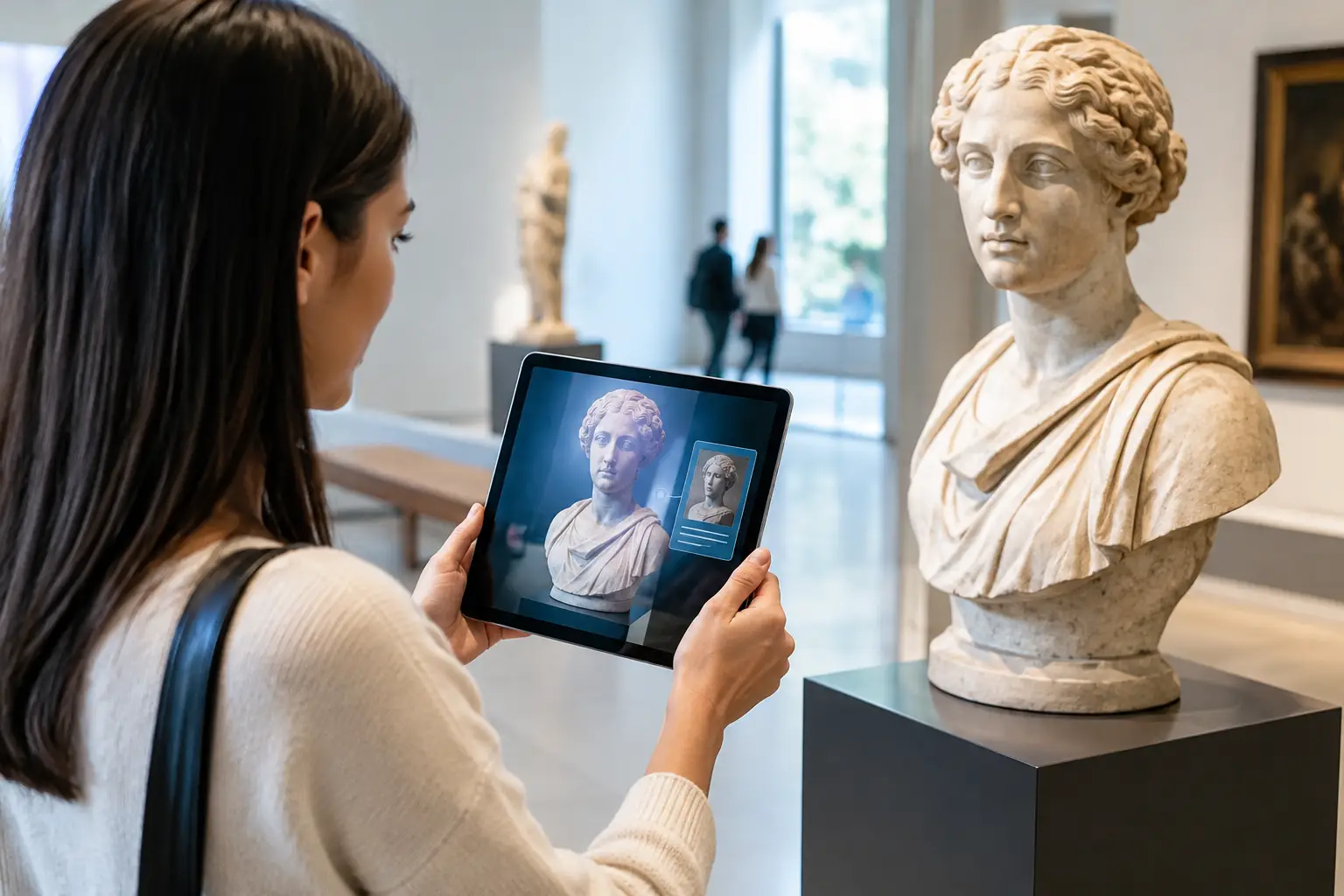
Augmented reality is moving beyond its early reputation for digital gimmickry. Used with restraint, it can restore a sense of scale and setting that is difficult to convey through static display alone. A visitor might hold up a device to see how a jar was packed into a ship’s hold, or watch a route appear across a period map as they stand before ceramics from different wrecks.
This approach works best in short, optional moments. Not every visitor wants to view a gallery through a phone, and many travellers come to museums precisely to step away from constant notifications. A well-conceived experience should offer a valuable additional layer without making a device a condition of understanding the collection.
Projection mapping can achieve a similar effect in larger spaces. It may bring a sea chart, trading port or reconstructed vessel to life around the visitor, creating atmosphere before they meet the original artefacts. Yet projections need careful lighting design. Glare, noise and visual clutter can diminish the quiet concentration that rare objects deserve.
3D models and closer looking
High-resolution 3D scanning is one of the most useful museum technologies because it serves both public interpretation and conservation. Visitors can rotate a digital model of a vessel, enlarge a maker’s mark or examine a damaged base that cannot safely be handled. Curators and conservators can also document condition in precise detail, compare fragments and monitor subtle changes over time.
For ancient ceramics, this has particular value. Fine brushwork, glaze pooling and small firing imperfections often tell a richer story than a distant view through glass can provide. A digital model does not replace the thrill of seeing the original porcelain. It guides the eye back to it, encouraging people to notice details they may otherwise have missed.
The trade-off is that digitisation requires investment, expertise and long-term care. A beautiful 3D model is of limited use if it sits on an outdated platform a few years later. Museums should favour formats and systems that can be maintained, updated and accessed without unnecessary barriers.
Accessibility is becoming a design principle
Some of the most meaningful museum technology trends are not the most theatrical. They make cultural encounters more accessible to more people. Captions, transcripts, adjustable text sizes, multilingual interpretation, hearing loops and visual descriptions can transform a visit for guests with different needs.
Audio experiences are also becoming more refined. Rather than a long sequence of numbered commentary, visitors may choose a route shaped by their interests: maritime trade, ceramic artistry, family stories or conservation. A child can follow a concise treasure trail while an enthusiast explores a longer curatorial narrative. Both leave with a fuller sense of discovery.
There is a useful principle here: accessibility features should feel integral, not added as an afterthought. Clear language, good contrast, intuitive navigation and places to pause benefit everyone. They also respect the broad audience a museum welcomes, from first-time visitors to experienced collectors.
A visit that continues beyond the gallery
The museum experience increasingly begins before arrival and continues after departure. Timed-entry information, digital maps and practical visitor guidance can remove uncertainty, allowing guests to spend their attention on the collection rather than logistics. After a visit, carefully chosen follow-up content can reconnect people with an object or story that stayed with them.
This does not mean every institution needs an elaborate app. For many museums, a mobile-friendly web experience and a clear digital guide are more useful than asking visitors to download another programme. It depends on the scale of the site, the needs of its guests and the resources available to maintain the technology properly.
For an integrated heritage and lifestyle venue, technology can also make the cultural day feel more coherent. A visitor who has spent time with shipwreck ceramics may appreciate a menu, retail selection or programme that continues the story of regional trade, craftsmanship and hospitality. At Straits & Oriental Museum, this connection can turn a gallery visit into a more rounded encounter with Penang’s maritime heritage, without reducing history to a backdrop for consumption.
Data should improve hospitality, not intrude on it
Museums can learn from visitor patterns. Anonymous information about popular galleries, dwell times and peak hours can help teams plan staffing, improve circulation and identify displays that may need clearer interpretation. Ticketing data may also support more relevant membership communication and event planning.
But cultural institutions hold a special responsibility. Visitors should understand what data is collected and why, with meaningful choices about communications and tracking. Trust is part of the visitor experience. A museum that treats personal information with care is more likely to build the long-term relationships on which memberships, repeat visits and cultural support depend.
The same caution applies to artificial intelligence. AI can assist with routine tasks such as transcribing archival material, generating first-draft translations or making large collections easier to search. It can help staff find patterns across catalogues that would take considerable time to identify manually.
It should not be allowed to invent provenance, flatten historical uncertainty or speak with authority where evidence is incomplete. Museum interpretation gains its value from scholarship, transparency and intellectual honesty. When the history of an object contains unanswered questions, those questions can be part of the fascination.
Choosing technology with discernment
The right investment is rarely the one with the most impressive demonstration. It is the one that supports a clear visitor need and can be cared for over time. Before introducing a new digital feature, museums should ask whether it reveals something that cannot be communicated as effectively through an object, a label, a human guide or the physical design of the gallery.
They should also consider maintenance from the outset. Hardware ages, software licences change and staff need time to learn new systems. A modest, reliable interpretive tool that remains useful for five years is often more valuable than a costly installation that loses relevance after one season.
Human presence remains irreplaceable. A knowledgeable guide responding to a visitor’s question, a curator explaining a puzzling detail, or a café conversation after the galleries can create the most personal moments of a cultural outing. Technology should give these encounters more room to flourish, not attempt to automate them away.
The future of museums will not be defined by how digital they appear. It will be defined by how generously they help people look, ask and remember. When technology brings a visitor closer to the hand that painted a porcelain vessel, the voyage that carried it and the world it once connected, it earns its place in the gallery.