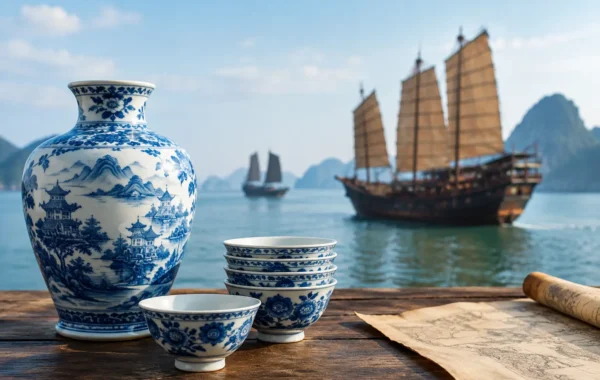
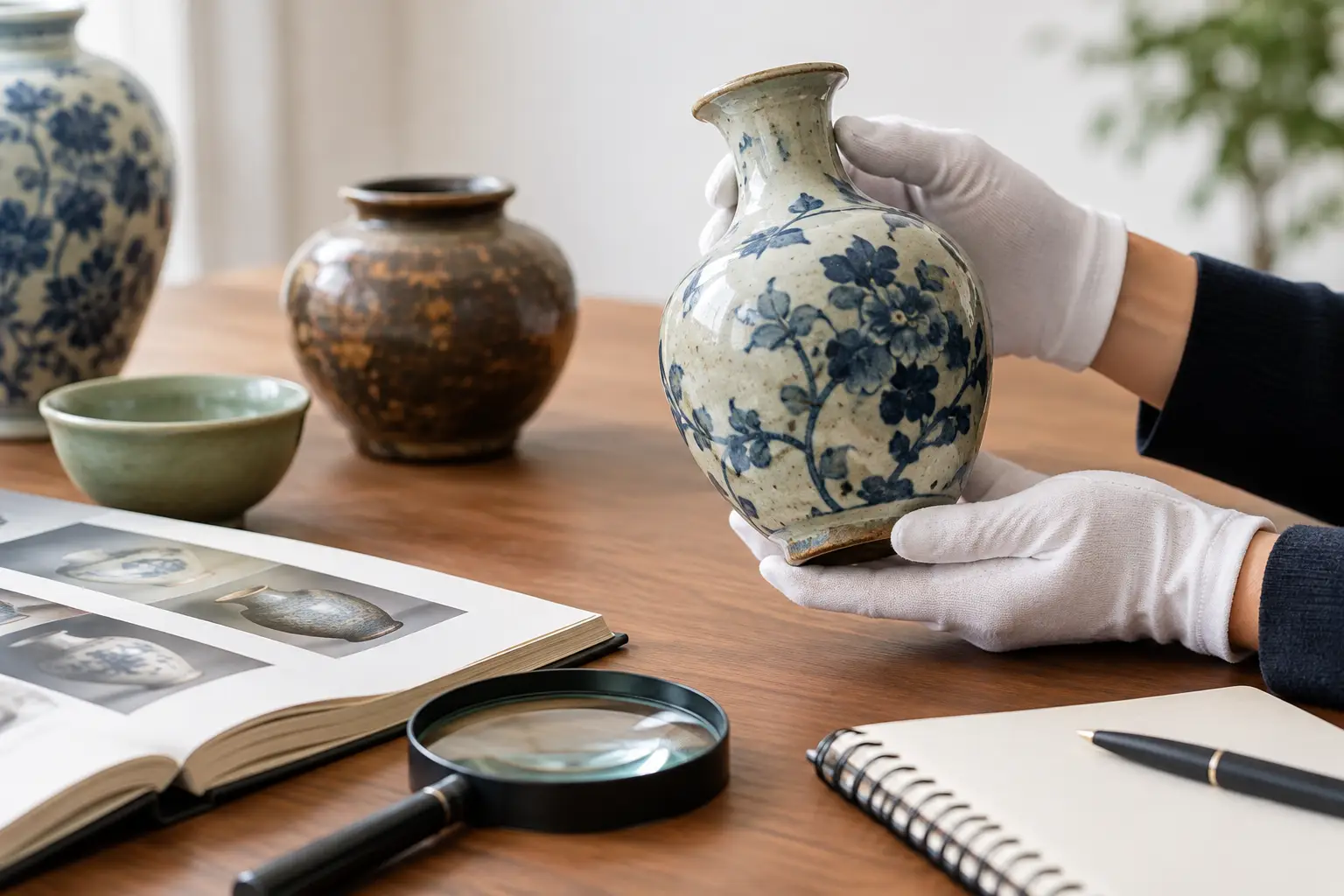

A ceramic bowl can be admired for its glaze, its painted dragons or the quiet elegance of its form. Yet its most compelling feature may be invisible at first glance: the journey that brought it from kiln to table, tomb, trading vessel, collection or museum case. This Guide to ceramic provenance explains how that journey is traced, why it shapes value, and how a closer look can turn an object into a vivid record of human exchange.
For collectors and curious visitors alike, provenance is not merely paperwork. It is the chain of evidence that gives a ceramic object its place in history. A small blue-and-white dish, for example, may speak of imperial taste in China, maritime trade across Southeast Asia, a shipwreck beneath tropical waters and the modern work of conservation. The more securely that story can be supported, the more meaningful the object becomes.
What ceramic provenance really means
Provenance describes an object’s documented history of ownership, discovery and movement. In ceramics, it may begin with a known kiln or production region, continue through export and use, and end with its arrival in a present-day collection. The strongest provenance establishes not only where an object has been, but also how it entered each stage of its life.
This is different from attribution, although the two are closely connected. Attribution asks who made an object, where and when. A specialist may identify a celadon bowl as Longquan ware, for instance, by its glaze, body and form. Provenance asks where that particular bowl was found, who held it, whether it appeared in a documented sale or collection, and whether its movement was lawful and ethical.
A complete record is not always possible. Ceramics have survived fires, migrations, changing borders and centuries of informal collecting. An absence of early records does not automatically mean an object is inauthentic. It does mean that a collector, dealer or museum should describe what is known with care, avoid filling gaps with speculation and distinguish evidence from family lore.
A guide to ceramic provenance: where the evidence sits
The evidence for provenance is rarely contained in a single certificate. It is assembled from several sources, each contributing part of the story. A persuasive account is built by comparing physical clues with records, archaeological knowledge and expert assessment.
Begin with the object itself
The ceramic body often provides the first clues. Its clay, firing temperature, glaze, decoration and shape can indicate a kiln tradition or date range. A reign mark, potter’s mark, collector’s label or old inventory number may add useful detail, though marks must always be assessed in context. They can be copied, added later or misunderstood.
Look closely at the foot rim and unglazed areas. These may reveal the colour and texture of the body, kiln grit or firing supports. Wear can also be informative. Genuine handling wear tends to develop gradually on edges and bases, while surface damage from burial or seawater may have a different character. Such signs should not be treated as proof on their own, but as part of a wider reading.
Photography matters here. Clear images of the base, rim, interior, decoration, repairs and any labels create a useful record before an object changes hands. For significant pieces, professional condition reports can document cracks, restoration, staining and losses that might otherwise be mistaken for age or rarity.
Follow the paper trail
Documents can be as revealing as the object itself. Auction catalogues, invoices, export permits, old collection inventories, exhibition records, insurance valuations and correspondence may establish dates and ownership. A photograph of a ceramic displayed in a home decades ago can be valuable supporting evidence when paired with other records.
Names and dates should form a plausible sequence. If a seller claims that a piece came from a collection formed in the 1950s, ask whether an inventory, purchase receipt or period photograph supports that claim. If it was bought at auction, identify the sale, lot number and catalogue description. A vague phrase such as “from a European private collection” may be true, but it is not the same as a documented collecting history.
Collectors should retain all material received at purchase and add their own records over time. Good stewardship includes keeping invoices, condition reports, correspondence and photographs together. This record protects the object’s story for future owners and can make later research far more productive.
Consider the archaeological context
For excavated ceramics, context can be decisive. An object recovered during a professionally recorded excavation has meaning beyond its individual beauty. Its location, depth, association with other objects and relationship to a settlement, burial or wreck can help scholars date trade routes, consumption patterns and cultural exchange.
Context is especially significant for maritime ceramics. Cargoes aboard trading ships were often packed in large quantities, sometimes with pieces from several kiln centres. When archaeologists document a wreck carefully, they can identify how wares were stowed, what markets they may have served and which goods travelled together. A single jar, dish or kendi can therefore contribute to a much larger maritime narrative.
Why shipwreck ceramics need particular care
Shipwreck ceramics possess an undeniable romance, but seawater does not provide provenance by itself. A claim that an object is “from a wreck” should be supported by documentation identifying the wreck, the recovery process, the date of recovery and any relevant permissions or ownership history.
Marine deposits can alter a ceramic surface. Salt crystallisation, encrustation, staining and abrasion may be visible, while conservation treatment can remove or stabilise these effects. Such features may help specialists understand an object’s condition, but they should never be used as a shortcut to authentication. Artificial ageing and fabricated marine deposits exist, particularly where demand is high.
There is also an ethical dimension. Underwater cultural heritage is finite, and undocumented recovery can destroy the very context that makes an object historically valuable. Responsible collecting respects the laws of the country of origin, recovery and export, as well as the integrity of archaeological sites. A well-documented wreck ceramic offers not only an object to possess or display, but evidence of the trading worlds that connected Asia for centuries.
At Straits & Oriental Museum in George Town, shipwreck ceramics are presented as part of this wider story: material witnesses to voyages, commerce and the enduring splendour of porcelain. Seeing them in relation to a named wreck helps visitors understand why context transforms an artefact into history.
Questions worth asking before acquisition
A thoughtful buyer does not need to become a forensic archaeologist, but should be ready to ask direct, specific questions. Who owned the object before the seller? When and where was it acquired? Are there invoices, catalogue entries, photographs or export documents? Has it been restored, and has the restoration been disclosed? If it is said to come from an excavation or shipwreck, is the site and recovery history clearly identified?
The quality of the answer matters as much as the answer itself. Reputable specialists are usually willing to discuss uncertainty, provide available documentation and explain the basis for an attribution. Be cautious where stories are dramatic but records are thin, where an object is priced far below comparable examples, or where pressure is applied to buy quickly.
Independent opinions are sensible for higher-value purchases. A ceramics specialist may assess form, glaze and date; a conservator can identify repairs and alterations; and a lawyer or heritage adviser may be appropriate where export rules or ownership claims are complex. The cost of careful research is often small beside the cost of a regrettable acquisition.
Provenance adds depth, not just price
Provenance can influence market value, particularly when it connects an object to a distinguished collection, a landmark exhibition or a documented archaeological context. Yet its greater value is cultural. It enables an object to be interpreted honestly, cared for responsibly and passed on with its story intact.
There are trade-offs. A beautiful ceramic with modest documentation may still be worth enjoying if it is fairly described, legally acquired and priced accordingly. A celebrated provenance may increase significance, but it does not excuse condition problems, uncertain attribution or weak legal history. The most rewarding collecting is neither blind trust nor relentless suspicion. It is informed attention.
The next time you stand before a porcelain dish or a weathered storage jar, look beyond its surface. Ask where it was made, who used it, what route it travelled and which evidence allows that journey to be told. In those questions, ceramic collecting becomes something richer: a way of keeping history present, one carefully documented object at a time.