
A porcelain bowl raised from the seabed can hold more than a beautiful glaze. It can reveal trade routes, changing tastes, craftsmanship, migration and the lives of people who once crossed Asia’s waters. Straits & Oriental Museum pioneers Penang in arts, culture, education and tourism by placing these tangible fragments of maritime history at the centre of a visit designed to be both illuminating and memorable.
For a city celebrated for its layered heritage, this is a distinctive proposition. The museum presents Penang’s maritime connections not as a distant chapter in a textbook, but as an encounter with authentic objects that travelled through centuries before arriving on display.
A new cultural landmark for Penang
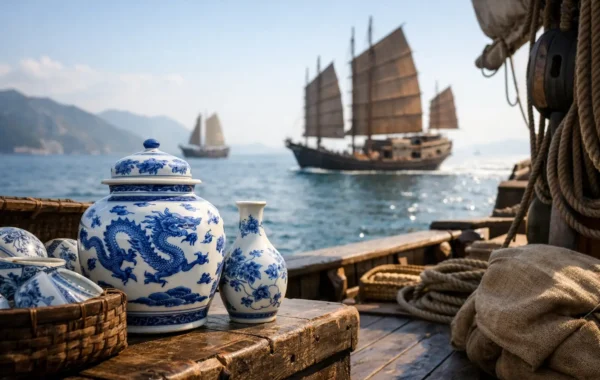
George Town has long rewarded curious travellers. Its streets, food and architectural heritage speak of exchange between communities, empires and commercial worlds. The museum adds a compelling maritime dimension to that story through ceramic artefacts recovered from significant Asian shipwrecks, including the Wanli, Turiang, Royal Nanhai, Nanyang, Xuande and Desaru.
These collections make the past immediate. The fine forms, motifs and surfaces of porcelain document the splendour of ceramic production, while their recovery from shipwrecks gives every piece an added sense of journey. They are not simply decorative antiques. They are surviving witnesses to the sea lanes that connected China, Southeast Asia and the wider world.
As Penang’s first museum of its kind and Malaysia’s first integrated heritage and lifestyle museum, the destination broadens what a museum visit can be. It respects the seriousness of historical material while recognising that contemporary visitors want a cultural outing to feel generous, social and complete.
Where arts, culture, education and tourism meet
The strongest cultural destinations do not ask visitors to choose between learning and leisure. They create the conditions for both. Here, maritime archaeology and porcelain scholarship sit alongside art, exhibitions, hospitality and considered retail, allowing a visit to unfold at a more natural pace.
For cultural tourists, this creates an experience with genuine local relevance. Penang’s historic importance was shaped by its position within regional networks of movement and exchange. Shipwreck ceramics give those networks form and texture. A visitor can look closely at an object, consider its original voyage, then see the city outside with a sharper understanding of its place in Asian history.
For families, the value is equally clear. Artefacts can turn large ideas – trade, technology, geography and cultural exchange – into stories that younger visitors can see rather than merely hear about. The objects invite questions: Who made this? Where was it going? What happened when the ship went down? That curiosity is the beginning of meaningful education.
Education, however, need not feel formal to be lasting. A carefully presented display, a conversation over lunch, or a chosen keepsake can extend the experience beyond the gallery. This is particularly valuable for travellers with limited time, who want depth without the sense of being hurried through a conventional attraction.
Heritage with a lived-in sense of occasion
A static display can preserve objects, but it does not always create a reason to linger. An integrated destination offers another possibility: heritage can be encountered alongside food, a café pause, bar offerings, exhibitions and a gift house. The result is a cultural visit that belongs naturally within a day spent in George Town.
That balance requires care. Dining and retail should never distract from the historical significance of the collection. At their best, they give visitors time to reflect, discuss and carry a piece of the story forward. The artefacts remain the heart of the experience; the surrounding hospitality makes room for them to be appreciated without haste.
For collectors and design-minded visitors, this approach also acknowledges the enduring appeal of ceramics. Porcelain has always moved between utility, artistry and status. Seeing shipwreck pieces in a setting that celebrates material culture encourages a deeper appreciation of the skill, rarity and cultural exchange embodied in every form.
Why this matters to Penang tourism
Tourism is most valuable when it strengthens a visitor’s relationship with place. A museum centred on maritime heritage gives international guests and local residents a richer way to understand Penang beyond its familiar landmarks. It complements the city’s established appeal rather than repeating it.
It also gives travellers a reason to return. Temporary exhibitions, cultural programming and the changing atmosphere of an integrated venue can make each visit feel different, while the permanent collection provides an enduring anchor. For those planning a day around history, art and good conversation, the most rewarding itinerary leaves space for an object to surprise you – perhaps a centuries-old porcelain vessel that still carries the quiet drama of its voyage.