
A bowl lifted from a centuries-old shipwreck carries more than glaze and form. It carries ambition, exchange, appetite, and the quiet evidence of lives once linked by sea. That is why oriental porcelain heritage continues to hold such power today – not simply as beautiful craftsmanship, but as a record of the routes, rituals, and relationships that shaped Asia.
For visitors drawn to objects with both elegance and provenance, porcelain offers a rare kind of encounter. It is refined enough to belong in palaces and intimate enough to sit in the hand. Yet its real significance lies in what it reveals. A single shard can point to imperial kilns, mercantile networks, changing tastes, and the hazards of maritime travel. In that sense, porcelain is never only decorative. It is evidence.
What oriental porcelain heritage really represents
The phrase oriental porcelain heritage can sometimes sound like a broad label for antique ceramics. In reality, it refers to a layered cultural legacy that spans production, trade, collecting, and survival. Porcelain was prized because it combined technical mastery with visual allure. Its translucency, strength, and finely controlled decoration made it a luxury object, but it was also a traded commodity that travelled widely across ports and courts.
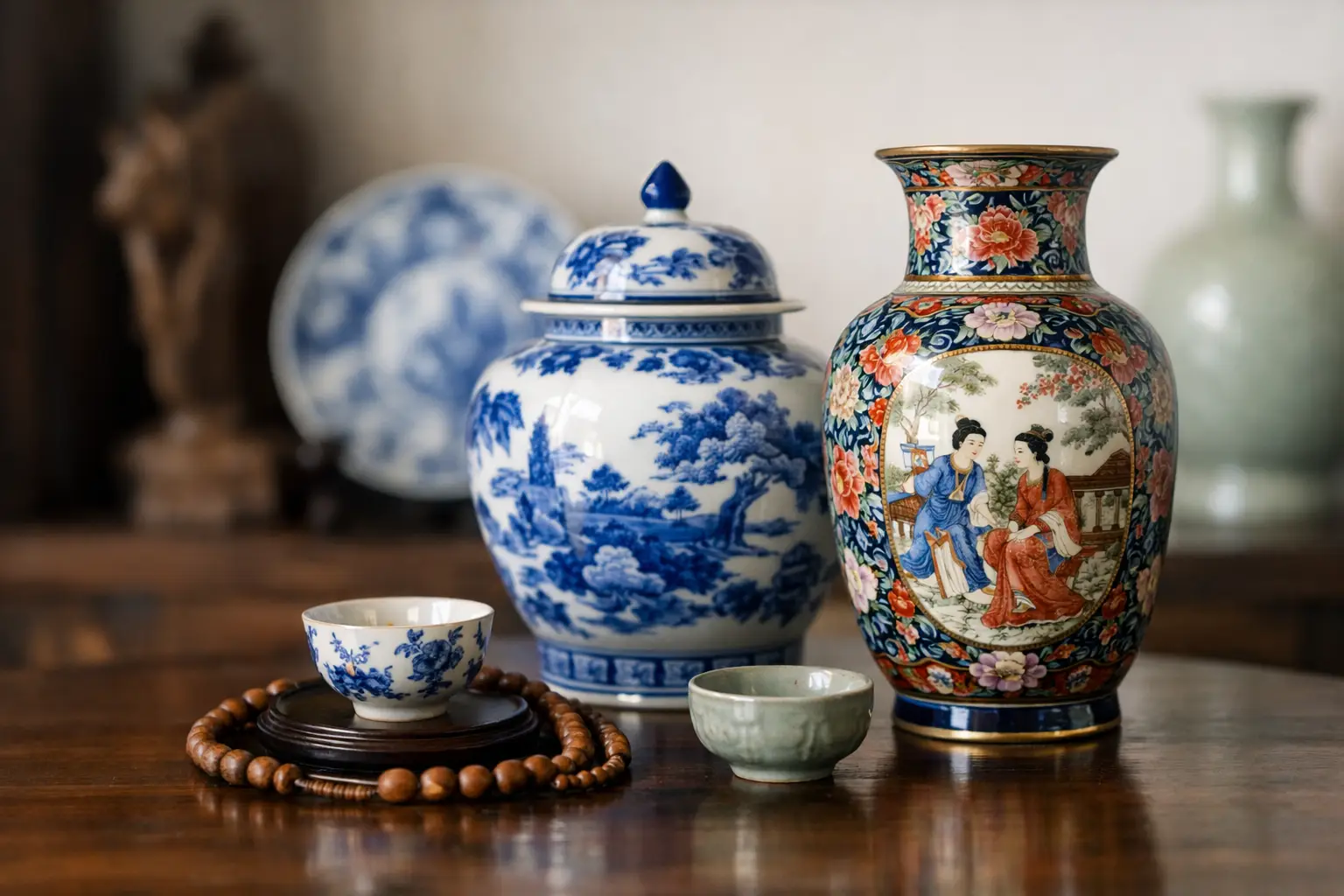
Across different dynasties and regions, porcelain developed distinct identities. Some pieces were made for imperial use, some for export, and some for everyday domestic life. Blue-and-white wares became especially influential because they moved so effectively across cultural boundaries. Their motifs could be symbolic, commercial, or simply fashionable. A dish made in China might be commissioned with forms or decorative preferences intended for buyers elsewhere in Asia, the Middle East, or Europe.
That complexity matters. Heritage is not only about origin. It is also about movement. Porcelain belongs as much to the story of the sea as it does to the story of the kiln.
Oriental porcelain heritage and the maritime world
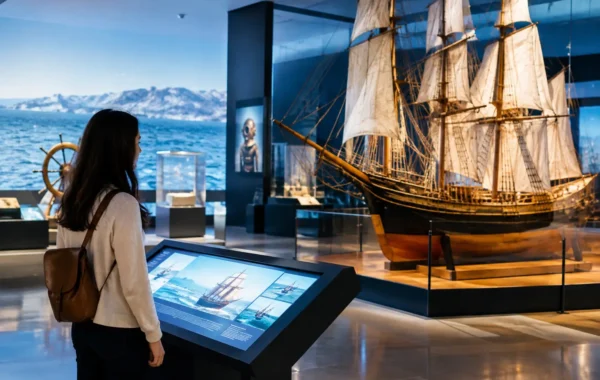
To understand oriental porcelain heritage properly, one must look beyond the display case and towards the shipping routes that carried these wares across the region. Porcelain was among the most significant cargoes in maritime trade, valued for its desirability, durability, and status. It linked production centres to entrepots, royal courts, merchant houses, and private homes.
This is where shipwreck ceramics become especially compelling. When a vessel sank, its cargo was abruptly sealed in time. Unlike objects passed down through generations, altered by use, or detached from their original context, shipwreck finds often preserve a clearer snapshot of commercial life at a specific historical moment. They show what was being traded, in what quantity, and sometimes for which market.
The story becomes more vivid when one considers the risks involved. Monsoon patterns, piracy, navigational error, and political instability all shaped maritime movement. Every recovered cargo reminds us that trade was never guaranteed. The porcelain that survived beneath the sea for centuries is extraordinary not only because it endured, but because it was never meant to be lost.
Why shipwreck porcelain changes how we read history
Museum visitors often respond first to appearance – the sheen of a celadon glaze, the precision of cobalt decoration, the graceful curve of a stem cup. But shipwreck porcelain asks for a second look. It invites us to see ceramics not as isolated art objects, but as part of a living historical system.
That shift in perspective is significant. A plate from a terrestrial collection can be admired for beauty and workmanship. A plate recovered from a wreck also speaks of cargo organisation, demand at destination ports, and the practical economics of long-distance trade. Quantity matters here as much as quality. Repetition across a cargo tells us something about scale and standardisation, while rarer pieces can indicate elite consumption or specialised commissions.
There is also an undeniable emotional charge to maritime archaeology. These objects were interrupted mid-journey. Their recovery restores not only material culture, but narrative. At a place such as Straits & Oriental Museum, where authentic ceramics from notable Asian shipwrecks are presented within a broader cultural setting, visitors are able to experience porcelain as both art and testimony. That distinction elevates the encounter.
Beauty, status, and the politics of taste
Porcelain has always done social work. It signalled refinement, wealth, and access. In courtly settings it reflected ceremony and hierarchy. In mercantile settings it demonstrated cosmopolitan taste. In domestic settings it could serve practical needs while still carrying prestige.
What makes this heritage especially fascinating is that taste was never fixed. Markets influenced design. Export wares adapted to foreign preferences. Decorative schemes travelled, mingled, and changed. The result was not a single static tradition, but a dynamic conversation between makers and buyers.
There is a useful tension here. On one hand, porcelain is often presented as timeless. On the other, it is highly responsive to fashion and commerce. Both are true. Its forms can feel enduring, yet each object belongs to a specific moment of production and exchange. Recognising that balance helps visitors appreciate why certain pieces feel universal while others seem rooted in a particular era or destination.
The value of authenticity in a reproduced world
We live in an age of endless imitation, where ceramic styles are frequently replicated for interiors, retail, and mass-market nostalgia. That can widen appreciation, but it can also flatten meaning. When every blue-and-white motif is treated as interchangeable, the historical and regional differences that define true heritage begin to blur.
Authentic porcelain artefacts resist that flattening. They ask us to slow down and consider material, provenance, and context. A genuine recovered piece carries marks of firing, transport, submersion, and survival that no reproduction can convincingly invent. Its value lies not only in rarity, but in truth.
This is especially relevant for travellers and collectors who want more than surface beauty. They want connection to place, period, and story. Authenticity, in this context, is not a marketing flourish. It is the foundation of meaning.
Why this heritage still resonates with modern audiences
Part of porcelain’s appeal is visual. It photographs beautifully, displays elegantly, and rewards close attention. But its staying power comes from something deeper. It connects intimate domestic life to large historical forces. A tea bowl can lead to a conversation about trade winds. A charger can open questions about empire, luxury, and cross-cultural exchange.
For families, that makes porcelain heritage unusually accessible. Children may be drawn to the drama of shipwrecks. Adults may linger over craftsmanship and history. Collectors may focus on typology, rarity, and condition. Cultural tourists may simply want an experience that feels rooted in place rather than generic. Porcelain has the unusual ability to meet all of those expectations without becoming simplistic.
It also suits the way people now prefer to encounter culture. They are not always looking for a silent, formal visit detached from the rest of the day. They often want heritage in conversation with leisure, design, hospitality, and memory-making. When presented thoughtfully, porcelain becomes part of a fuller cultural outing – one that is intellectually rewarding without losing warmth or accessibility.
Seeing oriental porcelain heritage with fresh eyes
The most rewarding way to approach oriental porcelain heritage is to resist the urge to treat it as merely antique. Instead, see it as a living archive of movement. Notice the curve of a vessel, but also ask where it was going. Admire the glaze, but also consider the kiln technologies behind it. Enjoy the symmetry of a painted motif, but also reflect on the buyers for whom it was intended.
It is equally worth acknowledging that heritage can be selective. Museums and collectors inevitably frame objects in particular ways. Some emphasise aesthetics, others archaeology, others trade, status, or craft. None of these approaches is wrong, but each highlights one part of a larger whole. The richest experience comes when beauty and context are allowed to stand together.
That is precisely why porcelain remains so compelling in a maritime setting. It does not have to be forced into relevance. Its relevance is already there – in the routes it travelled, the markets it served, and the centuries it has outlived.
The next time you stand before a recovered porcelain bowl or dish, look past the polish. Imagine the port where it was loaded, the hands that packed it, the sea it crossed, and the silence that followed its loss. Heritage begins there, not as nostalgia, but as a vivid reminder that history is often carried in the most delicate things.