
A porcelain bowl recovered from the seabed does not arrive with a label explaining who packed it, bought it, treasured it or lost it. Its value lies in the questions it carries: which port it left, which monsoon winds guided its vessel, and how it came to rest beneath the waves for centuries. The future of maritime heritage exhibitions rests on making those questions felt as vividly as the object itself.
For visitors, maritime heritage is no longer simply a row of artefacts behind glass. It is an invitation to understand Asia as a connected seascape, shaped by trade, migration, craftsmanship and chance. For museums, the challenge is to create that sense of connection without compromising the integrity of rare archaeological collections.
The future of maritime heritage exhibitions is human
The most compelling exhibition technology remains a well-told story. A fragment of blue-and-white porcelain becomes far more memorable when visitors can picture the merchant networks that carried it across the South China Sea, the skilled hands that made it, and the shipwreck that preserved it beyond the reach of ordinary history.
Future exhibitions will place greater emphasis on people rather than treating cargo as a catalogue of dates and dynasties. Curators will increasingly draw attention to sailors, navigators, potters, dockworkers, traders and coastal communities. This approach gives a collection emotional clarity while preserving the scholarly detail that enthusiasts and collectors value.
That does not mean simplifying the past. Maritime trade was prosperous, but it was also uncertain. Ships crossed dangerous waters; goods changed hands through complex networks; and the cultures represented in a single wreck were rarely confined to one place. A thoughtful exhibition should leave room for this complexity. The goal is not to turn history into a neat adventure story, but to make its stakes legible.
For George Town, this perspective holds particular resonance. The port city has long been shaped by movement across the Straits, with food, language, commerce and material culture bearing the marks of those encounters. Shipwreck ceramics offer a tangible way to see that wider regional history in the hand-sized details of everyday life.
Authentic objects will remain the centrepiece
Digital interpretation can add atmosphere, but it cannot replace authenticity. The salt-worn surface of a recovered jar, the irregularity of a hand-painted motif, and the scale of a cargo assembled centuries ago create a presence that a screen cannot reproduce. As audiences become more accustomed to polished digital experiences, genuine archaeological objects may become even more distinctive.
This is especially true for maritime collections. Objects recovered from wreck sites have passed through an extraordinary physical journey. Their condition is part of their meaning. Conservation marks, marine deposits and incomplete forms can reveal as much as decorative perfection, reminding visitors that these pieces are survivors as well as works of craft.
The future will therefore favour exhibitions that explain provenance clearly and respectfully. Visitors increasingly want to know where an object came from, how it was recovered and why it is held in a public collection. Museums that communicate these matters with confidence build trust, particularly when presenting items connected to underwater archaeology and international trade.
At Straits & Oriental Museum, the presence of ceramics associated with wrecks including the Wanli, Turiang, Royal Nanhai, Nanyang, Xuande and Desaru makes this approach especially powerful. The collection can speak not only to porcelain’s beauty, but also to the remarkable maritime systems that brought it into circulation.
Technology should deepen attention, not compete for it
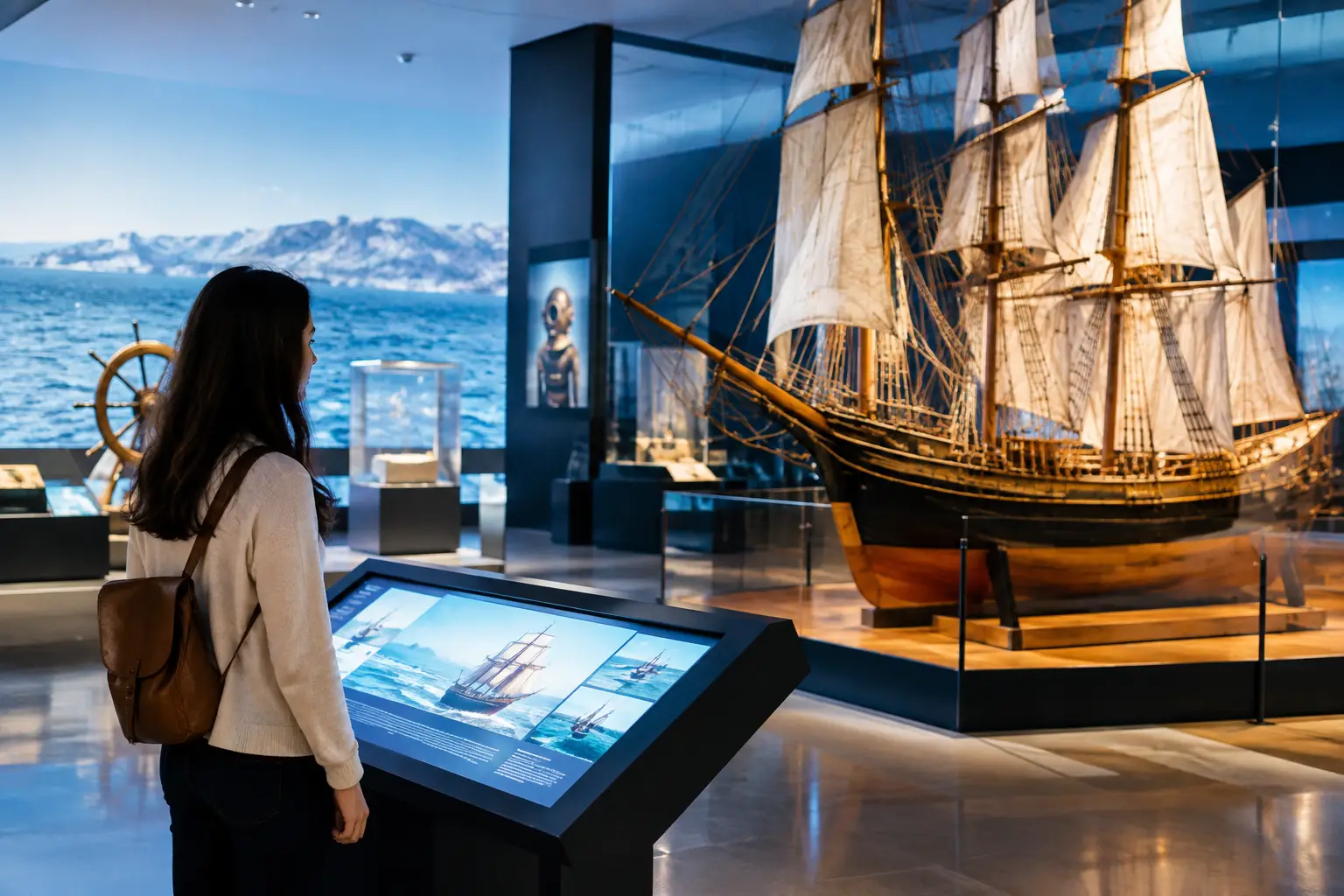
The strongest digital tools will be those that help visitors look more closely. A discreet projection might reconstruct a vessel’s cargo hold. A touch display could allow a family to trace routes between Chinese kilns and Southeast Asian ports. Audio could bring forward the sounds of a harbour: rigging in the wind, trade negotiations, ceramic crates being loaded for sea.
Used well, these tools create context around objects that must remain protected. They can also make difficult subjects more accessible, from navigation and ceramic production to the conservation process that follows underwater recovery. Multilingual interpretation, accessible captions and carefully designed sound can welcome a broader range of visitors without flattening the experience.
There is a trade-off. An exhibition filled with interactive surfaces can quickly become a room of competing distractions. If every object demands a scan, tap or animation, visitors may remember the interface rather than the collection. Technology should offer an optional layer of discovery, with the artefact always retaining the final word.
Immersive design also does not need to mean spectacle. A restrained change in lighting, a map that follows a monsoon route, or a table displaying the forms of bowls, ewers and storage jars can be more effective than a theatrical simulation. For heritage institutions, sophistication often comes from knowing when to pause.
From visit to cultural occasion
The future museum visit will increasingly be designed as a complete cultural occasion. Travellers and local audiences alike are looking for places where learning belongs naturally alongside conversation, art, food and considered retail. This does not diminish heritage. When handled with care, hospitality gives visitors time to absorb what they have seen and continue the story in their own way.
A café menu can reflect the ingredients and trade routes that shaped regional cooking. An exhibition programme can pair maritime history with contemporary art, collector conversations or family workshops. A gift house can offer well-designed objects and books that extend the encounter beyond the gallery. Each experience should relate to the institution’s curatorial identity rather than feeling like an unrelated add-on.
This model is particularly suited to maritime heritage because the sea has always connected commerce, culture and daily life. A museum that brings these elements together can show that history is not sealed in the past. It remains present in a city’s streets, tables and exchanges.
The balance matters. Dining and retail should support the atmosphere of discovery, not overwhelm it. Visitors who come for a rare artefact deserve calm, clarity and time. Visitors who arrive for lunch may become curious about the collection. A successful integrated venue allows both journeys to feel natural.
Exhibitions will become more participatory
Future audiences will expect opportunities to contribute, especially where maritime heritage intersects with family memory and local knowledge. A visitor may recognise a pattern on a dish from a grandparent’s home. A former seafarer may add insight into coastal routes. A child may ask the question that shifts an adult’s perspective: how did a ship carry all of this without sinking?
Participation must be curated rather than casual. Oral histories, community displays and public programmes need the same care as object labels, with sources checked and differing perspectives acknowledged. Yet when museums create room for these voices, they can present maritime history as a living conversation rather than a finished account.
For families, hands-on interpretation will be particularly valuable. Handling replicas, matching ceramic motifs, plotting a voyage or examining how conservators piece together fragments can turn a visit into shared discovery. Adults gain depth, children gain agency, and the original artefacts remain safely protected.
Care, climate and the responsibility to preserve
The future of maritime heritage exhibitions will also be shaped by practical pressures. Climate change, rising humidity, extreme weather and the vulnerability of coastal sites make preservation an urgent concern. Maritime archaeology is not only about objects already in museums. It includes wrecks and landscapes that may still lie underwater, exposed to environmental change and illicit disturbance.
This gives exhibitions an important public role. They can explain why conservation takes patience, why some sites should not be disturbed, and why responsible collecting matters. Such interpretation need not feel gloomy. It can inspire respect for the expertise required to safeguard fragile material for future generations.
There is no single formula for the exhibition of the future. A collector may seek close study and provenance; a holidaying couple may want an evocative hour; a family may need tactile moments and clear stories. The finest maritime exhibitions welcome each visitor while refusing to compromise on the depth of the collection.
The next time you stand before a shipwreck ceramic, linger over its smallest details. In that object are a maker’s skill, a voyage interrupted and a world connected by water – a reminder that the most enduring exhibitions do not merely display history, but give it room to speak.