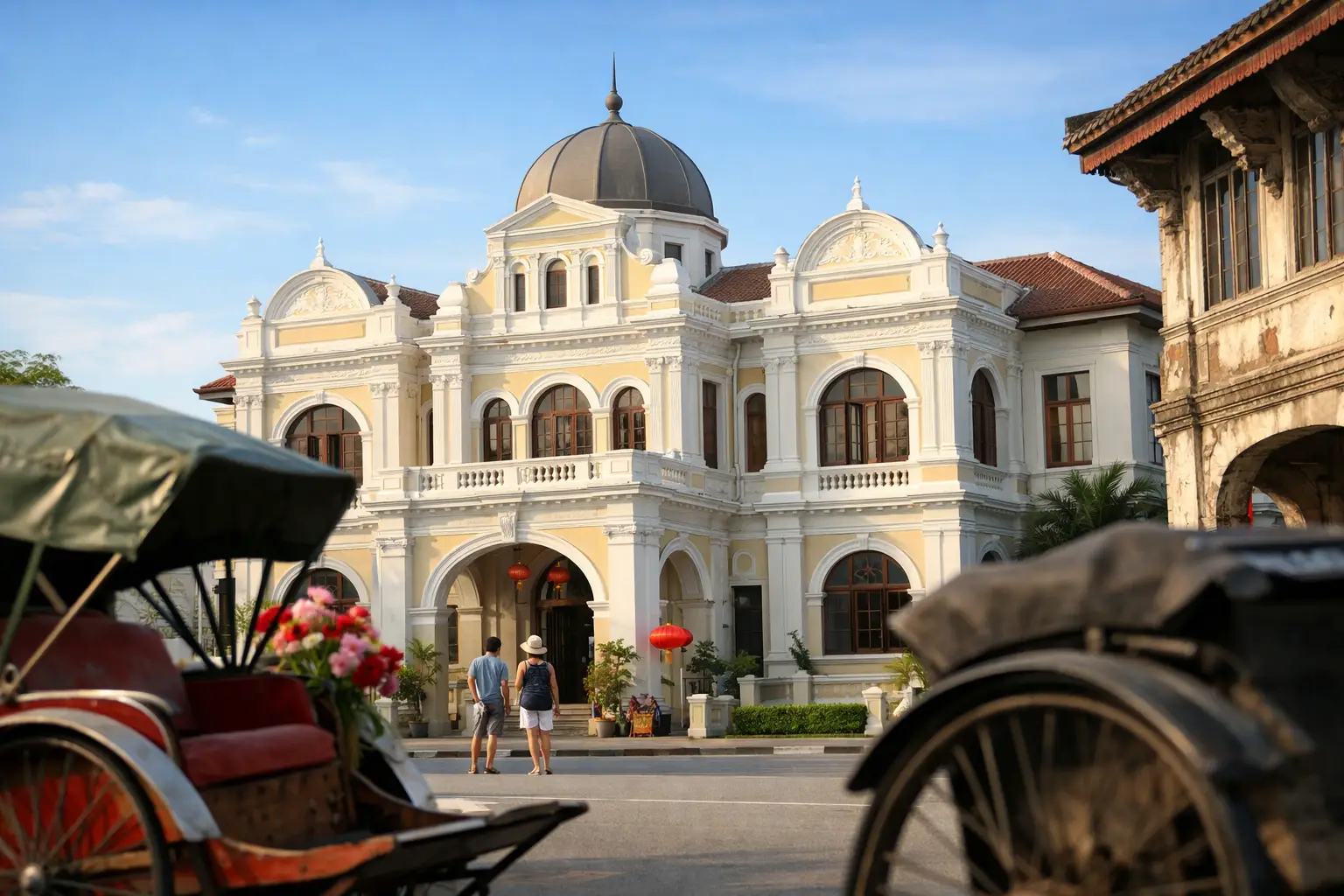

George Town rewards the curious. Look beyond its well-known streets and shophouses, and the city’s deeper story comes into view – one shaped by trade winds, sea routes, migrating communities and objects carried across oceans. That is precisely why a George Town heritage museum remains such a compelling destination today. It does more than preserve the past. At its best, it gives visitors a way to feel how Penang became a meeting point of commerce, culture and craftsmanship.
For many travellers, heritage can sometimes sound worthy but distant, as though it belongs behind glass and at arm’s length. The more memorable experience is something else entirely. It is standing before a porcelain bowl that survived centuries underwater and realising that history is not abstract at all. It travelled. It broke, endured, disappeared and returned. In a city built on exchange, maritime heritage is not a side note. It is one of the central stories.
What makes a George Town heritage museum distinctive
Not every heritage museum tells its story in the same way. Some focus on architecture, some on political milestones, and others on community memory. In George Town, the most distinctive interpretation often begins at sea. That matters because the city’s identity was never formed solely on land. Its fortunes were tied to shipping lanes, merchant networks and the movement of goods between China, Southeast Asia and beyond.
A museum centred on maritime history brings that reality into sharp focus. Ceramics recovered from historic shipwrecks are not simply beautiful artefacts, though many are exactly that. They are evidence of taste, trade and technology. They show what was valued, what was made in large quantities, what travelled far, and what people were willing to risk transporting over dangerous waters.
This is where a more considered museum experience stands apart from a quick heritage stop. When visitors encounter collections linked to wrecks such as the Wanli, Turiang, Royal Nanhai, Nanyang, Xuande and Desaru, they are not just seeing isolated objects. They are seeing fragments of a regional story that connects courts, ports, workshops and households. The appeal is immediate, but the meaning deepens the longer you stay with it.
More than display cases – history with atmosphere
A strong heritage museum does not rely on rarity alone. Rare collections can impress, but without context they risk becoming little more than attractive surfaces. What turns admiration into engagement is storytelling – careful curation, clear interpretation and an atmosphere that encourages people to linger rather than rush through.
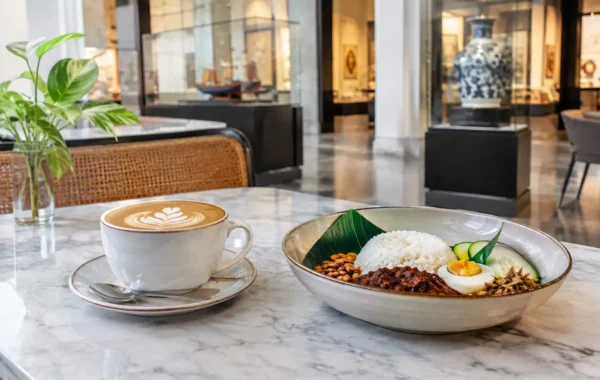
That is especially true for today’s visitors, who want more from cultural destinations. They may arrive for the collections, but they also value the setting, the pace and the sense of occasion. A heritage museum that combines exhibitions with gallery experiences, dining and thoughtful retail acknowledges something simple: culture is not diminished by hospitality. When done properly, it is enhanced by it.
There is, of course, a balance to strike. Lean too far into lifestyle and the historical core can feel diluted. Lean too far into academic formality and many visitors will admire the institution while feeling slightly excluded by it. The most successful museums occupy the middle ground with confidence. They remain serious about their collections while making the overall visit feel generous, civilised and welcoming.
The power of shipwreck ceramics in telling Penang’s story
Shipwreck ceramics carry an unusual emotional force. Paintings and documents can explain trade, but recovered porcelain makes the stakes tangible. Here is the cargo that never arrived. Here are the objects made for use, exchange, status or ceremony, interrupted by disaster and preserved by the sea.
For visitors in Penang, that framing is particularly resonant. This was a region shaped by maritime circulation. Goods did not move in neat, inevitable lines. They moved through risk, weather, ambition and human error. A recovered plate or jar becomes proof of those forces. It also reminds us that heritage is often accidental. What survives does so through a combination of craft, chance and recovery.
There is another reason these collections matter. They reveal splendour without requiring specialist knowledge. You do not need to be an archaeologist or collector to appreciate the refinement of glaze, the delicacy of form or the endurance of material. Yet for those who do have a deeper interest, the objects reward close looking. Differences in kiln production, export patterns and decorative styles open onto a wider conversation about Asian trade and cultural exchange.
That layered accessibility is one of the great strengths of a museum built around maritime ceramics. Families, seasoned museum-goers and serious collectors can all find something here, though not always in exactly the same way. That is not a weakness. It is the sign of a collection with range.
Why heritage visitors want a fuller cultural outing
The modern museum visit is rarely just about ticking off a landmark. Visitors increasingly want a destination that can hold an afternoon, not merely half an hour. They want visual discovery, but also comfort, atmosphere and room to absorb what they have seen. In that respect, the evolution of the heritage museum is not a compromise with contemporary tastes. It is a practical response to how people actually spend time.
A venue that brings together museum displays, curated exhibitions, dining spaces and a gift house creates a different rhythm of visit. Guests can move from object to story, from gallery to conversation, from reflection to refreshment. That rhythm suits couples, travelling families and cultural tourists especially well because it removes the pressure to separate learning from leisure.
Penang’s first integrated heritage and lifestyle museum, Straits & Oriental Museum, speaks directly to that expectation. Its significance lies not only in the rarity of its shipwreck ceramic collections, but in the way it frames heritage as a lived cultural experience rather than a static encounter. For travellers seeking substance as well as style, that distinction matters.
George Town heritage museum visits are not one-size-fits-all
It is worth saying plainly that not every visitor arrives with the same priorities. Some are drawn by maritime archaeology. Others are more interested in porcelain as an art form. Families may be looking for an experience that is educational without feeling too formal, while collectors might care most about provenance, period and condition.
A well-conceived museum makes space for those different entry points. It does not assume that everyone wants a lecture, nor does it flatten the material into quick entertainment. Instead, it offers enough depth for the knowledgeable visitor while remaining inviting to the newcomer. That balance can be difficult to achieve, but when it is done well, it turns a museum into a place people genuinely remember.
There is also the question of pace. Some travellers want a focused cultural stop between other plans. Others prefer to settle in, take their time and let the visit unfold. A museum that also functions as an exhibition and lifestyle destination accommodates both, which is one reason this model feels so suited to a heritage city with an international audience.
What visitors remember after they leave
Long after specific labels and dates fade, most people remember a museum through a handful of vivid impressions. The lustre of porcelain under the light. The knowledge that an object spent centuries beneath the sea. The quiet thrill of standing close to something both fragile and durable. A meal or coffee that extended the visit rather than interrupting it. A small purchase that carried a piece of the story home.
That combination of intellectual interest and sensory memory is powerful. It turns heritage from information into experience. It also reflects something true about George Town itself. This is a place where history is not confined to a single building or period. It lives in food, trade, craftsmanship, migration and material culture. A museum that understands this does more than interpret the city. It mirrors its character.
For visitors choosing how to spend their time, that is the real value of a thoughtful heritage destination. It offers beauty, yes, but also perspective. It reminds us that the story of a port city was written by movement – of people, objects, ideas and fortunes – and that some of its finest witnesses are the artefacts that crossed the sea and survived it.
If you are seeking a cultural experience with substance, choose the place that lets history feel close enough to admire and rich enough to stay with you afterwards.