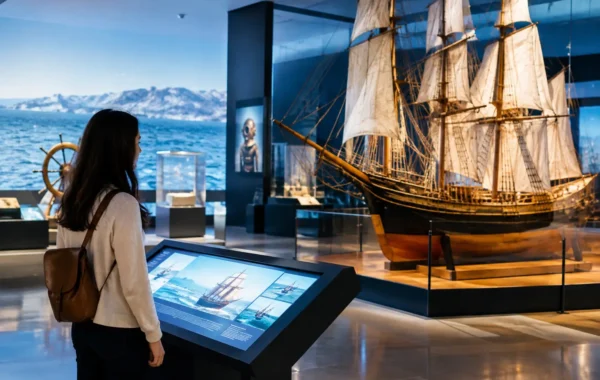

A fine shipwreck porcelain collection does more than display beautiful ceramics behind glass. It brings commerce, taste, risk and survival into one room, allowing visitors to stand before objects that once crossed dangerous seas as part of Asia’s great maritime networks.
That is what makes these collections so arresting. Porcelain was never merely decorative. It was cargo, currency, status symbol and cultural ambassador all at once. When a vessel went down, its ceramic cargo often remained intact beneath layers of sand and silt, waiting for centuries before re-entering the world as evidence of trade, craftsmanship and human ambition.
Why a shipwreck porcelain collection matters
There is a particular power in seeing porcelain that has survived both kiln and ocean. Unlike many historical objects that reach us through written description alone, shipwreck ceramics are tactile proof of movement across the region. They show what merchants valued, what ports demanded, what tastes travelled and how widely Asian trade was connected long before the modern age.
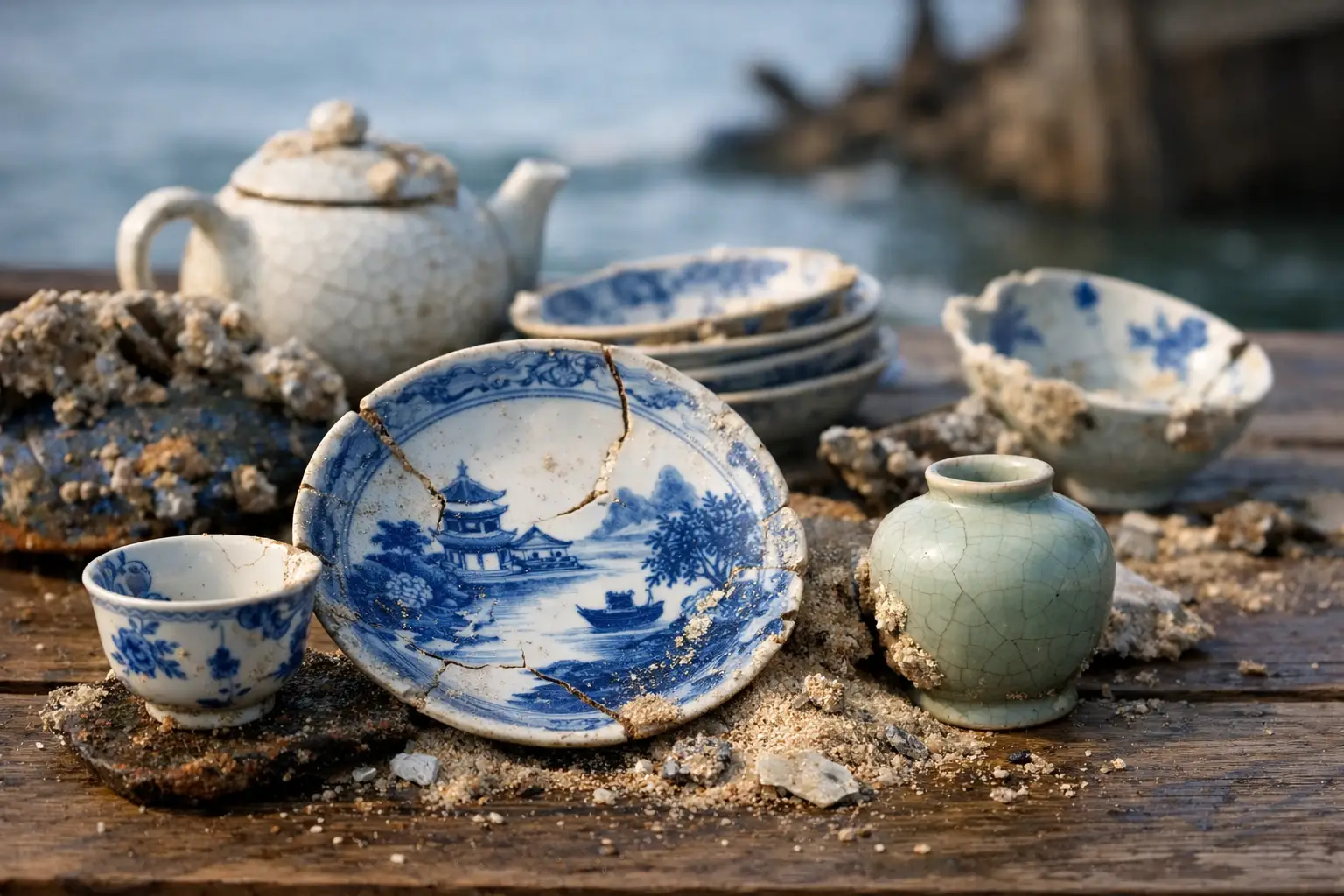
For visitors, the appeal usually begins with beauty. Blue and white wares, celadon surfaces, delicately painted bowls and storage jars possess an immediate visual elegance. Yet the real fascination deepens when you understand that these were not isolated art objects. They were part of immense trading systems linking production centres, shipbuilders, merchants and coastal communities.
A shipwreck porcelain collection therefore rewards both the casual museum-goer and the serious collector. One may be drawn first to colour and form, the other to provenance and period. Both leave with a stronger sense that porcelain is not static heritage but a record of exchange across oceans.
What shipwreck ceramics can tell us
When archaeologically recovered and properly interpreted, porcelain from wreck sites reveals far more than dates and dynasties. It can indicate trade routes, market demand, packaging methods and even shifting political conditions. A cargo made up of everyday bowls suggests one kind of commercial network. A mixed load of higher-value wares, storage vessels and utilitarian ceramics suggests another.
This is where nuance matters. Not every recovered piece is a masterpiece, and that is precisely the point. A collection composed only of the finest examples would tell a narrower story. The presence of ordinary wares, repeat forms and export-focused designs often gives a truer picture of how maritime trade worked in practice.
Condition also needs careful reading. Visitors sometimes assume that the most valuable item is simply the most pristine. In historical terms, however, a piece with marine accretions or slight imperfections may still be deeply significant if it reveals kiln practice, route patterns or the nature of the cargo. Beauty matters, certainly, but context matters more.
The appeal of recovered porcelain
Part of the enchantment lies in contrast. Porcelain is associated with refinement, domesticity and ceremony. A shipwreck evokes storm, rupture and loss. When the two meet, the object acquires a drama that ordinary display pieces rarely possess.
That drama should not be mistaken for romance alone. Shipwreck collections sit at the meeting point of archaeology, conservation and storytelling. They require patient recovery, documentation and interpretation. Without that discipline, ceramics risk becoming curiosities rather than historical witnesses.
For that reason, the strongest collections are those that present porcelain as part of a wider maritime narrative. The bowl matters, but so does the vessel that carried it, the period that produced it, and the sea lane that shaped its journey. Visitors tend to remember objects more vividly when they understand the route from kiln to port to seabed to gallery.
Shipwreck porcelain collection highlights to look for
A thoughtful visit is rarely about seeing as many objects as possible. It is about noticing relationships between them. In a distinguished shipwreck porcelain collection, several details deserve closer attention.
First, look at repetition. Sets of similar bowls, dishes or jars tell you these were traded in quantity, not treasured as one-off luxuries. Second, notice variation within repetition. Small differences in glaze, motif or firing can reveal workshop practices and commercial adaptability. Third, pay attention to scale. Large storage vessels, compact cups and medium serving wares all suggest different uses and different buyers.
Decoration offers another layer of insight. Floral patterns, geometric borders and painted scenes often travelled well because they appealed across regions. Some motifs were highly local; others were deliberately export-friendly. That balance between local production and international taste is one of the most compelling aspects of maritime ceramics.
Then there is the material presence of the sea itself. Encrustation, staining and wear can be visually striking, but they also remind us that recovery is only one chapter in an object’s life. The ocean leaves marks, and those marks are part of the story.
From cargo to cultural memory
Porcelain carried on merchant vessels was once part of ordinary economic life. Today, once recovered and interpreted, it becomes part of cultural memory. That shift is profound. A trade item intended for sale now helps explain how societies were linked through appetite, fashion, diplomacy and exchange.
In an institution devoted to maritime heritage, this transformation is especially vivid. Collections associated with notable Asian wrecks, including the Wanli, Turiang, Royal Nanhai, Nanyang, Xuande and Desaru, allow visitors to see that the sea was not a barrier between cultures but a channel through which goods and ideas travelled constantly.
This matters in Penang, a place shaped by trade, migration and layered histories. Seeing recovered ceramics within that broader regional context gives the visitor more than a lesson in antique porcelain. It offers a clearer sense of how port cities became cultural crossroads.
Why collectors and casual visitors respond differently
One of the strengths of shipwreck ceramics is that they speak to different audiences without losing their integrity. Families and first-time visitors often respond emotionally first. They imagine the vessel, the voyage, the sinking and the rediscovery. The story gives the object life.
Collectors and specialists may begin elsewhere. They notice glaze quality, form, rarity, dating and comparables. They ask whether a piece is typical of an export cargo or an unusual survival. They are often alert to provenance and conservation standards, which is entirely appropriate in this field.
Neither response is superior. In fact, the best museum experiences allow both to coexist. Historical authority should never flatten wonder, and visual spectacle should never replace context. When those elements are in balance, a collection becomes both intellectually serious and widely accessible.
A museum experience, not just a display
That balance is what distinguishes a memorable visit from a quick look around. A shipwreck porcelain collection is most compelling when presented as part of a wider cultural outing – one that invites reflection, conversation and lingering attention rather than hurried observation.
For many travellers, that matters as much as the objects themselves. They are not simply seeking information; they are seeking atmosphere, authenticity and a strong sense of place. In George Town, Straits & Oriental Museum frames maritime ceramics within a broader heritage and lifestyle setting, which gives visitors room to move from discovery to discussion and from history to hospitality in a single destination.
There is a practical advantage to this approach. Maritime archaeology can feel specialised if presented too narrowly. But when the storytelling is elegant and the environment welcoming, visitors of different ages and levels of knowledge can engage with the collection on their own terms.
What stays with you after the visit
Long after specific dates and dynasties fade, most people remember a handful of images: a bowl that survived the seabed, a cluster of cargo once meant for distant markets, the quiet shock of realising how connected the region has always been. That is the lasting gift of a shipwreck porcelain collection.
It reminds us that history is not abstract. It is fired in clay, loaded onto ships, lost to storms, recovered by care and preserved through interpretation. And when those objects are presented with authority and imagination, they do more than document the splendour of porcelain. They return the sea, the traders and the journey to view.
The next time you stand before recovered ceramics, look beyond their surface finish. You may find that the most remarkable thing about them is not that they sank, but that they still have so much to say.