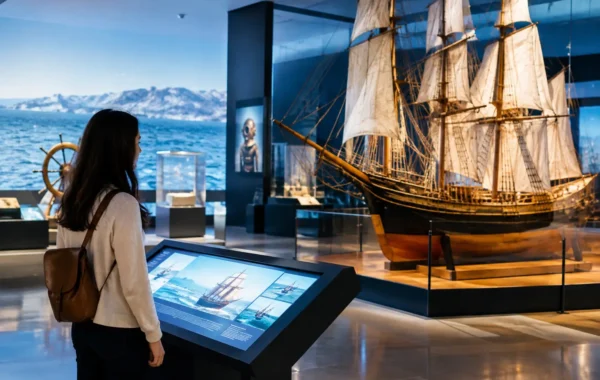
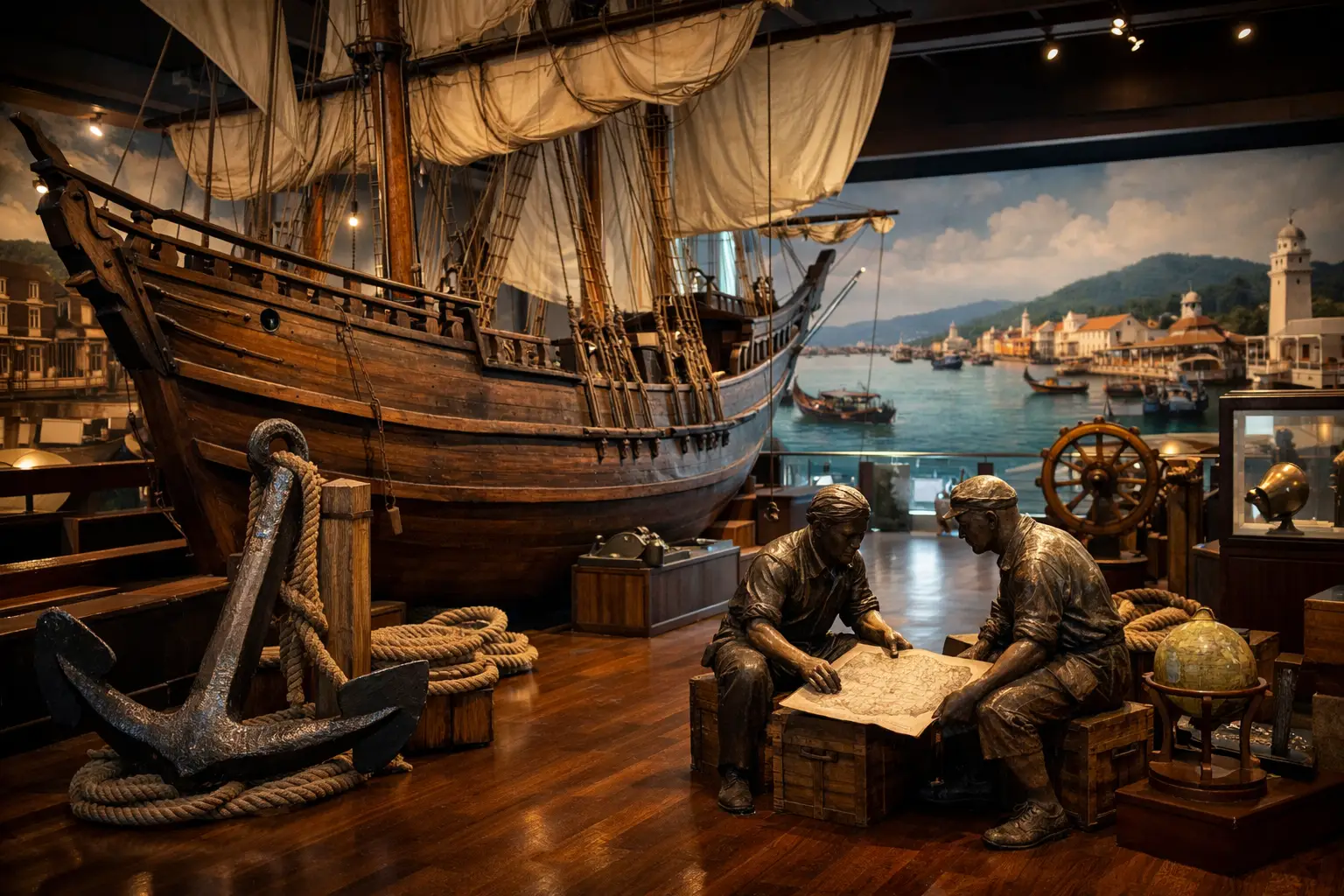

A port city is best understood by what arrived on its shores. At a penang maritime history museum, that truth becomes visible in porcelain, trade goods and the traces of voyages that once connected Penang to the wider Asian maritime world. This is not history kept at a distance behind labels alone. It is history made tangible through objects that survived storms, commerce, empire and time.
For many visitors, Penang is already associated with architecture, food and the textured rhythm of George Town’s streets. Yet the island’s maritime identity often explains far more than first appears. Trade shaped its fortunes, migration shaped its communities, and the sea shaped its role in the region. A museum devoted to this story gives visitors something richer than a stop on an itinerary. It offers context – and context is what turns sightseeing into understanding.
What makes a Penang maritime history museum worth your time
Not every heritage attraction asks you to look beyond the surface. Maritime history does. A ceramic bowl is never just a bowl once you know it crossed trading routes, passed through merchant hands and rested for centuries beneath the sea. Shipwreck artefacts have a particular power because they compress so many stories into a single object – craftsmanship, exchange, danger, loss and recovery.
That is why a strong maritime museum experience feels distinct from a conventional gallery visit. You are not simply admiring beautiful pieces, although beauty matters. You are also reading evidence. Glaze, form, motif and origin reveal how goods moved across Asia, what was prized in different markets and how deeply connected coastal societies had become long before the modern tourist map existed.
In Penang, this matters more than it might elsewhere. The island’s historical importance is inseparable from the sea. To understand Penang without understanding maritime trade is to miss the engine behind much of its cultural and commercial life.
The story is in the shipwreck ceramics
Among the most compelling features of a museum in this category is the presence of authentic ceramics recovered from historic wrecks. These are not reproductions standing in for the past. They are survivors of it. Pieces linked to notable wrecks such as the Wanli, Turiang, Royal Nanhai, Nanyang, Xuande and Desaru carry unusual weight because they connect artistry with archaeology.
There is a difference between seeing antique porcelain in a decorative setting and seeing it as part of a maritime narrative. In the second case, each vessel, dish or jar becomes evidence of a route, a cargo and a moment interrupted. That interruption is part of the fascination. Shipwreck collections remind us that trade was never tidy. It was ambitious, profitable and often precarious.
For visitors with an eye for design, the appeal begins with craftsmanship. For collectors and history enthusiasts, the attraction often deepens into questions of provenance, rarity and regional significance. Families may respond to the drama of the sea story first, then find themselves unexpectedly engaged by the artistry of the objects themselves. A good museum creates room for all of these responses without flattening the experience into either scholarship or spectacle.
More than display cases
A penang maritime history museum is most memorable when it does not behave like a static institution. The strongest heritage spaces today understand that visitors want atmosphere as well as information. They want to learn, certainly, but they also want to linger, reflect and fold the experience into a broader day out.
This is where an integrated heritage and lifestyle concept becomes especially persuasive. When a museum sits alongside exhibition spaces, art, dining, retail and cultural programming, the visit gains texture. You can move from studying a cargo of porcelain to discussing it over coffee, from viewing artefacts to browsing objects that extend the story, from a gallery moment to an evening shaped by heritage rather than separated from it.
That approach does not dilute the history when done well. It enlarges it. The past becomes part of contemporary leisure rather than something sealed off from everyday life. For travellers and local visitors alike, that makes the destination feel less like an obligation and more like a place to return to.
Why maritime heritage feels especially relevant in Penang
Penang’s appeal has always depended on exchange. Goods, languages, recipes, beliefs and aesthetics all arrived by sea and settled into new forms. Maritime history is therefore not a niche subject here. It sits underneath the island’s identity.
A museum focused on this heritage helps connect seemingly separate experiences across a trip. The architecture of the old port city, the cosmopolitan food culture, the historic mercantile buildings and the enduring mix of influences all become easier to read once the maritime backdrop is clear. Visitors begin to recognise Penang not simply as charming or picturesque, but as a node in a larger network of movement and commerce.
That perspective also gives depth to the visual splendour of ceramic collections. Porcelain was not merely ornamental. It was cargo, status, trade currency, domestic ware and cross-cultural messenger all at once. The finest museums show this without becoming heavy-handed. They let the objects carry the story.
What to look for in the best experience
The difference between a pleasant visit and a memorable one often comes down to curation. Rare artefacts matter, but interpretation matters as much. A strong museum should help visitors understand why these collections are exceptional, how they were recovered and what they reveal about regional trade routes and cultural exchange.
Atmosphere counts too. Lighting, pacing and presentation can elevate maritime material from academic interest to emotional encounter. Ceramics in particular benefit from careful display because their appeal lies in both delicacy and endurance. They are fragile objects that have outlasted shipwrecks – a fact that deserves thoughtful staging.
It also helps when the venue understands modern visitor habits. Some travellers want a focused museum visit. Others want a half-day cultural outing that includes food, conversation and time to browse. Neither approach is wrong. The better destination caters to both without making either feel secondary.
For those seeking exactly that balance, Straits & Oriental Museum stands out as a landmark setting – not only for its maritime collections, but for the way it brings heritage, hospitality and visual storytelling into one coherent experience.
A place for different kinds of visitors
One of the strengths of maritime heritage is that it meets people at different levels of interest. You do not need specialist knowledge to be drawn in by the drama of shipwreck recovery or the beauty of centuries-old porcelain. At the same time, visitors with deeper knowledge of ceramics, trade history or collecting can find plenty to hold their attention.
Couples may appreciate the elegance of the setting and the sense of discovery. Families often find that objects linked to real voyages spark more curiosity than abstract timelines ever could. Collectors are likely to be alert to the subtleties of form, origin and preservation. International visitors, meanwhile, may value the museum as a lens through which Penang’s wider story becomes clearer.
That range is important because the best cultural destinations do not speak only to experts. They remain authoritative without becoming exclusive. In a tourism landscape crowded with quick attractions, a museum that offers rarity, narrative and a refined environment earns attention for good reason.
The value of seeing history in person
Digital images can show shape and colour. They cannot reproduce scale, surface or presence. A recovered ceramic piece seen in person has a different authority. You notice details the camera misses – a crack line, the softness of glaze, the slight asymmetry of handmade form. More than that, you feel the improbability of its survival.
That physical encounter is part of what makes a maritime museum compelling. It asks you to stand before an object that once travelled as cargo, disappeared beneath water and now reappears as witness. For visitors used to fast-moving travel schedules, this can be a rare slowing-down point. You begin to look properly.
And that is perhaps the real gift of a place centred on maritime history. It reframes Penang not just as a destination to consume, but as a crossroads to interpret. The sea stops being background scenery and becomes the main character.
If you are choosing one cultural experience that adds meaning to the rest of your time in Penang, choose the one that shows how the island came to matter in the first place. You may arrive for porcelain and shipwrecks, then leave with a sharper sense of the city itself.