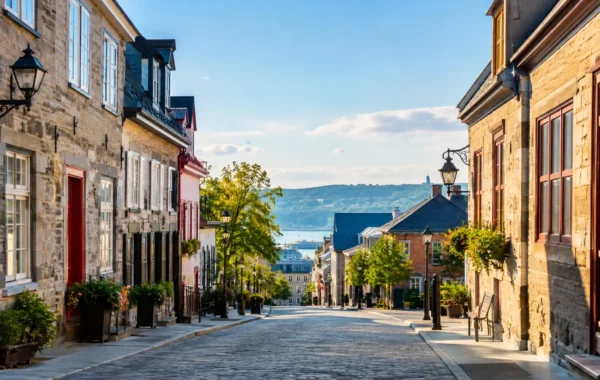

A street can tell you what a port once valued. King Street at Georgetown Penang does exactly that. Within a short stretch, you encounter the marks of commerce, devotion, migration and civic life – the very forces that shaped George Town into one of Southeast Asia’s most storied urban centres.
This is not the loudest street in the historic core, nor the most photographed. That is part of its appeal. King Street rewards the visitor who prefers substance over spectacle, and who understands that heritage is often held in the quieter facades, the institutional buildings, the old religious landmarks and the urban grain that survives long after empires, shipping routes and business families have changed.
Why King Street at Georgetown Penang matters
To walk King Street at Georgetown Penang is to see how a colonial trading settlement matured into a multicultural city with its own character. Streets here were never merely thoroughfares. They were economic corridors, social markers and cultural meeting points. King Street, in particular, carries the weight of administration, mercantile activity and community memory.
The architecture hints at these overlapping roles. You can read different periods in the built environment – colonial-era structures, shophouse rhythms, civic buildings and places of worship that speak to the communities who lived, traded and gathered nearby. It is a street that makes most sense when viewed not as a single attraction, but as part of a wider urban story shaped by the sea.
That maritime connection matters. George Town grew because ships arrived, goods moved, people settled and ideas travelled. What happened inland was inseparable from what happened at the waterfront. For visitors interested in Penang’s deeper history, King Street is one of the places where that connection still feels legible.
What you will notice as you walk the street
King Street has a certain visual restraint. Unlike streets dominated by one type of building or one tourism-driven identity, this stretch feels layered and lived in. The facades do not compete for attention. Instead, they build a cumulative sense of place.
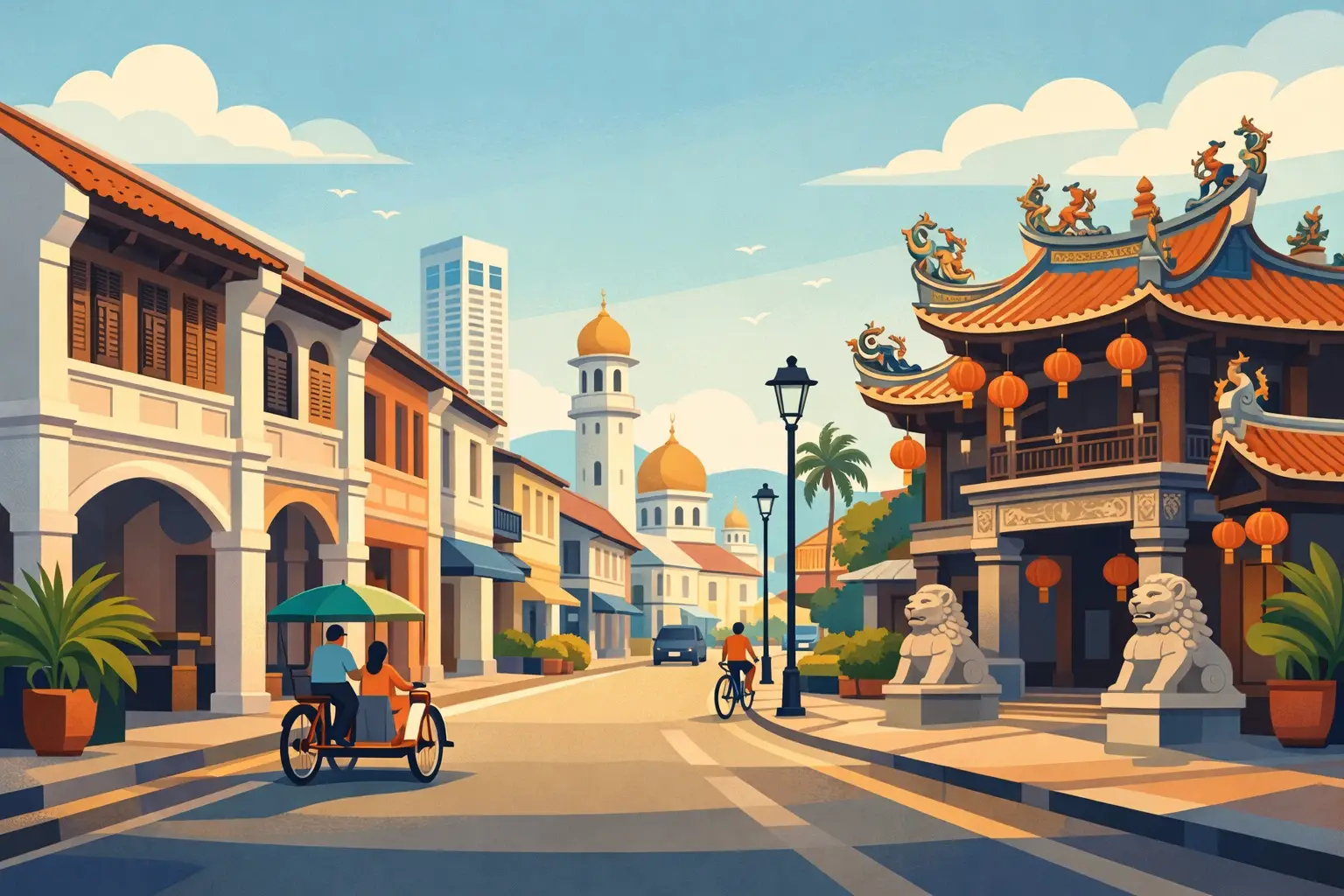
Look closely and you begin to notice proportion, repetition and adaptation. Arched windows, timber shutters, plaster ornament and five-foot ways reflect practical responses to climate as much as aesthetic taste. Some buildings retain a formal colonial bearing, while others reflect the mercantile culture of the port city. That contrast is part of what makes the street compelling.
There is also a ceremonial quality to parts of the area, created by the presence of significant religious and institutional buildings. These are reminders that George Town’s prosperity was never only commercial. Communities invested in permanence – in worship, education, philanthropy and administration. The result is a street with a civic dignity that still carries today.
A street shaped by trade, migration and belief
George Town was built through encounter. Traders, labourers, settlers, officials and pilgrims all passed through or made lives here. King Street reflects that complexity better than many visitors expect.
You can sense the influence of British colonial planning, but the street’s meaning was never defined by colonial authority alone. South Asian communities, Chinese merchants, local Malay networks and other groups all contributed to the neighbourhood’s character. Commerce and belief often stood side by side, which is one reason the historic core feels so rich rather than orderly.
This is where a more careful visit becomes rewarding. Heritage in Penang is rarely singular. A building may have begun with one purpose and taken on another. A street name may suggest one history while the people who animated the area tell a broader one. King Street invites that kind of reading.
King Street and the maritime story of George Town
For anyone drawn to Penang because of its port history, King Street is best understood as part of a larger commercial ecosystem. The street itself is inland enough to feel civic, yet close enough to the old trading world to carry its imprint. Goods arriving by sea eventually moved into warehouses, counting houses, shops and administrative networks. Wealth generated by maritime trade shaped the architecture and institutions that followed.
This is why the street resonates so strongly with visitors who appreciate material history. Urban heritage is not separate from maritime heritage. Imported ceramics, shipping records, merchant houses, religious endowments and colonial administration all belong to the same story. One explains the other.
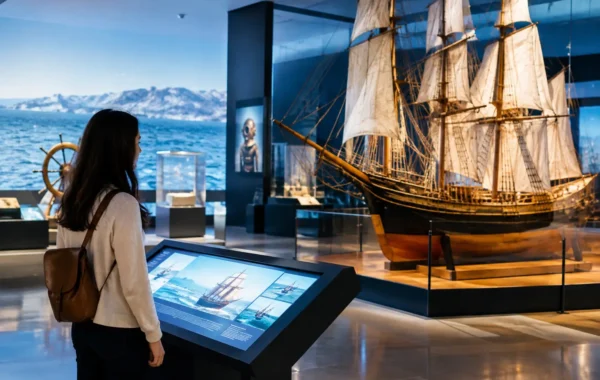
In that sense, a walk through this area becomes richer when paired with a museum experience that interprets the sea routes behind the city’s rise. At Straits & Oriental Museum, rare shipwreck ceramics recovered from historic Asian wrecks offer a direct link to the trade networks that made places like George Town flourish. The city on land and the cargoes beneath the sea are part of one connected past.
The pace of visiting King Street at Georgetown Penang
This is not a street to rush. It suits a slower pace, especially in the morning or later in the afternoon when the light softens the facades and the city feels less hurried. If your aim is to collect quick photographs, you may find it understated. If your aim is to understand George Town beyond its most famous murals and shopfronts, it is far more generous.
A thoughtful visit works best when you allow time for detours. The surrounding streets and nearby landmarks add context, and often the most memorable part of the walk is how one urban thread leads to another. King Street is valuable precisely because it opens outward into a larger heritage landscape.
It also suits different kinds of visitors in different ways. Families may appreciate the sense of discovery without the pressure of a fixed route. Cultural travellers will enjoy the architectural and historical detail. Collectors and design-minded visitors often notice craftsmanship that others pass by. There is no single correct way to experience it, although curiosity helps.
What makes this street different from Penang’s better-known stops
George Town has no shortage of celebrated heritage addresses, and some are more theatrical than King Street. They offer brighter shopfronts, heavier footfall or more immediate visual drama. King Street offers something else – credibility.
Its appeal lies in continuity. The street still feels connected to the city’s historical function rather than simply its tourism economy. That does not make it untouched, and it would be naïve to pretend otherwise. Conservation always involves compromise, and heritage districts everywhere must balance preservation with contemporary use. Yet King Street has retained enough texture to feel grounded.
That balance matters. A heritage street that is too polished can begin to feel staged. One that is too neglected becomes difficult to read or enjoy. King Street sits somewhere in between, which gives it a particular honesty.
How to get more from your visit
The best approach is to come with a theme in mind. Architecture is one option. Faith and community is another. Maritime trade is perhaps the most rewarding, because it helps connect what you see on the street with the larger story of Penang’s rise as a port city.
Notice the relationship between buildings rather than isolating each one. Pay attention to thresholds, corners, sightlines and how institutional structures sit beside commercial ones. If you enjoy photography, this is a place for detail rather than grand panoramas – windows, textures, signage and the rhythm of facades.
It is also worth accepting that not every heritage experience needs to be crowded or loudly interpreted. Some places ask more of the visitor. King Street is one of them. It offers atmosphere, evidence and context, but it expects you to look closely.
A street that deepens the whole city
King Street does not need spectacle to prove its worth. Its significance lies in how much of George Town it contains in compressed form – trade, empire, migration, devotion, wealth, adaptation and memory. For visitors who want more than a checklist of landmarks, it is one of the streets that makes the city intelligible.
Walk it with patience, and the reward is not simply a better understanding of one road. It is a clearer sense of how Penang became Penang – a place shaped by the sea, refined by many communities and still capable of telling its story through stone, plaster, timber and time.