
A great museum does more than display objects behind glass. It creates conversations across centuries, cultures, and communities. That is why the idea of Georgetown Museum As a cultural and educational exchange hub in Asia matters so deeply – especially in a historic port city where trade, migration, craftsmanship, and storytelling have always met.
George Town has long held a special place in the cultural map of Asia. Its streets, architecture, foodways, and living traditions reflect layers of exchange between the Malay world, China, India, the Middle East, and Europe. In that setting, a museum is not simply a place of preservation. At its best, it becomes a civic and regional meeting point – one where visitors can understand how the past shaped Asia’s connected present.
Why Georgetown Museum as a cultural and educational exchange hub in Asia matters
Not every museum is built to play this role. Some focus narrowly on collecting, others on scholarship, and others on tourism. A truly significant Georgetown museum must do all three well while remaining inviting to the public. That balance is what turns a museum from a static institution into a living cultural platform.
In Asia, where maritime routes carried ceramics, spices, faiths, languages, and artistic ideas across vast distances, museums in historic port cities carry unusual responsibility. They interpret movement rather than isolation. They show that heritage was never fixed. It travelled, adapted, and gained meaning as it passed through different hands.
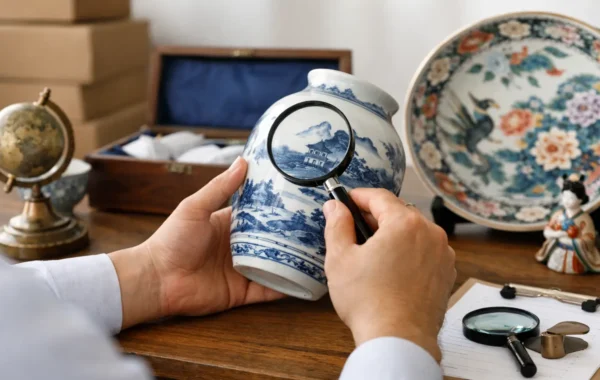
This is particularly powerful when collections include authentic artefacts from shipwrecks and trade routes. Such pieces are not abstract illustrations of history. They are direct witnesses to exchange. Porcelain, stoneware, and ceramics recovered from Asian waters tell stories of merchants, makers, courts, ports, and households connected by commerce and curiosity. They remind visitors that education does not only happen in classrooms. It also happens in front of a bowl, a jar, or a shard that survived the sea.
A museum shaped by maritime history
In George Town, maritime history is not a side note. It is central to understanding the region’s identity. A museum grounded in shipwreck ceramics and seaborne trade offers something more distinctive than a general heritage overview. It gives visitors access to Asia through objects that once moved across oceans.
That matters because maritime archaeology has a rare ability to make large historical systems feel immediate. Trade networks can sound distant when described in dates and dynasties alone. Yet when a visitor stands before porcelain recovered from vessels such as the Wanli, Turiang, Royal Nanhai, Nanyang, Xuande, or Desaru, history becomes tangible. You are no longer reading about exchange. You are encountering its material evidence.
For cultural tourists and history-minded travellers, this kind of collection offers depth that many destinations cannot match. It gives context to George Town’s wider heritage landscape while also setting the museum apart as a place of rarity and authority. For families, it creates a more memorable form of learning because the objects carry drama as well as beauty. For collectors and connoisseurs, it offers a closer understanding of craftsmanship, provenance, and the cultural journeys of ceramic art across Asia.
Education that feels vivid, not formal
A common problem with heritage spaces is that they can either feel too academic or too simplified. The best museums resist both extremes. They present scholarship with confidence, but they do so through atmosphere, curation, and storytelling that draw people in.
That is where the educational value of a cultural hub becomes especially important. Education in this setting is not confined to labels on walls. It includes exhibition design, guided interpretation, special displays, talks, family-friendly experiences, and the way objects are arranged to reveal patterns of trade, taste, and influence.
A visitor may arrive drawn by the visual splendour of porcelain and leave with a richer understanding of Asian exchange networks. Another may come for a leisurely cultural outing and discover how shipwreck finds illuminate diplomacy, consumption, and artistic transmission. This is education in a more generous sense – elegant, accessible, and grounded in encounter.
It also suits the expectations of modern museum-goers. Many visitors do not want a purely didactic experience, but they do want substance. They want to feel that their time has been well spent, that they have seen something rare, and that they have learned something they could not have learned elsewhere. A strong Georgetown museum answers that expectation by making knowledge feel curated rather than crowded.
More than exhibits: the power of an integrated cultural destination
The modern cultural institution is changing. Visitors increasingly look for places where discovery can unfold across more than one mode of experience. A museum that also includes gallery programming, dining, social space, and carefully selected retail extends the life of the visit. It encourages people to linger, reflect, converse, and return.
This matters because exchange does not stop at the showcase. It continues in the café over coffee, in the gallery during a temporary exhibition, and in the gift house where visitors take home objects and books that prolong their engagement. Heritage becomes part of a fuller day out rather than a brief stop.
There is a practical side to this model as well. Museums need sustainable ways to support conservation, programming, and public access. An integrated heritage and lifestyle destination can help achieve that without diminishing cultural seriousness, provided the curation remains strong. In fact, when done well, hospitality enhances the institution’s role. It makes the museum more porous, more welcoming, and more relevant to a wider range of audiences.
This is one reason a venue such as Straits & Oriental Museum carries regional significance. It reflects a broader understanding of what a museum can be in Asia today – not a silent repository, but a place where heritage, refined leisure, and public learning can coexist with confidence.
Why Asia needs exchange hubs, not just display spaces
Asia’s history cannot be neatly divided into national stories. Ports, merchant communities, ceramics, languages, and artistic forms travelled too widely for that. Museums that recognise this are better equipped to interpret the region honestly.
A Georgetown museum as a cultural and educational exchange hub in Asia can help visitors see connections that conventional narratives often flatten. Chinese ceramics gain new meaning when viewed through Southeast Asian trade. Penang’s role becomes clearer when placed in wider maritime circuits. Local history becomes richer, not smaller, when seen in regional context.
This approach also makes the museum more relevant for international visitors. Rather than presenting heritage as something sealed within one place, it shows George Town as part of a larger Asian conversation. That perspective feels both intellectually stronger and more emotionally resonant. Travellers often remember destinations most vividly when they understand how local stories link to global ones.
There are, of course, trade-offs. A museum that aims to appeal to tourists, families, collectors, and serious enthusiasts must avoid becoming too broad. If interpretation is oversimplified, the collection loses authority. If it becomes too specialist, many visitors may feel excluded. The strongest institutions solve this through layered storytelling – offering immediate visual appeal, clear historical framing, and enough depth for those who wish to look closer.
What visitors gain from the experience
For many people, the greatest value of such a museum is not merely information. It is perspective. To walk through galleries shaped by maritime history is to be reminded that Asia was built through contact, movement, and exchange. The finest ceramics do not represent luxury alone. They represent routes, risk, ambition, and cultural appetite.
That perspective changes the visit from passive viewing into active reflection. Couples on a cultural day out may find themselves discussing how objects moved across empires. Families may use the visit to introduce younger audiences to history through beauty and discovery rather than through textbooks alone. Collectors may find fresh appreciation for the lives these pieces have lived before reaching the gallery.
The setting matters too. In a heritage city celebrated for its layered identity, a museum visit can become the anchor of a wider cultural itinerary. It offers a thoughtful counterpoint to street exploration, food experiences, and architecture. Rather than competing with the city, it deepens the meaning of being there.
The future of the Georgetown museum experience
As audience expectations evolve, the museums that will matter most are those able to preserve authority while remaining socially and culturally alive. In George Town, that means recognising that heritage is not only about safekeeping. It is also about interpretation, hospitality, design, and the ability to create shared experiences around rare and meaningful collections.
A museum rooted in maritime archaeology and Asian ceramics is especially well placed to lead this shift. Its collections already speak across borders. Its educational role can extend naturally into exhibitions, public programmes, family visits, collector interest, and destination-led tourism. Its lifestyle elements can welcome visitors who may not begin as museum enthusiasts but leave with genuine curiosity.
That is the real promise of Georgetown Museum As a cultural and educational exchange hub in Asia. It is not simply that visitors see remarkable artefacts. It is that they encounter Asia as a network of stories carried by sea, preserved in porcelain, and made newly relevant in a museum experience worthy of the city around it.