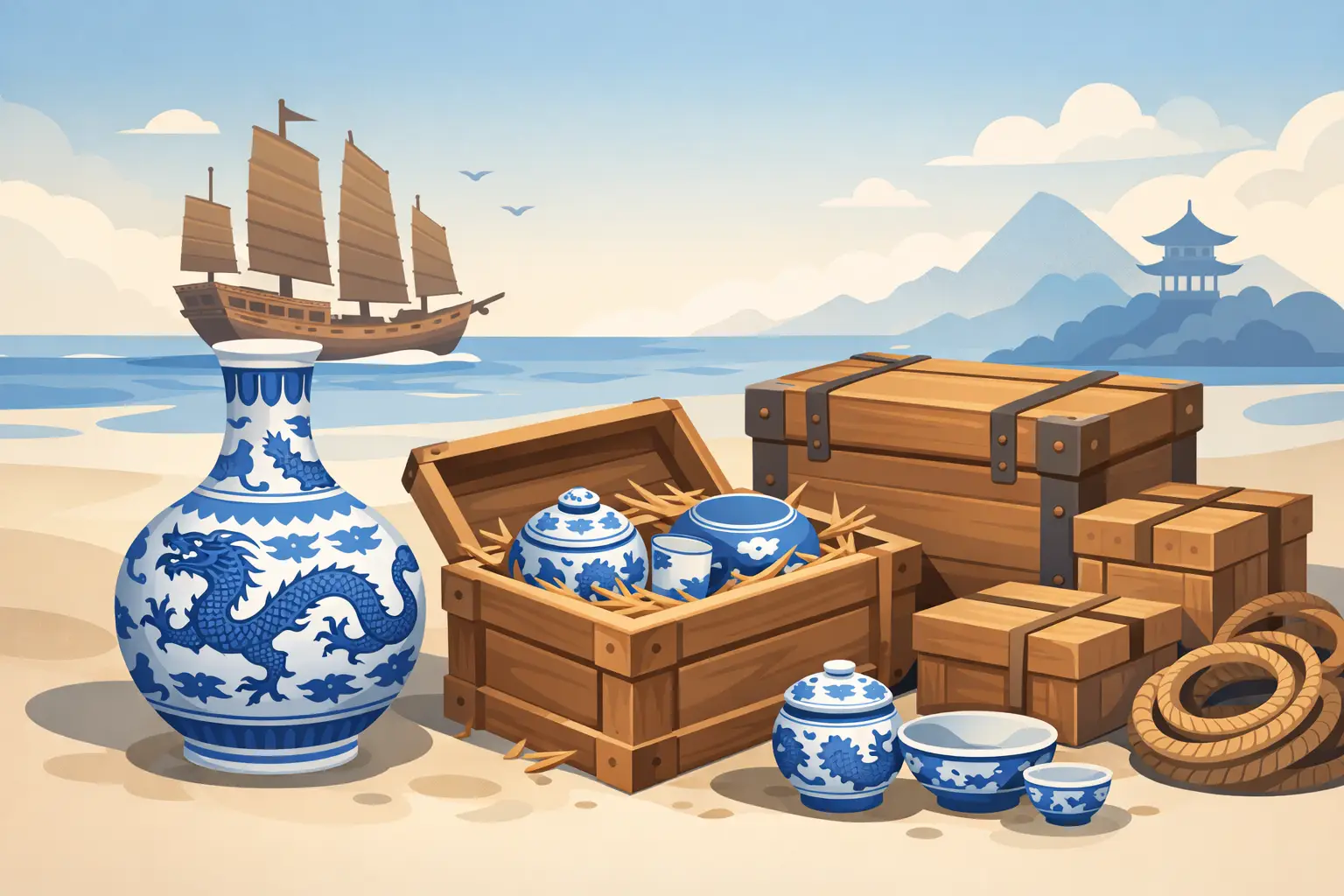

When visitors encounter a Xuande porcelain cargo example, they are not simply looking at old ceramics lifted from the sea. They are standing before evidence of taste, power, commerce and risk – all preserved in fired clay. Few artefacts bring the maritime history of Asia into focus so quickly, because porcelain travelled as both a luxury object and a practical trade commodity, carrying the prestige of the Ming court far beyond China’s shores.
The Xuande period, which falls within the reign of the Ming emperor Xuande from 1426 to 1435, holds a special place in the history of Chinese ceramics. For many collectors and museum visitors, the name immediately suggests refinement: elegant blue-and-white decoration, confident calligraphy, balanced forms and technical control of a remarkably high order. Yet when we speak of cargo, the story becomes even more compelling. A shipwreck assemblage shows that these wares were not made only for palace display. They were also part of a wider trading world that linked kilns, ports, merchants and distant consumers across maritime Asia.
What makes a Xuande porcelain cargo example so significant?
A single surviving dish or jar can be admired for its beauty. A cargo, by contrast, reveals a system. It shows what was packed together, what quantities were considered commercially viable, which shapes were popular, and how porcelain was moving through regional waters. That is why a Xuande porcelain cargo example matters so much in a museum setting. It turns an object into a narrative.
This matters especially with Xuande wares because the period is associated with quality and imperial patronage. If a ship carried porcelain linked to that era, questions immediately follow. Were the pieces made for export, for elite exchange, or for redistribution through regional ports? Were they standardised trade wares, or did they include finer objects intended for affluent buyers? The answers are rarely simple, and that complexity is exactly what makes maritime archaeology so rewarding.
A cargo also preserves the ordinary alongside the exceptional. Not every recovered piece is a flawless masterpiece. Some show kiln grit, stacking marks, firing imperfections or practical forms designed for transport and sale. Those details are not disappointments. They are part of the evidence. They remind us that porcelain history is not only about courtly splendour, but also about merchants making calculations, sailors facing monsoon seas and buyers selecting objects for use in homes, shrines and trading houses.
The world behind Xuande porcelain cargo
To understand any Xuande porcelain cargo example, it helps to picture the world that produced it. The early 15th century was a period of strong maritime contact across Asia, even if political conditions and official trade policies shifted over time. Ceramics moved through networks that connected production centres in China with ports across Southeast Asia and beyond. Ships carried more than one kind of goods, but porcelain was ideal cargo in several respects. It was durable, stackable, highly valued and recognisable across cultures.
Xuande porcelain itself is admired for a certain confidence of execution. Blue-and-white pieces from the period often feature rich cobalt tones and a poised decorative rhythm – floral scrolls, waves, fruit, lotuses and lively painted borders. Forms could range from bowls and dishes to jars, boxes and stem cups. In an export context, some shapes and motifs may have been chosen because they appealed to overseas markets, while others followed broader Ming ceramic traditions.
That is where cargo evidence becomes particularly useful. Museum visitors often ask whether porcelain found in a wreck was intended for imperial use. Usually, the answer is that it depends. A reign mark alone does not settle the matter, nor does fine decoration automatically mean palace ownership. Some wares reflect elite taste without being made for the court itself. Others may imitate prestigious styles for commercial sale. Shipwreck contexts force us to be careful, because they reveal how fluid the boundary could be between luxury and trade.
Reading the cargo beyond beauty
The strongest examples of interpretation do not isolate one perfect bowl under a spotlight and stop there. They ask what the full cargo says. Were there repeated forms suggesting standard export demand? Did the assemblage include storage jars, everyday wares or mixed ceramic types from different kilns? Was the porcelain packed densely, implying bulk trade, or was it part of a more varied, high-value consignment?
These questions matter because cargoes are rarely romantic treasure in the simplistic sense. They are structured loads. Their arrangement can reveal commercial intention, and even broken fragments can be deeply informative. A base sherd with part of a reign mark, a rim with underglaze blue scrollwork, or a group of nearly identical bowls may collectively tell us more than one isolated complete piece ever could.
What a shipwreck context changes
A porcelain object in a private collection may be admired for craftsmanship. The same object recovered from a wreck gains another layer of meaning: context. Archaeological recovery allows scholars and visitors to ask where the ship was sailing, what else it carried and what this tells us about maritime routes. That context transforms porcelain from decorative art into historical witness.
With a Xuande porcelain cargo example, the shipwreck setting can also sharpen dating. If the assemblage contains diagnostic forms or associated materials, researchers can place the cargo within a narrower historical frame. Even then, caution remains essential. Ceramics could stay in circulation for years before shipment, heirloom pieces might travel alongside newer wares, and not every mark or style corresponds neatly to a production date. Maritime archaeology is powerful because it provides evidence, but it also demands restraint in interpretation.
For the public, this is part of the fascination. A wreck cargo is not a static cabinet of pretty objects. It is a preserved interruption of a voyage. The ship never reached its destination, and the seabed became an accidental archive. Every recovered porcelain piece carries the poignancy of that unfinished journey.
Xuande porcelain cargo example in a museum experience
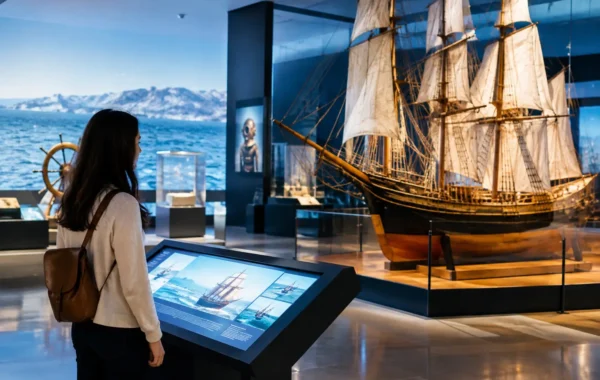
For a heritage institution centred on shipwreck ceramics, a Xuande porcelain cargo example offers an ideal point of entry into the wider story of Asian maritime exchange. It is visually arresting enough to captivate first-time visitors, yet rich enough in historical meaning to reward seasoned collectors and enthusiasts. That dual appeal is rare.
What makes it especially effective in exhibition storytelling is the contrast it holds within itself. Xuande porcelain suggests imperial sophistication, but cargo suggests movement, trade and practical circulation. Place those ideas together and visitors begin to see history not as a series of isolated dynasties, but as a living regional network shaped by craftsmanship, commerce and sea routes.
This is why institutions such as Straits & Oriental Museum can present shipwreck porcelain with such resonance. The display is not only about rarity, although rarity has its place. It is about bringing audiences face to face with objects that travelled through the same maritime world that shaped ports, settlements and cultural exchange across this region. In that sense, the cargo is both Chinese and broadly Asian in significance.
Why collectors and curious travellers are drawn to it
Collectors are often drawn first to technical attributes: glaze quality, cobalt tone, potting, foot rim and mark. Travellers and families may respond first to the drama of a shipwreck. Both responses are valid, and the best interpretation honours each. One person sees connoisseurship, another sees adventure, and both are looking at the same bowl.
That breadth of appeal helps explain why shipwreck ceramics hold such power in a destination-led museum experience. They invite slow looking. They encourage conversation. They also make the past tangible in a way few written records can. You do not need specialist training to feel the force of a porcelain vessel that survived a sinking and centuries underwater.
Looking closely without oversimplifying
There is a temptation, especially in promotional writing, to describe every Xuande-related object as a masterpiece and every cargo as proof of direct imperial trade. That may sound exciting, but it flattens the truth. The more interesting reality is that maritime ceramic history contains hierarchy, imitation, adaptation and market variation.
Some pieces within a cargo may be finer than others. Some may have been intended for wealthy buyers, while others served broader demand. Some motifs may reflect long-standing Chinese preferences, while others may have resonated in overseas markets. This variation is not a problem to explain away. It is the real texture of trade.
For visitors, that means the most memorable encounter is often not with certainty, but with informed possibility. A Xuande porcelain cargo example asks us to hold several ideas at once: art and commerce, prestige and practicality, survival and loss. It reminds us that objects can be beautiful while also being evidence.
The next time you stand before shipwreck porcelain, look beyond the glaze and painted surface. Imagine the kiln where it was fired, the hands that packed it, the vessel that carried it and the sea that kept it hidden. That is where the story truly begins.