
A bowl lifted from the seabed can tell a richer story than a page of dates. Among the most compelling historical artefacts from shipwrecks are ceramics – not only because they survive where wood, fabric and paper perish, but because they carry the marks of commerce, status, craftsmanship and human movement across oceans.
For visitors drawn to maritime history, shipwreck finds have a particular power. They are not replicas, impressions or later interpretations. They are objects that travelled, were traded, packed into holds, lost in catastrophe and recovered centuries later. In that sense, they offer a rare kind of proximity to the past – one shaped as much by risk and weather as by artistry and exchange.
Why historical artefacts from shipwrecks are so revealing
A shipwreck freezes a moment that land archaeology often cannot. On land, objects are reused, broken up, buried in layers or separated from their original setting. At sea, a vessel may sink with its cargo largely intact. When recovery is undertaken responsibly, the result can be an unusually concentrated record of one journey, one trading network and one historical moment.
This is why shipwreck ceramics are so significant. A single cargo can reveal what was being made, where it was headed and who might have bought it. Glaze quality, decorative motifs, kiln marks, vessel shapes and packing methods all contribute evidence. A dish is never merely a dish. It may indicate export demand, changing tastes in foreign markets, the influence of imperial patronage or the rise of merchant wealth.
The trade-off, of course, is that shipwrecks are also fragile archaeological sites. Recovery can preserve knowledge, but poor handling can strip context away. An artefact without provenance may still be beautiful, yet it tells a thinner story. Serious interpretation depends on where the object was found, what surrounded it and how the assemblage fits together.
More than treasure – what shipwreck artefacts actually show us
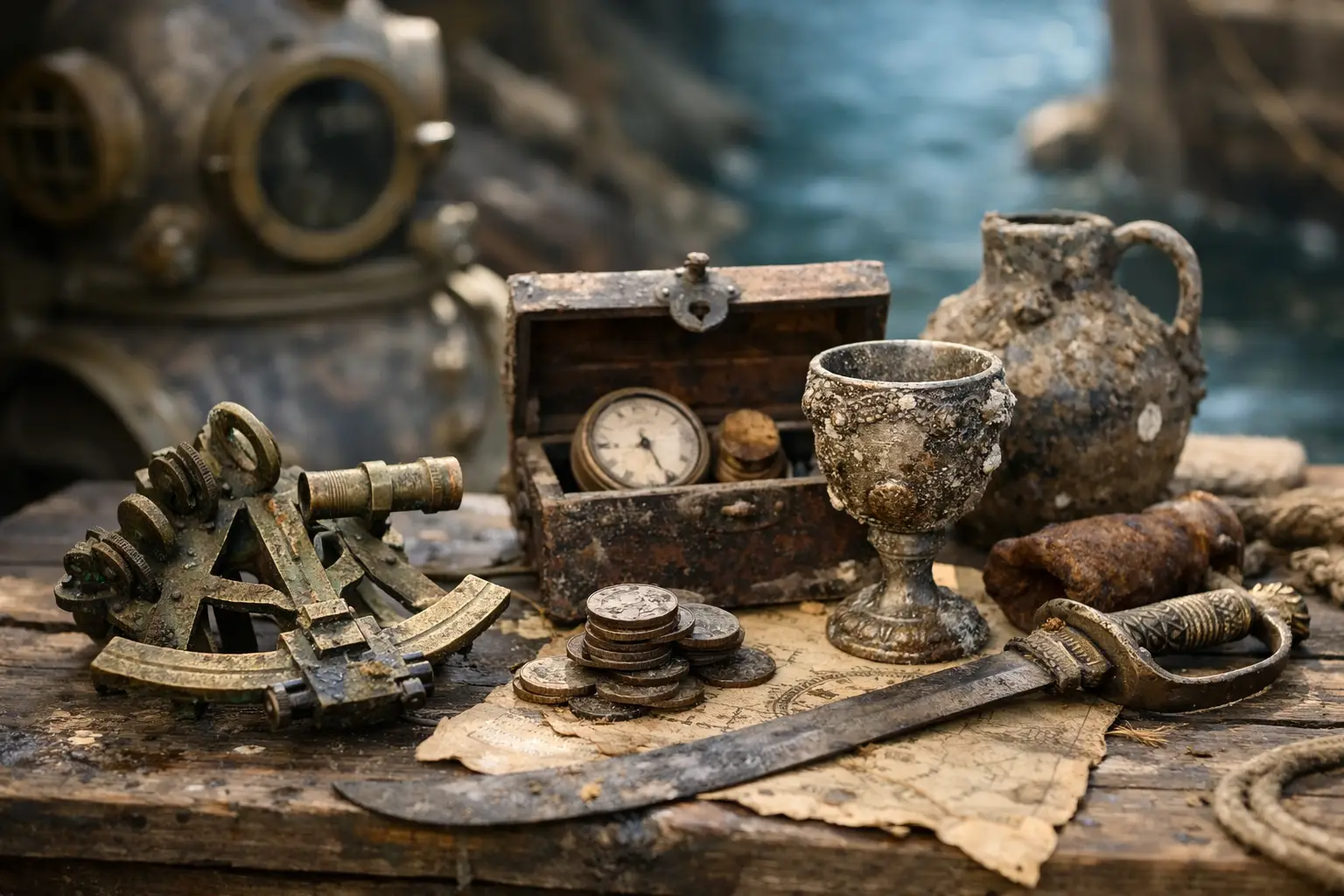
Popular imagination tends to fix on treasure chests and gold, but the most historically valuable finds are often humbler. Ceramics, storage jars, coins, navigational tools and personal belongings can be more informative than spectacular. They show routine life rather than fantasy.
Shipwreck cargoes reveal trade on a practical scale. What commodities moved in bulk? Which ports were connected? What forms of packaging protected goods on long voyages? In Asian maritime history, porcelain and stoneware are especially important because they circulated so widely and endured so well. They illuminate commercial links across China, Southeast Asia and beyond, mapping a seaborne world of exchange long before modern shipping lanes.
They also show taste. Export ceramics were not always identical to wares made for domestic use. Shapes could be adapted for foreign dining habits, decorative programmes adjusted for market preference and production scaled to commercial demand. That makes these artefacts evidence of cultural conversation, not simply trade volume.
Then there is the human dimension. Behind every recovered cargo was a crew, a merchant network, a set of financial calculations and a passage that did not end as planned. Shipwreck artefacts remind us that maritime history is never abstract. It is built from decisions made under uncertain conditions – weather, war, navigation errors, piracy, overcrowding and the endless hazards of sea travel.
The importance of ceramics in shipwreck collections
Among historical artefacts from shipwrecks, ceramics often become the centrepiece for good reason. They are durable, datable and visually striking. Yet their appeal is not only aesthetic. They help bridge specialist knowledge and public curiosity with unusual elegance.
A visitor does not need formal training to feel the force of a porcelain bowl that spent centuries underwater. Its surface, form and decoration speak immediately. But for those who look more closely, each feature opens another layer of interpretation. Was it made for elite use or broad trade? Does the glaze suggest a specific kiln tradition? Do repeated motifs point to workshop practices or export preferences? Even stacking rings and firing flaws can be historically meaningful.
This is where maritime collections become especially rewarding. They allow history to be read through objects that are both refined and resilient. Ceramics embody artistic excellence, but they also reflect systems of labour, shipping and demand. They belong equally to the history of beauty and the history of business.
At a museum level, that combination matters. Visitors are often drawn first by visual splendour, then held by the story. A well-curated display of shipwreck ceramics can turn a passing interest into a deeper understanding of regional maritime exchange. It offers an encounter with history that feels immediate rather than remote.
Reading Asia’s maritime past through wreck cargoes
Asian shipwreck collections are particularly rich because the region’s seas were central arteries of trade for centuries. Ceramics travelled alongside spices, metals, textiles and luxury goods, linking ports and consumers across vast distances. Wreck finds help reconstruct these routes in ways that written records alone cannot.
Documents tend to privilege states, merchants and official transactions. Shipwreck assemblages add another register. They show what was physically present on a voyage – what was packed, counted, protected and worth transporting. Sometimes they confirm written history. Sometimes they complicate it.
A cargo might reveal stronger demand for a particular ceramic style than texts suggest. It might indicate the reach of a kiln network into markets once thought marginal. It might expose the scale of regional exchange between Southeast Asian ports, rather than framing maritime history solely through imperial centres. In that respect, shipwreck artefacts can shift perspective. They make the sea not a backdrop, but the stage itself.
For a place such as George Town, with its longstanding connections to trade, migration and cosmopolitan exchange, these stories carry particular resonance. Maritime history here is not distant heritage. It is part of the wider cultural fabric that shaped the region’s identity.
What visitors should look for in historical artefacts from shipwrecks
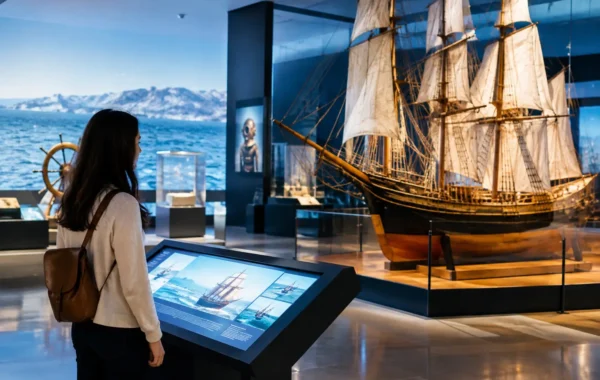
The most memorable collections do more than present recovered objects in glass cases. They invite visitors to notice relationships – between one bowl and another, between cargo and route, between elegance and risk.
Look first at repetition. A ship’s cargo often includes many examples of related forms, and that repetition is informative. It suggests scale, market demand and the practical logic of trade. Then notice variation within that pattern. Differences in decoration, quality or finish may point to multiple workshops, price tiers or intended buyers.
Condition matters too, but not always in the obvious way. A pristine piece can be astonishing, yet fragments, marine accretions and signs of wear also carry meaning. They remind us that these are not showroom objects detached from history. They have endured transport, disaster, submersion and recovery. Their imperfections can be part of their authority.
Context is equally important. The finest museums do not isolate artefacts from their journey. They interpret how a wreck was discovered, what period it belongs to and why the cargo matters. That context transforms admiration into understanding.
This is part of what makes Straits & Oriental Museum distinctive. By presenting authentic shipwreck ceramics within a broader cultural setting, it frames maritime archaeology not as a specialist niche but as a living conversation between history, collecting, travel and contemporary appreciation.
Preservation, ethics and the value of proper curation
There is no serious discussion of shipwreck artefacts without acknowledging ethics. Recovery has immense public value when it is documented, conserved and interpreted with care. Without that discipline, objects risk becoming detached curiosities.
Conservation is painstaking work. Salt contamination, structural weakness and surface instability can all threaten newly recovered artefacts. Proper treatment is slow and often invisible to the public, but it is essential. The glamour of discovery is only one part of the story. Preservation is what allows an artefact to remain meaningful for future audiences.
Ethics also shape display. A responsible institution does not simply celebrate rarity. It explains significance. It respects provenance. It situates beauty within scholarship. That balance matters because shipwreck artefacts sit at the meeting point of archaeology, collecting and public fascination. Handle them carelessly, and they become decorative objects with a dramatic backstory. Curate them well, and they become witnesses.
That distinction is worth holding onto when viewing any collection of historical artefacts from shipwrecks. The real value lies not only in age, scarcity or visual appeal, but in what those objects still have the power to tell us.
A recovered ceramic does not ask us to romanticise the past. It asks us to look closely – at trade, taste, ambition, danger and the enduring ties between sea routes and human lives. And once you have seen that story in a single object, the past feels less like something finished and more like something still surfacing.