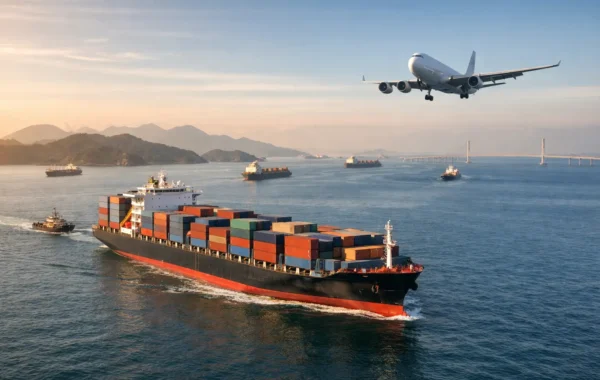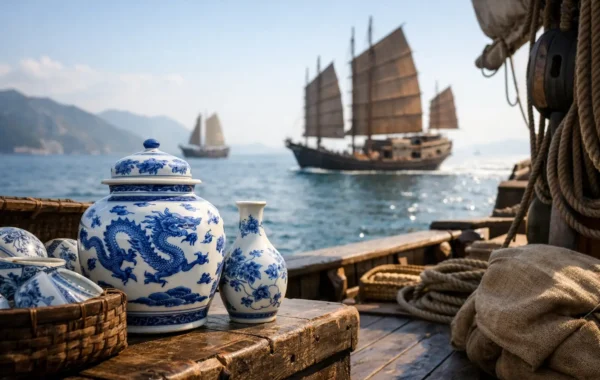


A blue-and-white porcelain bowl can tell a more compelling story about Penang than a harbour photograph. Its glaze, firing, trade route and eventual recovery from the seabed speak of the people, cargoes and monsoon crossings that connected this island to a far larger Asian world. That is what makes Penang maritime attractions especially rewarding: they are not simply places to look at the sea, but invitations to understand the sea’s lasting influence on the city.
George Town’s celebrated streets, shophouses and food culture can make it easy to overlook the water that enabled them. Yet Penang developed through exchange. Merchants, labourers, pilgrims and travellers arrived by sea, while ceramics, spices, textiles and ideas moved through the Straits in the opposite direction. A well-planned visit should leave room for both the waterfront itself and the objects that make this history tangible.
Why the sea is central to Penang’s story
Penang’s position along the Strait of Malacca placed it near one of the world’s most significant maritime passages. Long before modern container ports, the strait linked the Indian Ocean with the South China Sea, supporting a network of coastal and long-distance trade that shaped ports across Southeast Asia.
For Penang, maritime life was never confined to the shoreline. It influenced the languages heard in the streets, the ingredients found in local kitchens and the architecture created by prosperous trading communities. The island’s heritage is therefore best understood as a meeting point: Malay, Chinese, Indian, European and wider regional traditions encountered one another through commerce and migration.
This perspective changes the way visitors see the city. A waterfront walk becomes more than a pleasant pause between heritage sites. It becomes a view across the route by which goods and communities reached Penang, and by which its own character travelled outward.
Penang maritime attractions that bring trade to life
The most memorable maritime experiences balance atmosphere with evidence. A harbour view provides scale and feeling; archaeological artefacts provide the human detail. Together, they turn a general idea of ‘trade’ into stories of individual vessels, carefully packed cargoes and fragile objects that survived where ships did not.
Shipwreck ceramics and the archaeology of exchange
Shipwreck ceramics are among the most immediate records of Asian maritime trade. Unlike a written account, a cargo recovered from the seabed shows what was actually being transported: bowls for everyday households, storage jars, finely made wares and objects intended for markets many miles from their place of production.
At Straits & Oriental Museum, authentic porcelain and ceramic artefacts recovered from significant Asian shipwrecks create a journey through centuries of seafaring exchange. Collections associated with wrecks including the Wanli, Turiang, Royal Nanhai, Nanyang, Xuande and Desaru reveal the breadth of maritime networks that crossed the region.
The appeal lies in the detail. Visitors can consider the differences in form, colour and decoration, then imagine the decisions behind each cargo. Which customers were these pieces meant for? How were they stowed below deck? What happened when a vessel encountered reefs, storms or navigational error? The objects are beautiful, but their real distinction is that they were once working cargo, travelling through an uncertain world.
For collectors and design-minded visitors, this is also an opportunity to appreciate porcelain as both art and evidence. A small dish may carry the marks of a particular kiln tradition, while its presence on a wreck suggests the commercial reach of that workshop. The result is a more intimate encounter with history than a display of dates alone can offer.
The waterfront as a living threshold
Penang’s waterfront remains the natural setting for these maritime stories. From the shore, ferries, fishing boats and working port activity remind visitors that the strait is not a historical backdrop. It is an active passage, still carrying people and goods between island and mainland.
Take time to observe rather than rush through. The changing light on the water, the rhythm of vessels arriving and departing, and the contrast between older waterfront communities and modern infrastructure all reveal a place that continues to negotiate its relationship with the sea. Early morning offers a quieter, more reflective atmosphere; late afternoon provides softer light and a livelier sense of the city moving towards evening.
The trade-off is simple. A quick waterside stop is ideal for a first impression, but it cannot explain what made Penang maritime. Pair it with a museum visit or a heritage walk, and the view gains depth.
Ferry crossings and island perspectives
A crossing between Penang Island and the mainland is a modest journey with considerable value. It offers a change of vantage point that streetside sightseeing cannot provide. From the water, George Town’s built form appears as a coastal settlement first, with its towers, roofs and historic core gathered behind the shore.
It is not a substitute for a dedicated cruise or an island excursion, and schedules can shape the experience. Still, for visitors with limited time, a ferry journey is one of the most direct ways to feel the geography that underpinned Penang’s commercial importance. The wind, salt air and widening view of the strait lend a welcome physical dimension to the history seen indoors.
Coastal communities and everyday maritime heritage
Maritime heritage is not only found in grand trading narratives or rare artefacts. Along Penang’s coast, it also exists in the everyday practices of communities whose homes, livelihoods and food traditions have long been connected to the water.
Approach these places with care. They are living neighbourhoods, not stage sets, and respectful observation matters. The most meaningful encounters come from noticing the practical details: boats moored close to homes, repair work, the movement of supplies, and the way water access continues to shape daily routines.
This human scale is essential. Shipwreck porcelain may reveal the reach of international commerce, while coastal communities show how maritime life is sustained locally. Both are part of the same story.
How to build a richer maritime day in George Town
Begin with the artefacts, particularly if you are visiting during the hottest part of the day. Shipwreck ceramics offer an excellent foundation because they give names, materials and routes to the broader history of the straits. Once you have seen the cargoes that once travelled by sea, the waterfront feels less abstract.
Follow with a leisurely meal or coffee within a heritage setting, allowing time to discuss what you have seen. This is where an integrated cultural destination has a distinct advantage. Rather than treating a museum as a brief stop before the ‘real’ day begins, visitors can let history, art, hospitality and conversation form one unhurried experience.
Then head towards the water for a walk or crossing. Keep expectations realistic: Penang’s working maritime landscape is not designed as a polished theme attraction. Its interest comes from authenticity, and authenticity can be noisy, humid, busy or unexpectedly quiet. Families may prefer a shorter waterfront segment with plenty of breaks, while history enthusiasts can comfortably spend longer tracing the relationship between the harbour, the old town and the wider strait.
If your time is limited, choose depth over a long checklist. One excellent collection of maritime archaeology, one meaningful waterside view and one well-considered meal can leave a more lasting impression than racing between attractions.
What to look for beyond the obvious
The strongest maritime experiences invite close looking. On ceramics, notice the curve of a vessel, the precision of a painted motif and the wear that comes with age and recovery. At the waterfront, watch how the city meets the water: where movement is commercial, where it is communal, and where older forms of life remain visible beside contemporary development.
Ask questions that connect object to place. A porcelain cup may have been made far from Penang, but why did a market exist for it in this region? A shipwreck may be a tragedy, but what does its cargo reveal about ordinary tastes and household life? These questions turn sightseeing into discovery without requiring specialist knowledge.
Penang’s maritime past is most powerful when it feels present. Let a recovered bowl, a passing ferry or a salt-bright view across the strait slow the day down. The sea has always carried more than cargo here, and the best visit leaves you seeing its stories in every shoreward glance.