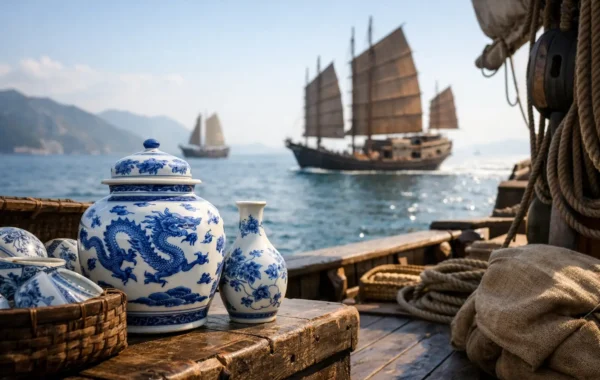

A shipwreck ceramic is not simply an object to be viewed behind glass. It is evidence of a voyage interrupted: a vessel crossing Asian trade routes, hands that loaded its cargo, waters that preserved it, and centuries of history waiting below the surface. The future of immersive museum experiences lies in helping visitors feel that scale of story without losing sight of the object itself.
For cultural travellers, families and collectors alike, the most memorable museum visits now offer more than information. They create a sense of place, invite curiosity and leave room for personal discovery. Yet true immersion is not a race to fill galleries with screens. It is the considered art of bringing heritage closer while safeguarding the authenticity that makes it worth encountering.
Why the Future of Immersive Museum Experiences Begins with Authenticity
Museums hold something no digital platform can replicate: the presence of the real. A bowl recovered from a shipwreck carries marks of firing, trade, use and time. Its glaze, form and imperfections are part of its historical record. Visitors do not need to be told that such an encounter matters – they sense it when the display allows them to look closely.
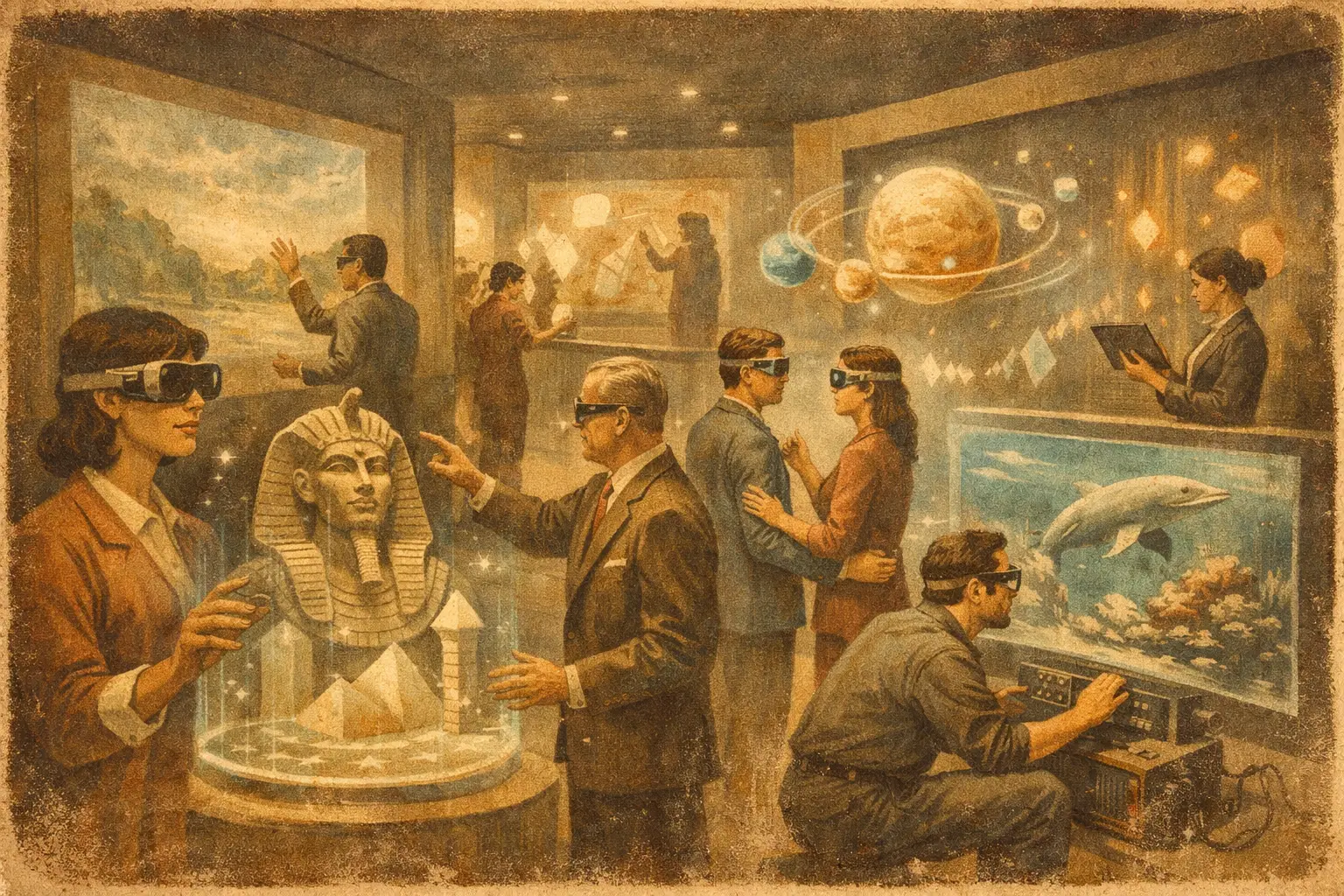
This is why the strongest immersive environments begin with artefacts rather than effects. Technology can illuminate a porcelain piece’s journey from kiln to port, reconstruct a merchant vessel or reveal the geography of maritime exchange. It should never compete with the ceramic itself. When every surface demands attention, visitors may remember the spectacle but forget what they came to see.
For a museum devoted to ancient shipwreck ceramics, the opportunity is particularly rich. A single cargo can connect the ceramics traditions of China and Southeast Asia with the trading worlds of the Malay Archipelago, India and beyond. The story is already dramatic. Interpretation simply needs to make its layers legible to a visitor who may have no prior knowledge of maritime archaeology.
From Display Case to Journey Through Time
The museum of the future will increasingly be designed as a sequence of encounters rather than a series of rooms. Visitors may begin with the sea: its changing currents, monsoon seasons and trading routes. From there, they can meet the people behind a cargo – potters, merchants, sailors and coastal communities – before arriving at the recovered objects with a clearer understanding of their significance.
Spatial design is central to this approach. Light, sound, material and pacing can suggest the atmosphere of a port, a vessel’s hold or the stillness of an underwater site. A carefully composed soundtrack may evoke a harbour without becoming theatrical. A map that responds to a visitor’s choice can make regional networks easier to grasp than a wall of dates ever could.
The best interpretation also respects different ways of looking. A collector may linger over a bowl’s provenance and form. A child may be drawn first to the mystery of a wreck beneath the sea. An international visitor may want context on Penang’s place in the wider maritime world. Layered storytelling allows each person to enter at their own level, then discover more as their interest grows.
Technology Should Add Context, Not Noise
Augmented reality, projection and interactive media have a valuable place in galleries when they answer a genuine question. What did this vessel look like before it sank? How were these ceramics packed? Where did this pattern originate? A short, well-made digital interpretation can give visitors a visual answer while the artefact remains the focal point.
There are trade-offs. Digital installations require maintenance, updates and careful accessibility planning. They can age quickly, while a well-presented ceramic remains compelling across generations. Museums should therefore choose adaptable tools and avoid making every moment dependent on a device, headset or app.
A more enduring model blends analogue and digital interpretation. Tactile reproductions can help visitors understand weight and texture. Subtle projections can recreate a route or landscape. Curatorial text can provide the detail that a moving image cannot. This combination gives the experience richness without reducing history to a novelty.
Immersion Must Be Inclusive, Not Overwhelming
Not every visitor wants to interact in the same way. Some enjoy a guided conversation with a knowledgeable host; others prefer to wander slowly and read. Some visitors benefit from captions, high-contrast design, clear wayfinding and places to rest. Families need room for questions, while specialists appreciate deeper catalogue-level information.
The future of museum experiences will be more inclusive when it offers choices rather than prescribing one route. A gallery can provide a concise introduction for those short on time, alongside longer material for visitors who want to examine the detail. Audio interpretation can be available without becoming a requirement. Quiet zones can sit comfortably beside more atmospheric installations.
This is not merely good visitor care. It reflects how heritage works. History is rarely a single, fixed narrative. It gains meaning through multiple perspectives: archaeological, artistic, commercial, social and personal. A museum that welcomes different forms of engagement gives its collection a wider and more lasting public life.
The Museum as a Cultural Day Out
The most exciting shift is happening beyond the gallery walls. Museums are becoming places where a visit can unfold across exhibitions, talks, food, retail and conversation. This does not dilute cultural purpose when it is done with care. It allows visitors to spend more time with a place and to connect the stories they have seen with the pleasures of being there.
At Straits & Oriental Museum, the relationship between maritime heritage and hospitality offers a natural example. After encountering the splendour of porcelain recovered from historic wrecks, guests can continue the conversation over a meal, browse thoughtfully chosen objects or attend a cultural programme. The museum becomes part of a fuller day in George Town, rather than a brief stop between other plans.
The key is coherence. A café, shop or event should feel connected to the museum’s character, not like an unrelated commercial addition. Flavours, design, programming and objects can all echo the region’s long history of exchange. Done well, this creates an environment where heritage feels lived with rather than sealed away.
Human Hosts Will Remain Essential
Even as museums adopt more advanced tools, the most powerful form of immersion may still be a well-told story from another person. A guide who notices a visitor’s interest in blue-and-white porcelain can turn a general tour into a meaningful exchange. A curator’s talk can explain why a small detail matters. A family activity led with confidence can transform a child’s first museum visit.
Human expertise gives institutions their character. It also brings responsiveness that technology cannot always offer: the ability to answer an unexpected question, clarify a misconception or share a fresh discovery. Future-facing museums will invest in this hospitality as seriously as they invest in digital design.
A More Responsible Kind of Wonder
Immersive design brings an obligation to be truthful. Reconstructed scenes must be clearly presented as interpretations. Archaeological uncertainty should not be hidden simply because a definitive story is more dramatic. Provenance, conservation and the work of recovery deserve attention alongside the glamour of precious cargo.
This honesty makes the experience more compelling, not less. Visitors are increasingly alert to how collections were formed and cared for. They value institutions that acknowledge complexity, explain their stewardship and treat cultural material with respect. A museum can inspire wonder while still being precise about what is known, what is probable and what remains a mystery.
There is also an environmental question. Large-scale digital displays consume energy, and frequent exhibition rebuilds create waste. The most considered museums will favour reusable exhibition systems, efficient technology and designs that can evolve without being discarded. Cultural stewardship should extend to the way heritage is presented.
The future will belong to museums that understand immersion as attention, not distraction. Give visitors an authentic object, a story with depth, a setting that rewards time and a warm invitation to stay curious. A centuries-old ceramic, lifted from the sea and placed before a thoughtful audience, can still do the rest.