
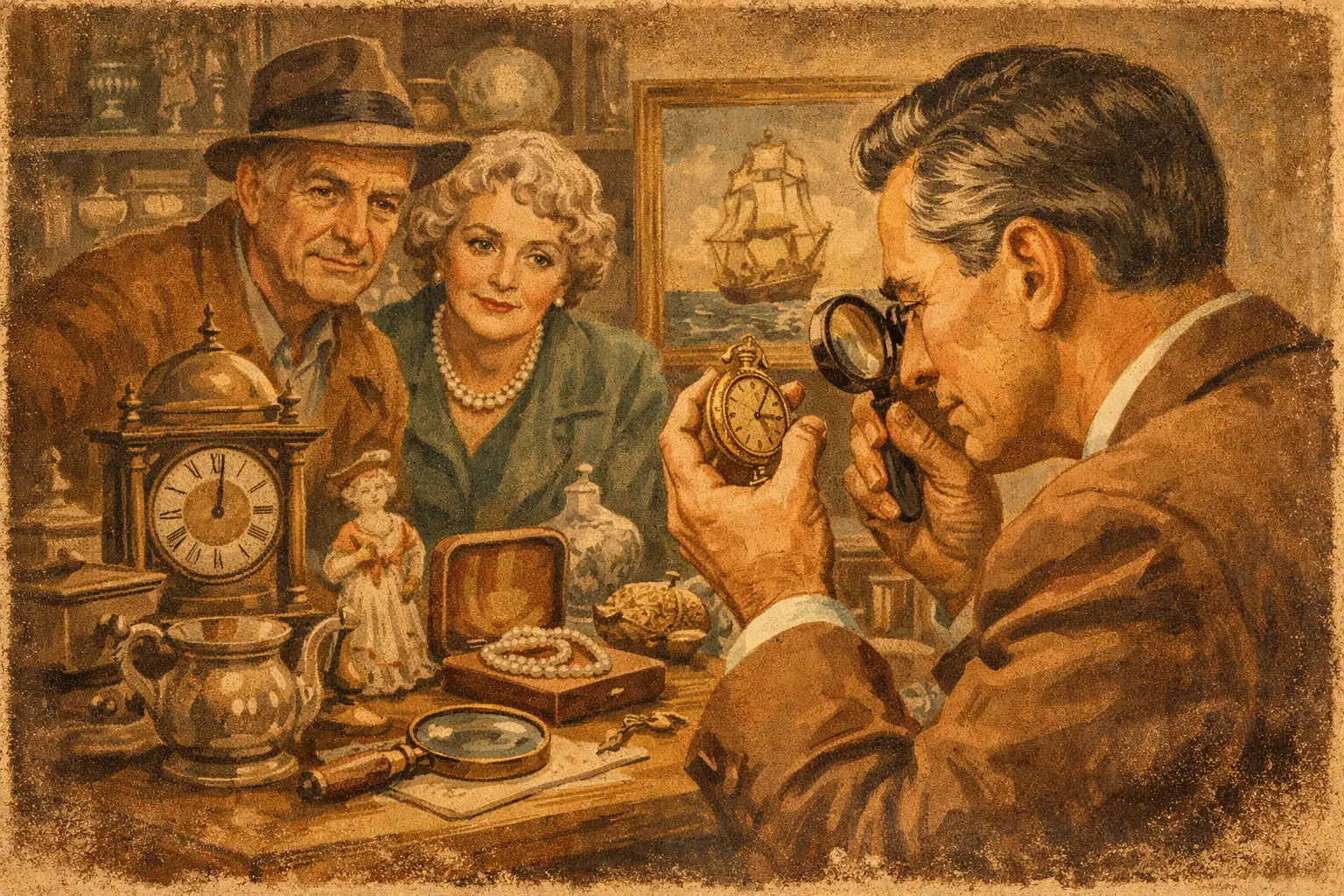

A porcelain bowl can appear modest on a shelf, yet its glaze may carry the evidence of a kiln, a trading route and a century of collecting. Equally, an impressive-looking object may be a later decorative reproduction with more sentimental than market value. This is where antique appraisal services earn their place: not simply by attaching a figure to an object, but by helping its owner understand what they hold.
For collectors, inheritors and curious owners, an appraisal is a moment of closer looking. It can reveal whether a piece belongs to a known tradition, how its condition affects desirability and what records should travel with it into the future. With ceramics, especially, small details can transform the story.
An appraisal is more than a price tag
People often seek an appraisal after inheriting a cabinet of porcelain, considering a sale, arranging insurance or deciding whether an object deserves specialist conservation. These are all valid reasons, but they call for different kinds of value.
An insurance valuation considers the likely cost of replacing an item in the current retail market. A fair market valuation usually reflects what the object might reasonably achieve between willing buyer and seller. A probate valuation may follow a different basis again, while a collector may be most interested in historical importance, rarity and provenance rather than an immediate sale price.
A good appraiser should explain which basis is being used. A single number without context can be misleading, particularly in a market shaped by fashion, condition, regional demand and the strength of an object’s documentation. The value of a famille verte dish, for example, may depend on its period, decoration, size, restoration history, comparable sales and whether its ownership history can be traced with confidence.
Why provenance changes the conversation
Provenance is the record of an object’s ownership, discovery or collection history. It may include old invoices, auction catalogues, family correspondence, labels, photographs or collection notes. These details can be as revealing as the object itself.
For maritime ceramics, provenance carries particular weight. Asian trade wares travelled across seas for centuries, linking China, Southeast Asia, the Middle East and Europe through commerce, migration and exchange. Ceramics recovered from documented shipwrecks can offer a powerful connection to that history, but they also demand careful scrutiny. A claimed shipwreck origin should be supported by credible records, not merely a story attached long after the event.
This is not only a question of value. It is a question of responsible collecting. Archaeological material may be subject to export rules, cultural heritage legislation or restrictions relating to its recovery and sale. An experienced specialist can identify when further research, legal advice or documentary evidence is needed before an object is bought, sold or moved across borders.
What specialists look for in antique ceramics
Appraising porcelain is an exercise in observation. An expert will study the body of the vessel, its foot rim, glaze, decoration, firing marks and signs of age. They will consider whether the shape and motifs align with the period claimed, and whether the piece was made for domestic use, export trade, ritual use or a particular market.
Condition matters, but it is rarely as simple as ‘perfect’ or ‘damaged’. A hairline crack, rim chip, repaired break or re-glazed surface can significantly affect commercial value. Yet some early trade ceramics are valued partly because of their survival in difficult conditions. A piece with minor wear may still be historically compelling if its form, origin and documentation are exceptional.
Marks also need careful interpretation. Reign marks can be useful, but they are not automatic proof of age. Later makers often honoured earlier periods by copying their marks, and marks may be spurious. The same caution applies to labels, certificates and family lore. They may point an appraiser in a useful direction, but they should be tested against the object’s physical evidence.
At Straits & Oriental Museum, the study of shipwreck ceramics brings this principle vividly to life. Objects from maritime contexts are not merely decorative survivors. They document the splendour of porcelain alongside the movement of goods, ideas and craftsmanship across Asia’s historic sea routes.
Preparing for antique appraisal services
The most useful appraisal begins before the object reaches the specialist. Avoid polishing metal, washing ceramics aggressively or attempting a repair. Old surfaces, dust, labels and even the way a piece has been stored can provide clues. A well-intentioned clean-up may remove evidence that cannot be restored.
Bring together the material that helps tell the object’s story. For a group of items, photograph each one individually as well as in context. Clear images of the base, marks, damage and any old labels are especially helpful. If an object is large, fragile or fixed in place, a remote preliminary assessment may be possible from detailed photographs, although a final opinion may require an in-person inspection.
Before the appointment, prepare the following:
- measurements, including height, width and depth;
- photographs of all sides, bases, marks and areas of damage;
- purchase receipts, old valuations, catalogues and correspondence;
- any known family history, even where it is incomplete;
- questions about insurance, sale, conservation, display or inheritance.
It is also sensible to ask what the written report will include. A clear appraisal normally identifies the object, describes its materials and condition, states the purpose and basis of value, and records the date of assessment. If attribution is uncertain, that uncertainty should be expressed plainly rather than concealed behind grand language.
Authentication, appraisal and conservation are different tasks
These terms are often used interchangeably, yet they answer different questions. Authentication asks whether an object is genuinely what it is claimed to be. Appraisal establishes value for a stated purpose. Conservation assesses how an object can be stabilised, repaired or cared for without compromising its integrity.
One specialist may be able to advise across all three areas, but complex objects often benefit from more than one expert view. A ceramic conservator may identify old restoration invisible to an untrained eye. A scholar of Chinese export ware may refine an attribution. A valuer with knowledge of the current market can then place the item within realistic commercial terms.
For valuable collections, this layered approach is worth considering. It reduces the risk of relying on a single, overly confident opinion and creates a stronger record for insurers, heirs or future buyers.
The market value is only one form of worth
An appraisal can occasionally disappoint. The ornate vase inherited from a grandparent may be a twentieth-century decorative piece rather than an eighteenth-century treasure. But clarity is valuable in itself. It prevents unnecessary insurance premiums, avoids poor buying decisions and lets owners care for their collections according to what they truly are.
The reverse can be equally significant. An unassuming plate, jar or blue-and-white bowl may prove to be part of a wider story of trade and material culture. Its importance may lie not only in auction potential, but in its ability to connect a household collection with a larger cultural history.
That perspective matters in a place shaped by maritime exchange such as George Town. Objects do not arrive with their histories neatly labelled. They accumulate meaning through craftsmanship, travel, ownership and memory. The best antique appraisal services respect all of these layers while remaining honest about the evidence.
If you are unsure about an object, begin with curiosity rather than assumption. Preserve what accompanies it, record what your family knows and seek a specialist whose knowledge suits the material. A considered appraisal may not turn every heirloom into a treasure, but it can ensure that every object receives the attention its story deserves.