
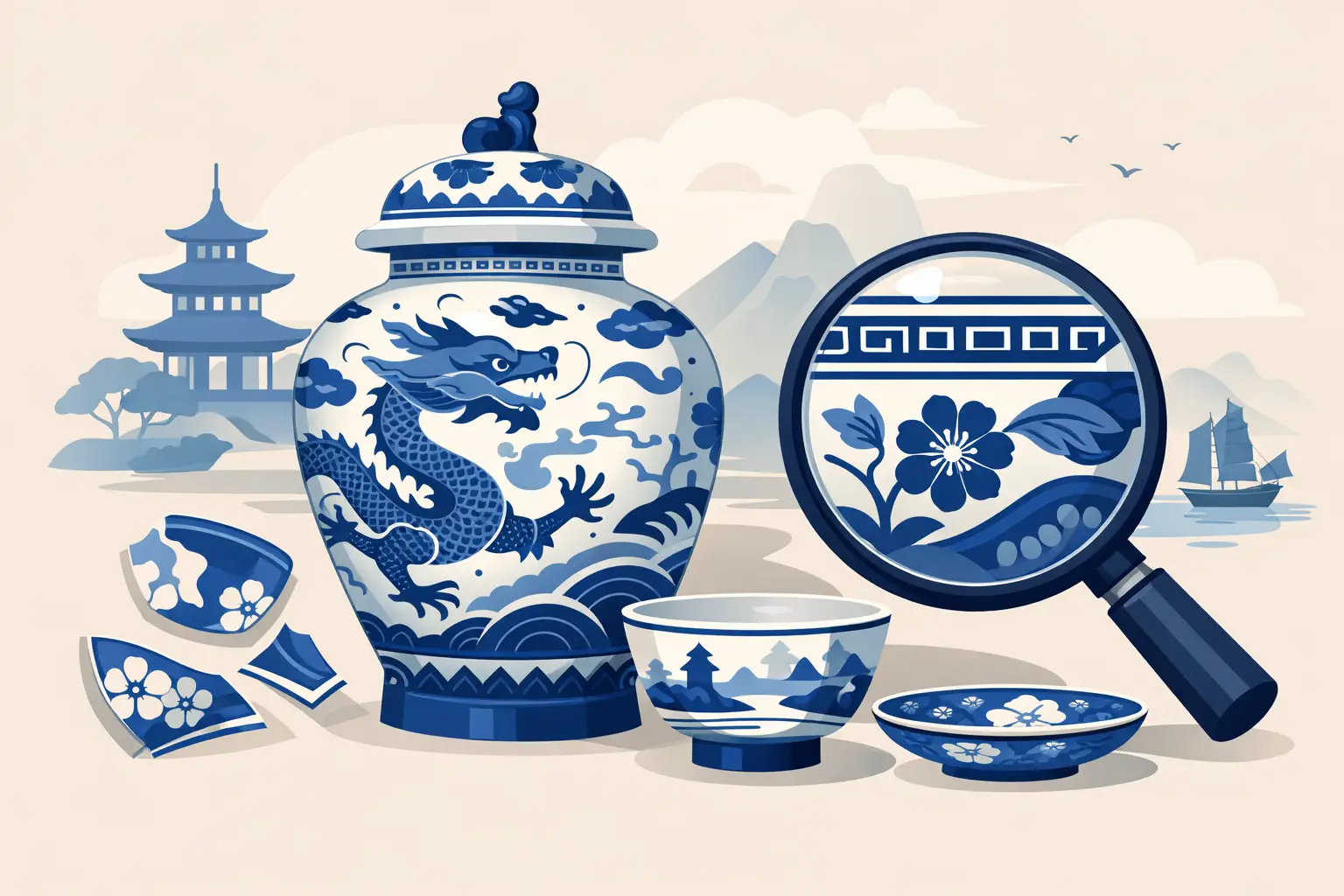

A dish that looks simply blue and white at first glance can hold an entire map of maritime Asia. For collectors, travellers and museum visitors alike, the top Ming export porcelain features are not just matters of style – they are clues to trade, taste, technology and movement across oceans.
Ming export porcelain was made for circulation far beyond China’s domestic market. It travelled through port cities, crossed monsoon routes, entered royal courts and merchant homes, and occasionally sank with the ships that carried it. That wider journey is precisely why these wares feel so compelling today. They were never static objects. They were made to move, to impress and to serve.
What makes Ming export porcelain distinct?
The first thing to understand is that export porcelain is not one single look. The Ming dynasty spanned nearly three centuries, and overseas demand shifted with politics, shipping routes and regional preferences. A bowl made for Southeast Asian consumers might differ noticeably from one intended for the Middle East or Europe.
Even so, certain visual and material traits appear again and again. The top Ming export porcelain features tend to include strong blue underglaze decoration, practical yet elegant forms, a body made for large-scale production, and signs of kiln firing that modern collectors learn to read almost instinctively. These are not flaws in the modern sense. Often, they are part of the object’s historical honesty.
Top Ming export porcelain features in decoration
Blue and white remains the most recognisable export style, and for good reason. Cobalt decoration offered drama, clarity and durability. On Ming export pieces, the blue can range from soft and misty to deep and vibrant, depending on the period, cobalt source and firing conditions.
One feature specialists often notice is the energetic quality of the brushwork. Decoration was frequently painted with confidence rather than microscopic precision. Floral scrolls, waves, deer, phoenixes, dragons and geometric borders may appear lively, even slightly spontaneous. That sense of movement is part of their appeal. A piece made for trade did not always aim for courtly restraint. It often favoured visual impact.
There is also a difference between careful artistry and over-neat modern imitation. Authentic Ming export decoration may show minor asymmetry, slight bleeding under the glaze or variation in line weight. These signs can indicate hand-painted work produced in a thriving commercial environment. If everything appears too uniform, too flat or too mechanically repeated, caution is sensible.
Motifs shaped by overseas markets
Export porcelain responded to taste abroad. Some motifs carried broad Chinese symbolism, while others were selected because they travelled well across cultures. Dense floral panels, stylised foliage and repeating borders suited long-distance trade because they were attractive and legible to many buyers.
This is where context matters. A motif is not enough on its own to identify a piece, but it helps when considered alongside form, glaze and firing marks. Collectors sometimes focus too heavily on decoration and overlook the body of the object itself.
Shape tells you as much as painting
Forms made for export were often practical, stackable and suited to transport. Dishes, bowls, kendi, boxes, jars and ewers appear frequently because they met commercial demand and shipped relatively efficiently. Wide dishes with everted rims, for instance, were popular across many export markets.
The top Ming export porcelain features therefore include shapes designed around use and movement, not just display. A merchant ordering ceramics in quantity needed forms that could survive handling, appeal to buyers and fit established dining or ritual habits in different regions.
Some export pieces feel slightly heavier or more direct in profile than highly refined imperial wares. That should not be mistaken for lesser historical value. It reflects purpose. Export porcelain was part of a sophisticated trade system, and function mattered.
Foot rims, bases and the underside story
Turn a piece over and the object often becomes more revealing. Foot rims may be sandy, uneven or show kiln grit from firing supports. Bases can vary from neatly finished to relatively casual, especially on mass-produced trade wares.
These underside details are among the most useful diagnostic features. A very clean, polished base can look reassuring to new buyers, but genuine age often comes with irregularity. The underside records manufacture in a way the painted surface does not.
The porcelain body and glaze
Ming export porcelain typically has a hard, high-fired body, but its exact tone and translucency can vary. Some examples appear bright and refined, while others carry a slightly grey or off-white cast. That variation is normal. It can reflect kiln conditions, clay composition and production speed.
The glaze also deserves close attention. On authentic pieces, it may sit smoothly over the body yet still reveal tiny imperfections – pooling, pinpricks, faint surface undulation or areas where the glaze thins at the rim. None of this automatically signals damage or poor quality. In many cases, it is consistent with historic firing.
A useful point for visitors and newer collectors is that age does not always look luxurious in the modern retail sense. Ming export wares were commercial ceramics of exceptional importance, but they were not all made to resemble jewelled treasures. Their beauty often lies in balance, freshness and evidence of skilled production at scale.
Signs of kiln firing and workshop production
One of the most fascinating top Ming export porcelain features is the presence of firing evidence. Stilt marks, grit adhesion, warped rims, glaze contractions and minor stacking traces can all appear on period pieces. These details connect the object to the kiln itself.
Far from diminishing value, such features can strengthen confidence when they are consistent with the type, date and origin claimed. Export porcelain was made in large quantities, and kiln technology, though highly advanced, still left physical signatures. Those signatures matter because they are difficult to fake convincingly in a coherent way.
That said, there is no single mark that proves authenticity. A convincing judgement depends on the whole object. Decoration, body, glaze, wear and provenance need to agree with one another. It is always the combination that tells the story.
Wear, marine history and survival
Many surviving export ceramics spent centuries in difficult conditions. Some passed through households for generations. Others were recovered from shipwreck contexts and carry the added drama of maritime archaeology. This can affect appearance in distinctive ways.
Marine-recovered porcelain may show surface accretions, glaze alteration or staining depending on burial conditions underwater. Domestic pieces, by contrast, may display rim fritting, foot wear or handling marks from long use. Neither path is inherently superior. It depends on whether your interest is artistic, archaeological or market-driven.
For institutions and informed visitors, shipwreck ceramics offer an especially vivid link between object and route. They remind us that porcelain was part of a living network of ports, risk and exchange. In a place shaped by maritime memory, that perspective feels particularly resonant.
Why collectors value imperfection
Modern eyes are sometimes trained to seek flawless symmetry, but Ming export porcelain asks for a different kind of looking. Slight misfiring, painterly freedom and workshop variation are often exactly what make a piece persuasive and alive.
This is one reason experienced collectors slow down before making judgements. A perfect-looking piece may be modern. A slightly irregular one may be centuries old and far more interesting. Taste matures when you begin to appreciate how trade ceramics were actually made and used.
At Straits & Oriental Museum, this way of seeing becomes especially rewarding because porcelain is presented not as isolated decoration, but as evidence of voyages, exchange and human ambition. The object in the case is never only an object. It is the survivor of a route.
What to look for when viewing a piece in person
If you are standing before a dish, bowl or jar and want to assess it with more confidence, begin with the silhouette. Then move to the painted surface, checking whether the brushwork feels hand-led rather than repetitive. After that, examine the glaze in raking light and finally turn to the foot rim and base.
Ask yourself whether all the parts belong to the same story. Does the decoration suit the form? Does the wear make sense for the supposed age? Do the underside and glaze support the claim, or do they feel oddly modern? This habit of reading the whole piece is far more useful than chasing one magic indicator.
The pleasure of Ming export porcelain lies in this layered encounter. It rewards the eye first, then the mind. The more closely you look, the more these wares reveal about taste, commerce and the sea routes that shaped Asia’s shared history.
A fine export piece does not need to shout. Often, the most memorable ones are those that quietly show their journey – in the blue of the brushwork, the ring of the foot, the softness of the glaze and the small marks left by fire, water and time.