
A search for “ming and qing important ceramics in straits and oriental museum in penang” points to more than beautiful objects behind glass. It opens a route into the maritime world that connected imperial kilns, merchant vessels and the busy ports of Southeast Asia. Each bowl, dish and jar recovered from the sea carries two histories at once: the story of its making in China and the unfinished voyage that brought it to the waters around the Malay Archipelago.
At Straits & Oriental Museum, these rare shipwreck ceramics give Penang’s long relationship with the sea a tangible, richly detailed presence. Their surfaces may be delicate, but their significance is immense. They reveal how taste, trade and technology travelled across Asia centuries before modern borders and shipping lanes took shape.
Why Ming and Qing ceramics matter
The Ming dynasty, which ruled from 1368 to 1644, and the Qing dynasty, from 1644 to 1912, oversaw periods of extraordinary achievement in Chinese ceramic production. Porcelain was prized for its strength, pale body, refined glaze and ability to hold intricate painted decoration. It was not simply tableware for an imperial court. It was a coveted trading commodity, commissioned in large quantities and carried to homes, markets and royal households far beyond China.
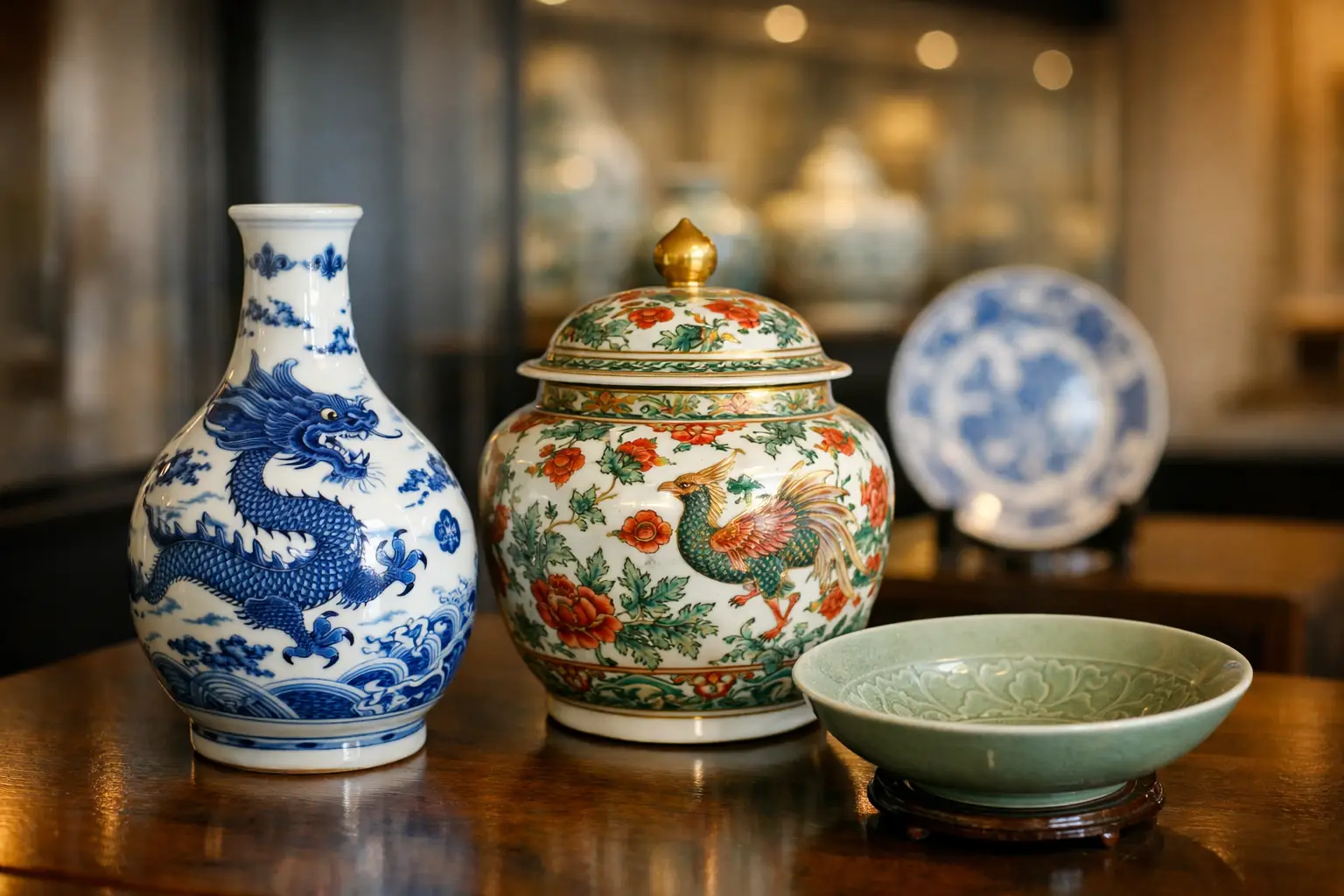
Ming pieces are often admired for their confident forms and vivid decorative language. Blue-and-white wares, painted with cobalt beneath a clear glaze, became especially influential across the trading world. Floral sprays, scrolling foliage, waves, birds and auspicious symbols were not casual ornament. They expressed prosperity, longevity, harmony and status, while also appealing to buyers who recognised their visual power.
Qing ceramics continued this tradition while expanding it. Potters developed increasingly sophisticated enamels, palettes and techniques, producing wares of remarkable variety. Some examples display restrained elegance; others are exuberant in colour and pattern. The distinction matters because a ceramic’s period can guide us towards questions of date, kiln practice, intended market and route of trade.
Yet no visitor needs to be a specialist to respond to these objects. A small dish can show the precision of the painter’s hand. A lidded jar may suggest a ship’s cargo hold packed for a distant port. A vessel marked by centuries underwater can make time feel unexpectedly close.
Ming and Qing important ceramics at the Straits & Oriental Museum
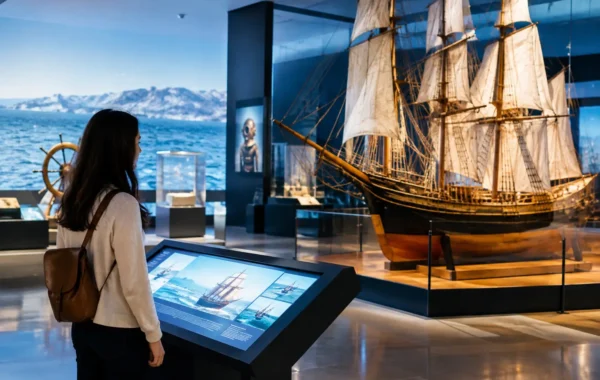
The museum’s shipwreck collection makes this history particularly compelling because the ceramics were once cargo. They were made to move. Rather than treating porcelain only as a luxury object, the displays invite visitors to consider it as evidence of an active commercial network linking China with Southeast Asia and beyond.
Wrecks associated with names such as Wanli, Turiang, Royal Nanhai, Nanyang, Xuande and Desaru offer different points along that wider story. Their cargoes reflect changing demand, shifting routes and the practical realities of maritime commerce. A shipwreck is a tragic event, but archaeologically it can preserve a remarkable snapshot of material culture: goods loaded together at a particular moment, destined for buyers whose preferences shaped what merchants chose to carry.
This is why provenance matters. A porcelain bowl viewed on its own can be admired for its design. Viewed as part of a recovered cargo, it becomes evidence of scale. Similar pieces may show that a pattern was made for export in volume, while an unusual form can hint at a more particular customer or market. The sea has altered some surfaces, but it has also preserved the relationship between objects that would otherwise have been dispersed long ago.
There is a necessary note of care here. Not every ceramic recovered from a wreck will be pristine, and perfection is not the only measure of value. Marine deposits, staining, chips and wear can form part of an object’s archaeological biography. For collectors, condition may influence rarity and market appeal. For historians, an imperfect fragment may still offer vital information about trade, manufacture or use.
Reading the detail in a single piece
The pleasure of viewing Ming and Qing porcelain lies in slowing down. Begin with the form. Is it a shallow dish, a deep bowl, a storage jar or a pouring vessel? Form offers an immediate clue to function, and function can point towards the people who might have purchased it.
Then look at the decoration. Blue-and-white ceramics reward close attention because the same colour can produce remarkable variation, from soft washes to dark, almost inky outlines. Notice whether the design is densely packed or spacious, formal or lively. The rhythm of a border, the curve of a leaf or the placement of a bird can reveal the visual conventions of its time.
Finally, consider the underside and the edges. The foot ring, glaze, firing marks and signs of use are often as revealing as the central image. These details help scholars assess how an object was made and, in some cases, where it may fit within a known tradition. They also encourage a more patient kind of looking, one that moves beyond the quick photograph towards genuine appreciation.
From imperial kilns to Southeast Asian tables
The maritime ceramic trade was never one-way. Chinese makers supplied goods into a region of discerning customers, and those customers influenced production. Shapes, motifs and quantities were responsive to demand. The result was not a single, uniform idea of Chinese porcelain, but a dynamic exchange between workshops, merchants and communities across the seas.
Penang is an especially fitting place to encounter that history. Its identity has long been shaped by movement – of people, goods, languages and ideas through the Straits. Shipwreck ceramics make those connections visible without reducing them to an abstract map. They show that the region was not at the edge of a distant imperial story. It was an active centre of commerce and cultural exchange.
For families, this can be an accessible introduction to archaeology: ask what a ship might have carried, who packed it and where it was heading. For enthusiasts, the collections offer the rewarding exercise of comparing forms, glazes and decorative programmes across periods. For collectors, they offer an opportunity to see why historical context is as valuable as visual beauty.
A museum visit with room to linger
A meaningful encounter with ceramics benefits from unhurried time. The objects become more vivid when visitors can move from a broad view of regional trade to the intimate details of individual pieces. This is also where an integrated heritage destination offers a different rhythm from a conventional museum visit. History can lead naturally into art, conversation, a meal or a considered souvenir chosen as a reminder of the day.
The best approach is to arrive curious rather than determined to identify every dynasty at once. Choose one or two objects that hold your attention and ask simple questions: Why was this made? Who wanted it? How far did it travel? What does its survival tell us about the sea route it never completed? Those questions turn a display into a journey through time.
Ming and Qing ceramics endure because they unite artistic accomplishment with human movement. In George Town, their story is not confined to distant courts or kiln towns. It belongs to the waters, merchants and port communities that made the Straits a meeting place for the world. Leave with one image in mind – perhaps the cobalt blue of a painted dish – and let it be a prompt to look more closely at the histories carried by every shore.