
Fort Convallis in Penang is most commonly a search for Fort Cornwallis, the star-shaped coastal fort at the edge of George Town’s historic waterfront. Its weathered ramparts, cannons and open parade ground offer more than a handsome stop for photographs. They mark the point where Penang’s modern story began – shaped by maritime trade, colonial ambition and the strategic value of the Straits of Malacca.
For visitors drawn to the island’s layered past, Fort Cornwallis is an essential place to begin. It does not present history as a distant chapter. Instead, it places you at the shoreline where ships, cargoes, people and ideas arrived, departed and altered the destiny of the region.
Fort Convallis in Penang: the name behind the search
There is no known historic landmark formally called Fort Convallis in Penang. The name is almost certainly a variation of Fort Cornwallis, which stands near the Esplanade in George Town. The fort was named after Charles Cornwallis, then Governor-General of Bengal under the British East India Company.
That distinction matters because Fort Cornwallis is not merely a colonial relic. It is a gateway into the larger story of Penang as a port city. Long before container ships and cruise visitors appeared on the horizon, these waters connected Southeast Asia with China, India, the Middle East and Europe. Penang’s position along a major sea route made it valuable, contested and remarkably cosmopolitan.
The fort’s presence on the coast reflected that geography. It was intended to protect a new British trading settlement and signal that this stretch of shore had become part of a changing political order.
Where Penang’s colonial chapter took shape
In 1786, Captain Francis Light established a British East India Company settlement on Penang Island, then known to the British as Prince of Wales Island. The first fortification was a simple stockade made from nibong palm trunks, built close to the sea. It offered a practical defensive position, though it was never the imposing stone citadel visitors see today.
The brick fort was constructed in the early 19th century, when the settlement had grown in commercial and strategic importance. Its angular bastions, thick walls and carefully considered layout followed European military thinking of the period. Yet Fort Cornwallis was never tested in the grand battle many might expect from its appearance. Its significance was as much political and symbolic as defensive.
A fort can declare authority without firing a shot. Here, the British East India Company projected confidence over a rising port, while merchants, sailors, labourers and migrants turned the surrounding settlement into a busy urban centre. George Town did not grow from one culture or one ambition alone. It developed through exchange, negotiation and movement across the sea.
This is why the fort rewards a slower visit. Look beyond the masonry and imagine the waterfront as it once was: sailing vessels in the harbour, goods being unloaded, languages carried through the streets and news from distant ports reaching Penang’s shore.
What to look for inside Fort Cornwallis
Fort Cornwallis is compact enough to visit without fatigue, but its individual features offer valuable clues to its original purpose. The best approach is to allow time to pause at each structure rather than treating the grounds as a quick box to tick between other George Town attractions.
The walls, bastions and parade ground
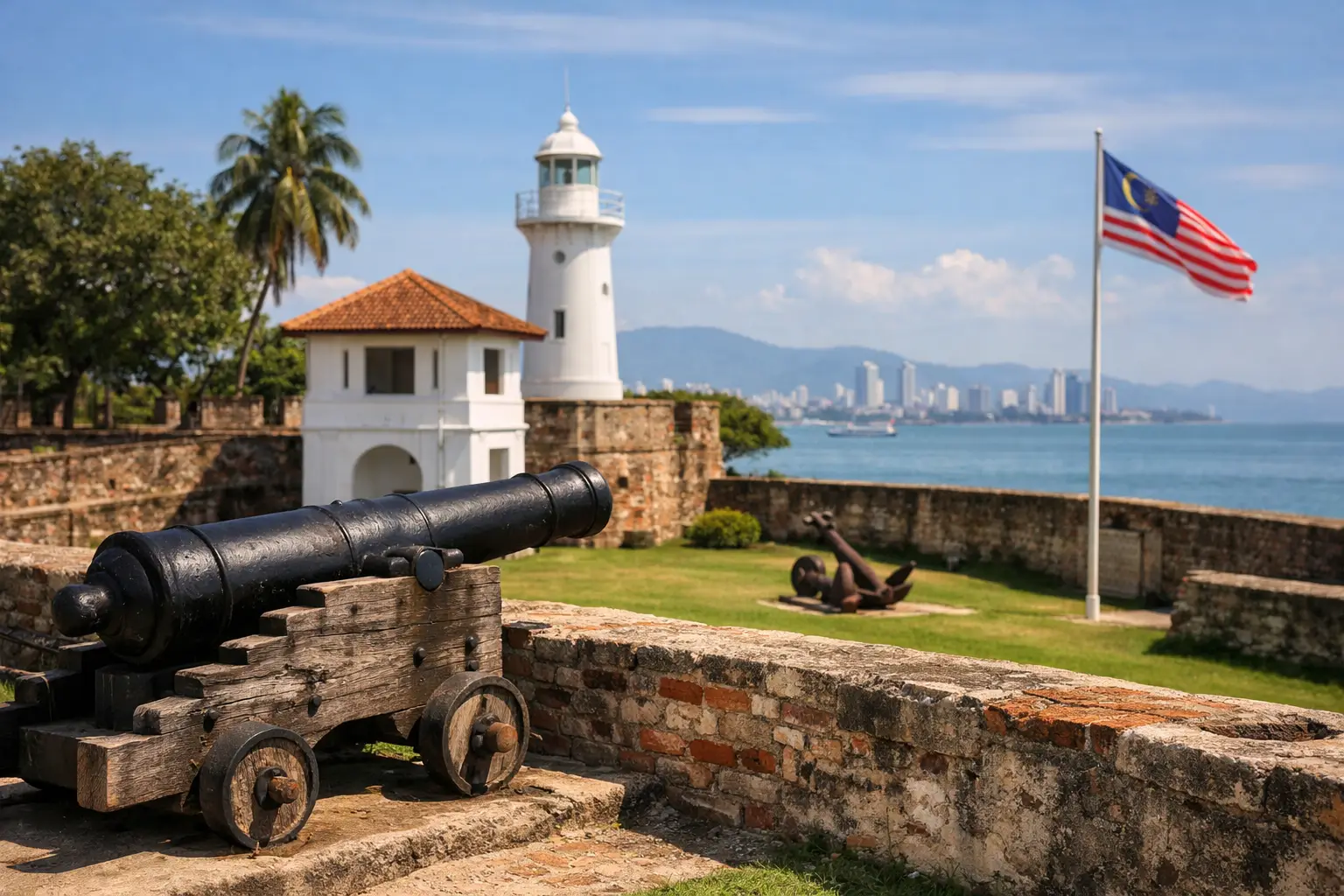
The fort is shaped as a star-like enclosure, with bastions designed to give defenders clear sightlines along the perimeter. Its low profile may feel understated compared with hilltop castles in Europe, but it made practical sense on an exposed tropical coast. The wide central grounds once served the discipline and routine of military life, including drills and ceremonial gatherings.
Today, the openness of the site creates a striking contrast with the dense heritage streets beyond its walls. It is a reminder that George Town was built around the needs of a port, with the sea once far more immediate to daily life than it can appear now.
Seri Rambai, the celebrated cannon
Among the fort’s most recognisable artefacts is Seri Rambai, a large Dutch cannon cast in 1603. It arrived in Penang after a long journey through the region and has become surrounded by local stories, particularly those relating to fertility and good fortune.
The cannon is compelling not simply because it is old, but because it embodies the movement of objects across maritime Southeast Asia. A weapon cast in Europe travelled through shifting alliances, colonial competition and local belief to become part of Penang’s cultural landscape. Such objects hold more than one history at once.
The chapel, cells and magazine
Within the grounds, visitors will find structures associated with the daily operation of the fort, including a small chapel, prison cells and an ammunition magazine. They are modest in scale, yet they give the site human texture. Military power depended on ordinary routines: worship, punishment, storage, labour, watchkeeping and the constant management of supplies.
These details also prevent the fort from becoming a simple monument to empire. The colonial period was experienced differently by officers, local communities, traders and workers. A thoughtful visit leaves room for that complexity. Fort Cornwallis can be appreciated for its architecture and historical importance while also inviting questions about the systems of power it represented.
Why the fort belongs to Penang’s maritime story
Penang’s history cannot be separated from the sea. Its port brought prosperity, but it also placed the island within wider rivalries between regional rulers and foreign trading powers. The fort was built at a moment when maritime commerce was transforming political influence across Asia.
Ceramics, spices, textiles, metals and tea travelled along routes that were rarely straightforward. Ships carried precious cargoes as well as people, belief systems and artistic traditions. Some vessels reached their destination; others were lost beneath the waves, preserving fragments of the trade that once passed through these waters.
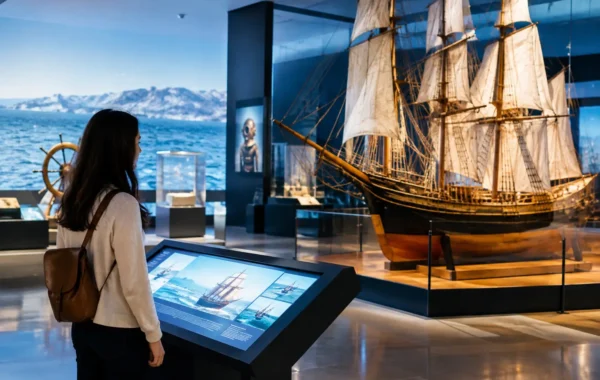
For those wishing to take this story further, Straits & Oriental Museum offers a complementary encounter with maritime history through authentic shipwreck ceramics. Where the fort reveals the strategic importance of Penang’s shore, recovered porcelain offers intimate evidence of the goods that moved across Asian seas. Together, these perspectives make the Straits feel less like a line on a map and more like a living passage of exchange.
Making a meaningful visit
Fort Cornwallis works especially well as part of a wider day in George Town. Visit in the cooler morning or later afternoon, when the light softens across the walls and the heat is more forgiving. It sits close to the Esplanade, heritage buildings and the old civic quarter, making it easy to connect with a walk through the city.
Families can treat the fort as an opportunity to make history tangible. Children often respond to the cannons, gates and enclosed grounds before they respond to dates. From there, the conversation can grow: Who built this? What did they want to protect? Who lived nearby? What arrived by sea?
For photographers and design-minded visitors, the appeal lies in the contrast between military geometry and tropical light. For history enthusiasts, the richer reward is context. Read the interpretive material, observe how the fort faces the waterfront and consider the gap between its defensive appearance and its largely ceremonial military history.
It is worth resisting the urge to romanticise every colonial site. Fort Cornwallis is beautiful in places, but beauty does not erase the unequal power relations that formed it. A more rewarding response is to hold both truths together: this is an important architectural landmark, and it is a setting in which to examine how trade, empire and local life became entangled.
A shoreline that still speaks
Fort Cornwallis endures because it gives form to a turning point. From its walls, it is possible to picture Penang not as a finished heritage destination, but as a developing port looking outward to a restless sea. The fort stands at the beginning of a story that continues in George Town’s communities, food, architecture, collections and waterfront.
Stand for a moment beside its old cannon and look towards the water. The most revealing part of the visit may not be what the fort defended, but what it witnessed: centuries of arrivals, departures and the enduring human urge to make a home at the meeting point of worlds.