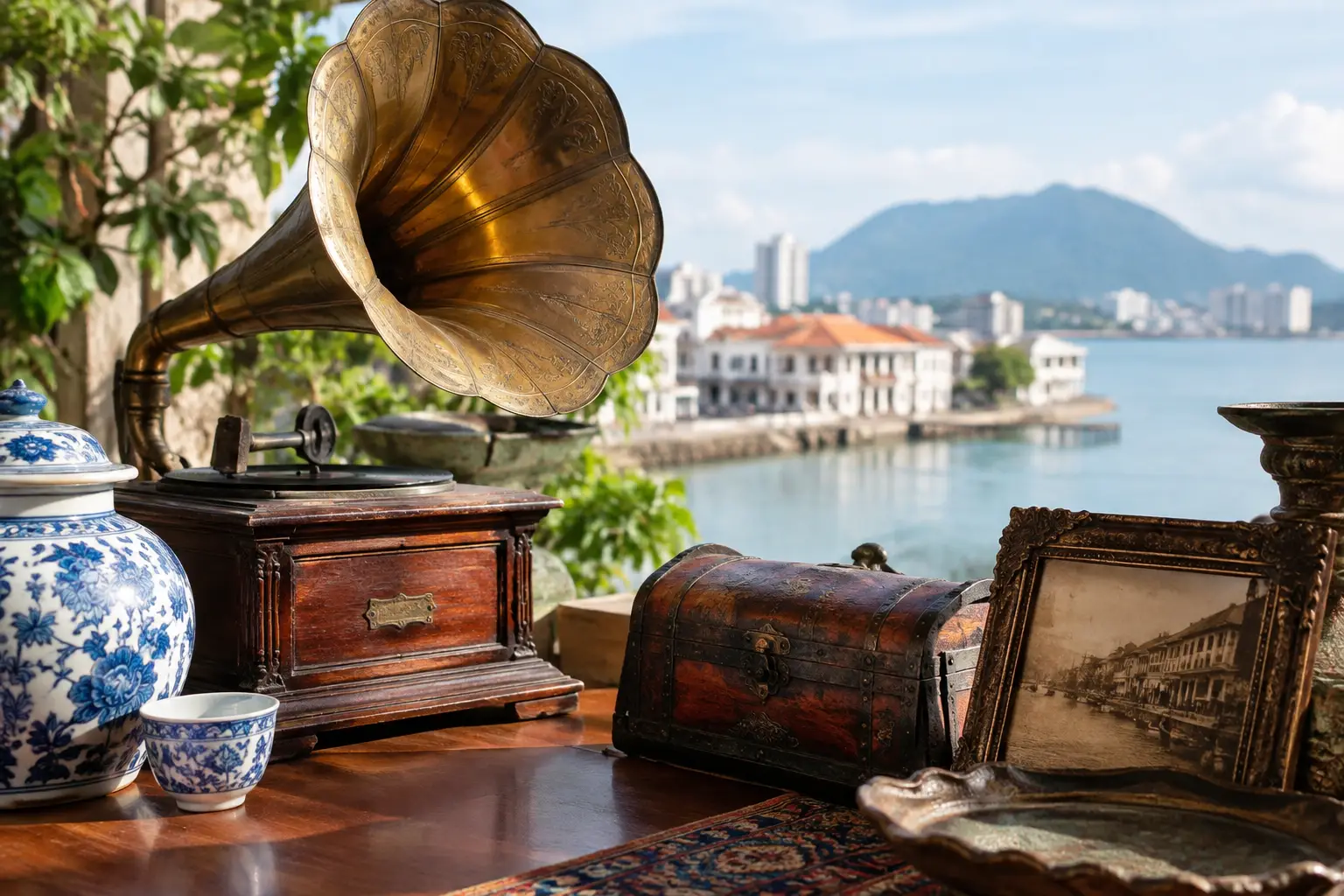

Penang’s old trading streets reward a slower gaze. Behind a carved timber screen, within the quiet gleam of a porcelain bowl, or in the softened patina of a brass vessel lies evidence of the island’s long conversation with the wider world. To seek an antique in Penang is not simply to look for an attractive old object. It is to encounter the routes, households, craftsmanship and exchanges that helped shape the Straits settlements.
For collectors, curious travellers and families drawn to George Town’s layered past, that distinction matters. The finest finds are not defined by age alone. They carry a story that can be examined, understood and enjoyed for years to come.
Why Penang Has a Distinctive Antique Character
Penang has always been a meeting place. Chinese merchants, Malay communities, Indian traders, European companies and seafarers from across Asia moved through its port, bringing objects that travelled far beyond their original makers and owners. Ceramics, textiles, furniture, coins, devotional pieces and domestic wares all became part of the material life of the island.
This is why an antique encountered here can feel particularly rich in context. A blue-and-white bowl may have been made in China, traded through Southeast Asian waters and used in a Peranakan household. A piece of Straits Chinese furniture may combine Chinese motifs with local tropical hardwoods and European-influenced proportions. Its value lies not only in how it looks, but in the cultural crossings visible in its design.
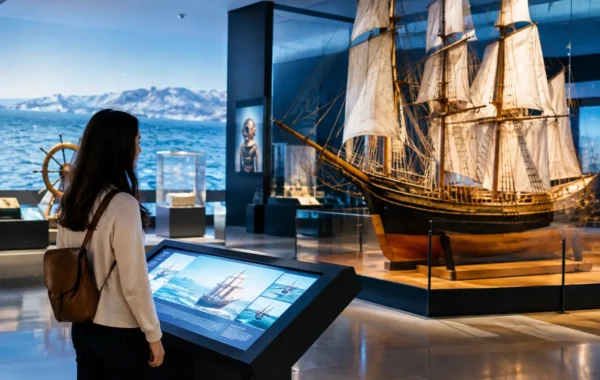
Maritime trade is central to this story. For centuries, the waters around the Malay Peninsula carried cargoes of ceramics destined for ports across the region. Shipwreck discoveries offer a rare, direct record of that commerce: objects preserved beneath the sea, sometimes for hundreds of years, before returning to public view. They remind us that porcelain was never merely decorative. It was a precious trade good, a useful household material and a record of taste across borders.
How to Recognise a Meaningful Antique in Penang
The word “antique” is used generously in markets and shops. Some objects are genuinely old, some are later reproductions, and others are vintage pieces with their own appeal but a different collecting value. There is nothing wrong with buying a reproduction if you love it, provided it is represented honestly. The pleasure of collecting begins with clear expectations.
Provenance gives an object its voice
Provenance means the documented history of an object: where it came from, who owned it, how it was acquired and, where possible, how it moved from maker to present holder. Complete provenance is uncommon, especially for objects that have passed through family homes over generations. Even so, a credible account supported by receipts, old photographs, collection records, expert assessments or auction documentation is valuable.
For maritime ceramics, provenance is especially significant. A piece attributed to a known wreck should have a credible chain of documentation, not simply an appealing label. It is reasonable to ask when and where it was recovered, whether it was part of a recorded cargo, and whether there is supporting certification. A serious seller should welcome considered questions.
Craftsmanship reveals more than perfection
Handmade antiques are not factory-identical. A slight asymmetry in a ceramic form, variation in glaze, tool marks on timber or a hand-finished metal edge may be part of the object’s character. These details can speak to process and period.
Yet irregularity does not automatically prove age. Collecting requires a balance of close looking and informed comparison. Examine the overall quality: the form, weight, decoration, construction and wear should make sense together. On furniture, consider joints, timber grain, hardware and signs of later repair. On ceramics, look at foot rims, glaze pooling, firing marks and the relationship between decoration and surface.
Condition also deserves a nuanced view. A museum-quality piece with minimal restoration may command a higher price, but a repaired bowl can still be historically compelling and visually beautiful. The right choice depends on whether you are building a scholarly collection, furnishing a home, marking a journey or giving a meaningful gift.
Shipwreck Ceramics: When the Sea Becomes an Archive
Few antiques offer such a vivid connection to Southeast Asia’s trading history as shipwreck ceramics. Cargoes often included thousands of vessels made for export: bowls, dishes, jars and storage wares that reveal the scale and sophistication of maritime commerce.
Their surfaces can be especially captivating. Time beneath the sea may leave mineral traces, marine accretions or altered glazes. These features are not simply decorative effects. When properly identified, they form part of an object’s archaeological story. At the same time, not every marine-looking surface confirms a wreck origin. Artificial ageing exists, which is why reliable documentation and specialist knowledge remain essential.
At Straits & Oriental Museum, authentic porcelain and ceramic artefacts recovered from renowned Asian shipwrecks offer visitors a considered way to encounter this history. Seen together, such pieces are more than individual curiosities. They document the splendour of porcelain, the ambitions of merchants and the connected world that once moved across the region’s seas.
Buying with Care Rather Than Impulse
Penang invites browsing, and there is pleasure in an unexpected find. Still, a considered purchase usually brings greater satisfaction than a hurried one. Begin by deciding what you are drawn to. You might prefer export porcelain, Nyonya ceramics, Chinese furniture, old maps, metalware or objects associated with domestic life. A collecting focus need not be narrow, but it helps you learn what good examples look like.
Before buying, spend time with the object in natural light if possible. Ask about its age, origin, repairs and previous ownership. Request written details for significant purchases, including measurements, materials, condition and any provenance offered. If an attribution is uncertain, it should be described as uncertain rather than presented as fact.
Price is not a reliable measure of authenticity on its own. An inexpensive item may be a genuine but damaged piece, while a costly object may simply be well marketed. Compare quality, condition, rarity and documentation. When the purchase is substantial, independent specialist advice can be worthwhile.
Visitors should also be mindful of legal and ethical considerations. Archaeological material, protected cultural property and objects removed from their place of origin without proper permission raise serious questions. A responsible collection is built with respect for heritage, lawful trade and transparent ownership. The most rewarding objects are those whose stories can be shared with confidence.
Bringing Heritage into Contemporary Life
An antique need not be confined to a cabinet or treated as untouchable. A well-chosen piece can give a contemporary room a sense of depth: a small porcelain dish on a writing desk, a carved stool beside a modern chair, or a framed print that invites conversation over dinner. The key is care rather than excess.
Ceramics should be protected from abrupt changes in temperature and displayed away from direct, harsh sunlight. Avoid aggressive household cleaners, adhesive labels and improvised repairs. For timber furniture, stable humidity and gentle cleaning matter more than frequent polishing. A little wear is often part of an antique’s honesty; over-restoration can erase the details that made it distinctive.
For travellers, smaller objects are often the most practical choice, but practicality should not lessen curiosity. Ask about safe packing, export requirements and suitable display. A modest, well-documented bowl or tile can become a lasting reminder of Penang, precisely because it holds more than visual appeal.
The Best Find Is One You Can Explain
The most memorable antique in Penang is rarely the one with the loudest claim or the brightest sheen. It is the piece that encourages another look: the bowl whose painted motif travelled across an ocean, the cabinet shaped by several cultural traditions, or the recovered ceramic that turns a maritime route into something tangible.
Take time to ask where an object has been and what evidence supports its story. When beauty is joined by provenance, craftsmanship and context, an antique becomes more than a possession. It becomes a small, enduring way to keep Penang’s many histories close at hand.