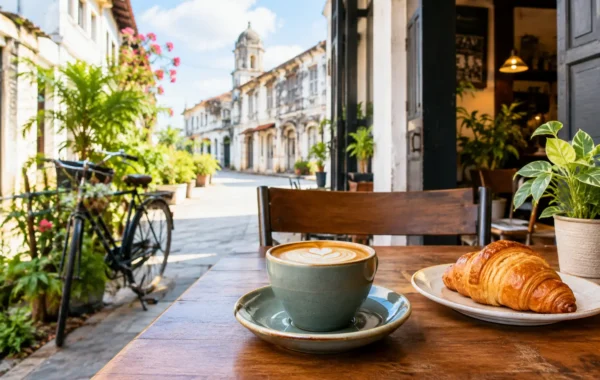

A porcelain bowl, a spice ledger or a weathered anchor can tell a more vivid story of Penang than a date alone. The history of Penang in 18th and 19th centuries is a story of monsoon passages, commercial ambition and communities arriving by sea. Long before George Town became admired for its streetscapes and culinary life, the island stood at a strategic threshold between the Bay of Bengal, the Malay Peninsula and the wider South China Sea.
History of Penang in the 18th and 19th Centuries
Before British settlement, Penang was part of the Sultanate of Kedah. Its shores and waterways were known to regional merchants, sailors and fishing communities, but the island was not yet the busy urban port visitors recognise today. Trade had long moved through the Malay world, carrying Indian textiles, forest products, spices, tin and Chinese ceramics between ports that rose and declined with political fortunes and shifting winds.
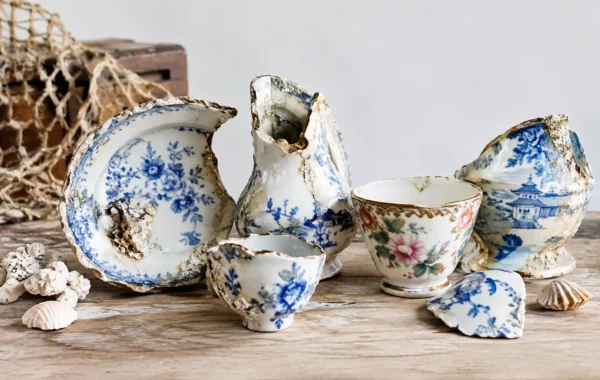
This older maritime world matters because Penang did not emerge from an empty sea. It entered an already sophisticated network of exchange. Ceramic cargoes recovered from Asian shipwrecks offer a tangible reminder of that earlier connectivity: porcelain was an object of beauty, but also a commercial commodity, packed, shipped, traded and treasured across remarkable distances.
By the late 18th century, the British East India Company sought a secure harbour in the region. Its ships needed provisions, repair facilities and a strategic base on the route between India and China. Penang’s deep, sheltered waters and position near the northern entrance to the Strait of Malacca made it exceptionally attractive.
Francis Light and the founding of George Town
In 1786, Captain Francis Light took possession of Penang Island on behalf of the East India Company. The settlement was named Prince of Wales Island, while its principal town became George Town, in honour of King George III. The event is often presented as a straightforward founding moment. In reality, it was shaped by a contested understanding between Light and the Sultan of Kedah.
The Sultan sought British military assistance against regional threats, while Light was determined to secure the island for the Company. Light indicated that protection would be forthcoming, but he lacked clear authority to guarantee it. When the promised support did not materialise, relations deteriorated sharply. Kedah forces attempted to retake the island in 1791, but the effort failed, confirming British control.
Fort Cornwallis, initially constructed from timber and later rebuilt in brick, became a visible expression of that new authority. Yet Penang’s future was never determined by military power alone. Its decisive advantage was commercial. Light declared the port free of customs duties, a policy that encouraged merchants to redirect their business there.
A Free Port Built by the Sea
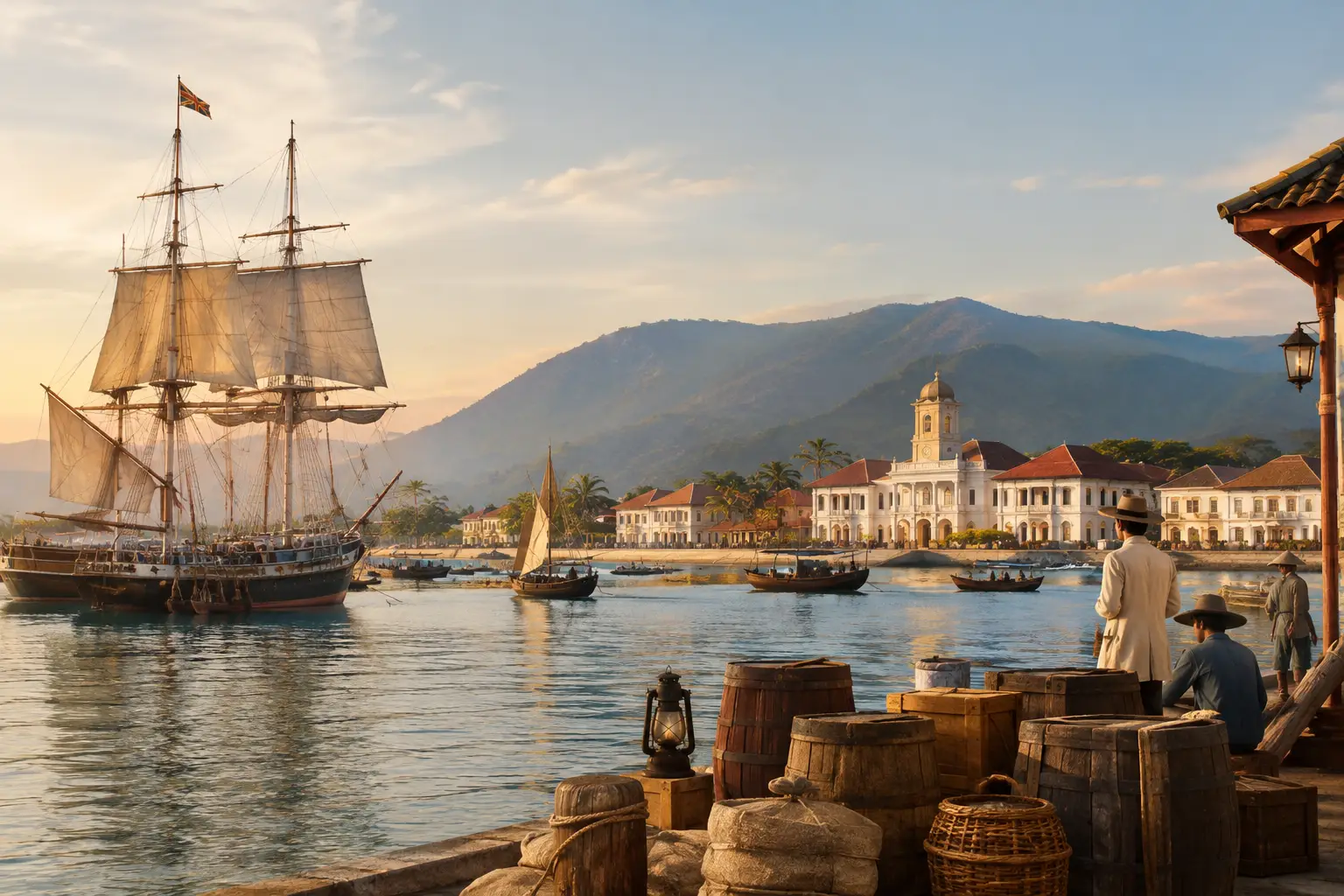
The free-port model transformed Penang with striking speed. Traders from China, India, the Malay Archipelago, Siam, Burma, Arabia and Europe could exchange goods with fewer restrictions than at many rival ports. The island became a place where commercial pragmatism often mattered more than imperial ceremony.
Its warehouses and waterfront received a varied cargo: pepper, nutmeg, cloves, betel nut, rattan, birds’ nests, tin, textiles, tea, opium and ceramics. Some goods were produced locally or on the peninsula; others arrived after journeys spanning several seas. Penang was an entrepôt, meaning that much of its prosperity rested on receiving, storing, financing and redistributing goods rather than producing them all itself.
That distinction helps explain the town’s character. Port cities thrive on movement. A merchant might arrive with cargo from the Coromandel Coast, arrange credit with a Chinese trader, buy provisions from Malay suppliers and depart with goods intended for another market altogether. This was not a tidy or equal world. Trade created fortunes, but it also depended on labour, colonial power and commodities such as opium that carried grave social consequences.
The sea connected Penang to opportunity, but it also brought uncertainty. Monsoons governed sailing seasons, piracy posed risks in surrounding waters, and political disruptions could alter supply routes overnight. Port life rewarded adaptability.
The communities that made a town
Penang’s rapid growth was made possible by people who brought their languages, faiths, skills and commercial connections with them. Malay communities remained central to the island’s social fabric, while Chinese migrants established trading houses, workshops, temples and clan associations. Tamil, Bengali and other South Asian communities contributed as merchants, labourers, administrators and religious leaders. Arab, Armenian, Siamese, Burmese and European residents added further threads to the town’s cosmopolitan identity.
These communities did not simply live beside one another. They shaped George Town’s built environment and daily rhythms. Mosques, Hindu temples, Chinese temples, churches, shop houses, godowns and clan buildings reflected both distinct traditions and the practical realities of a shared port. Foodways, festivals and family networks evolved through contact, adaptation and negotiation.
It would be misleading, however, to imagine a perfectly harmonious multicultural port. Class divisions, ethnic tensions, secret societies and competition for work and influence were real features of 19th-century Penang. The Penang Riots of 1867, involving rival Chinese secret societies, exposed the pressures beneath the town’s commercial success. The disturbances prompted stronger colonial intervention in policing and public order, but they also revealed how deeply economic rivalry could affect urban life.
From Company Outpost to Straits Settlement
Penang’s political status changed as British interests in Southeast Asia expanded. In 1800, the East India Company acquired a strip of mainland territory opposite the island, later known as Province Wellesley and now Seberang Perai. This gave Penang access to agricultural land and a broader mainland hinterland.
In 1805, Penang became a separate British presidency for a brief period, indicating its early importance. The balance shifted after the founding of Singapore in 1819. Singapore’s location further south, closer to key shipping routes, allowed it to grow rapidly as a competing free port.
In 1826, Penang, Malacca and Singapore were brought together as the Straits Settlements. Penang served as the administrative centre at first, but the seat of government moved to Singapore in 1832. This did not make Penang irrelevant. It remained a significant northern entrepôt, a gateway to the Malay Peninsula and Siam, and a commercial centre with enduring links to the Indian Ocean.
The Straits Settlements became a British Crown Colony in 1867, moving administration away from the East India Company’s Indian government. For Penang, the change brought closer imperial oversight alongside continued commercial development. Roads, drainage, municipal services, schools and civic institutions expanded unevenly as the town grew. These improvements served a flourishing colonial port, but access and benefit were never shared equally across society.
Ceramics, Commerce and the Evidence of Exchange
For visitors today, historic ceramics can make this vast story feel immediate. A finely painted dish or a simple storage jar carries evidence of craft, taste and circulation. Porcelain travelled because it was desirable, durable and valuable, though not invulnerable. When ships foundered, their cargoes became accidental archives of trade.
The ceramics associated with Asian shipwrecks span different periods and routes, often predating Penang’s British foundation. Their relevance lies in the wider maritime world that made a port such as Penang possible. They show that Southeast Asia was not a distant edge of global exchange. It was one of its great meeting grounds.
At Straits & Oriental Museum, shipwreck ceramics provide a compelling route into this wider history. They encourage a closer look at the objects behind the grand narrative: how a vessel was loaded, how luxury goods became everyday possessions in distant ports, and how fragile beauty crossed unpredictable waters.
Penang’s 19th-Century Legacy
By the end of the 19th century, Penang was firmly established as a layered port city. Its fortunes were influenced by British rule, but its identity could not be reduced to colonial administration. It had been built through Malay sovereignty, migrant enterprise, maritime labour, religious life, family networks and the ceaseless circulation of goods and ideas.
The most rewarding way to encounter this past is to look beyond landmark dates. Notice the proportions of a shop house, the scent of spice in a market, the form of a temple roof or the glaze on a centuries-old ceramic. Each offers a small passage into the sea-connected world that made Penang one of the Straits’ most enduring cultural crossroads.