
A fine Chinese bowl can hold far more than tea, rice or flowers. Its glaze may preserve the preferences of an imperial court; its painted surface may reveal a changing export market; its worn footring may point to a voyage across the South China Sea. The best Chinese ceramics collections bring these stories into view, allowing visitors to see porcelain not as isolated decoration, but as a record of artistic ambition, trade and human movement.
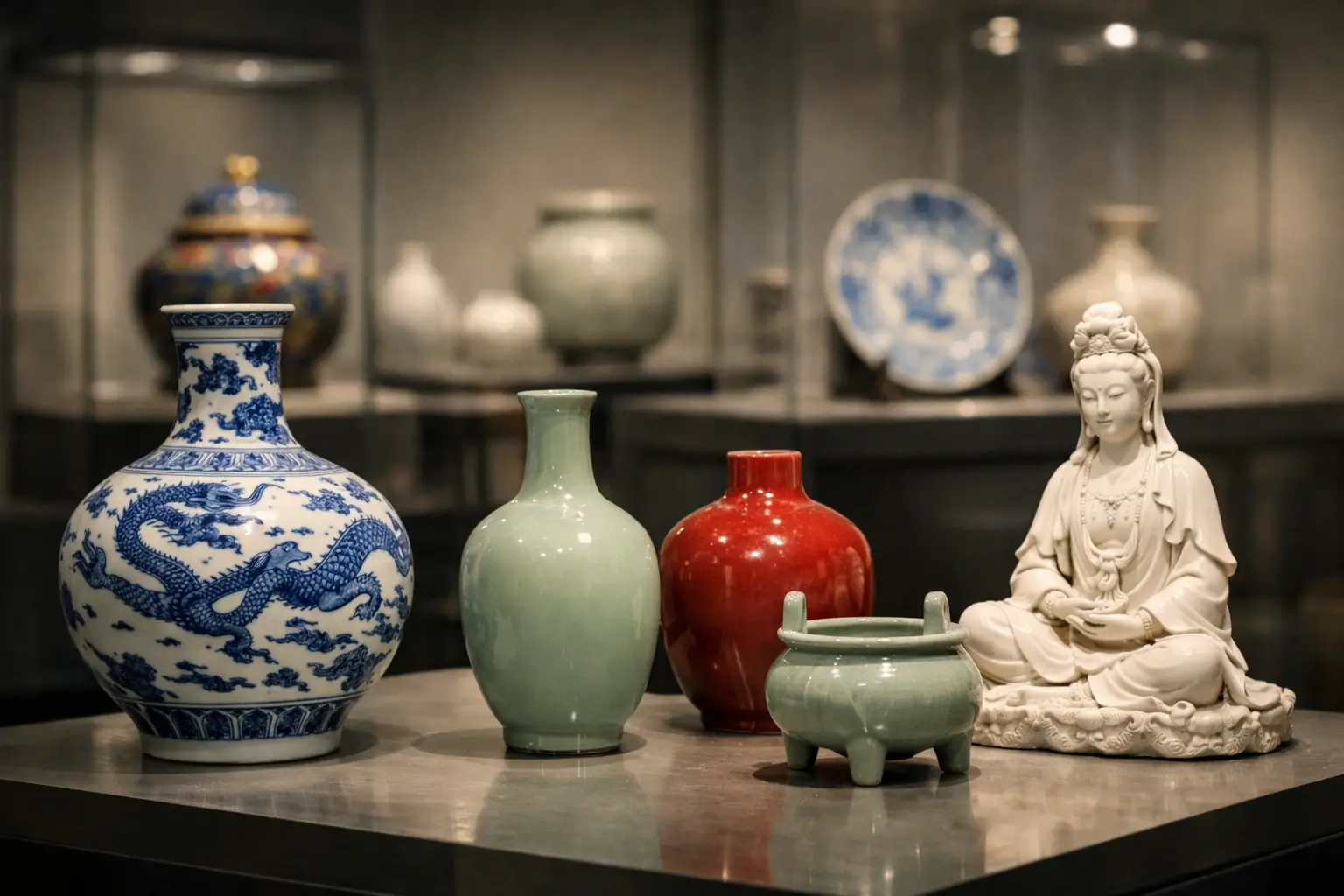
For the curious traveller, the appeal lies in both spectacle and detail. There are monumental blue-and-white jars, delicate celadons with the softness of jade, and humble everyday wares that survived because they were packed by the hundreds into a merchant vessel. The finest collections make room for all of them. They explain not only what is beautiful, but why it was made, who used it, and how it travelled.
What makes the best Chinese ceramics collections?
Scale alone does not make a collection exceptional. A room filled with porcelain can be visually impressive, yet still leave a visitor unsure of what they have seen. The most rewarding collections provide a clear sense of chronology, craftsmanship and provenance. They place a Northern Song dish beside the kiln traditions that shaped it, distinguish imperial commissions from export wares, and help visitors recognise how a single shade of blue or a particular form changed across centuries.
Provenance matters especially. Chinese ceramics have been admired and collected across Asia, Europe and the Middle East for generations, but objects with a well-documented archaeological context offer an unusually direct connection to their original world. A cargo recovered from a shipwreck can show what merchants selected, what overseas buyers desired, and how ceramics were protected for a long sea journey.
The strongest displays also resist the temptation to treat porcelain as one uniform tradition. China’s ceramic history extends across dynasties, regions and social worlds. Celadon, stoneware and porcelain each required different materials and firing knowledge. Courtly objects carried different meanings from those made for temples, households or overseas trade. Looking closely is part of the pleasure.
Collections that reveal the breadth of Chinese ceramics
Imperial ceramics in Beijing and Taipei
For visitors drawn to the height of courtly refinement, the Palace Museum in Beijing and the National Palace Museum in Taipei are essential reference points. Their holdings illuminate the role of ceramics within the imperial household, where workshops supplied wares for ritual, display, dining and diplomatic use. Forms were exacting, colours could be technically demanding, and marks often identified the reign under which a piece was commissioned.
These collections are particularly valuable for understanding the evolution of Jingdezhen porcelain. During the Ming and Qing dynasties, the kilns of Jingdezhen produced wares of remarkable assurance, from cobalt-blue designs painted beneath the glaze to vivid overglaze enamels. An imperial bowl rewards slow attention: the balance of its form, the density of its white body and the confidence of its decoration all speak to an extraordinary level of control.
Yet imperial objects are only one chapter. Their perfection can make it easy to overlook the wide market for Chinese ceramics beyond palace walls.
Song ceramics and the poetry of restraint
Song-period ceramics are often where collectors and devoted viewers develop a deeper appreciation for the medium. Rather than relying on elaborate painted motifs, many Song wares draw their power from proportion, texture and glaze. A pale Ding bowl, a carved Yaozhou dish or a Longquan celadon vessel can appear restrained at first glance, then become increasingly absorbing as light shifts over its surface.
This is also where the language of ceramics becomes useful. A crackle glaze, a carved peony, a moulded rim or an iron-brown splash is not mere ornament. It reflects the possibilities of a particular kiln, clay body and firing atmosphere. Great collections make such distinctions accessible without reducing the objects to technical specimens.
For a visitor, the best way to approach these pieces is to look beyond colour. Notice the silhouette against the gallery wall. Notice whether the glaze gathers more deeply near the foot. Notice how an incised line catches the light. These are qualities that photographs rarely convey fully.
Museum collections in Britain
Britain’s major museum collections offer an illuminating view of Chinese ceramics as objects of global collecting and exchange. The Victoria and Albert Museum and the British Museum, among others, contain works that range from early funerary wares to Ming blue-and-white porcelain and later export pieces made for European markets.
Their value lies partly in comparison. A visitor can trace how Chinese shapes and decorative ideas influenced makers elsewhere, while also seeing how foreign demand prompted Chinese workshops to adapt. Plates bearing armorial designs, teapots shaped for unfamiliar rituals and porcelain intended for grand European dining rooms reveal a two-way history of taste.
There is, however, a trade-off in collections assembled over long periods. Their breadth can be immense, but the original archaeological setting of an individual object may be less immediate. This is where shipwreck ceramics offer a powerful counterpoint.
Shipwreck collections and the maritime story
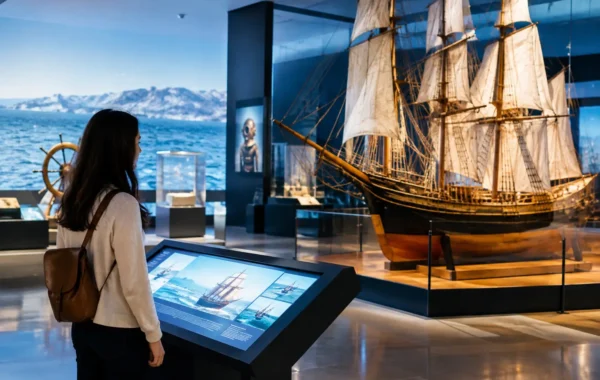
Shipwreck collections are among the most vivid ways to encounter Chinese ceramics. They restore the sense of movement that is often lost once an object enters a display case. A jar was not simply made, purchased and admired. It was wrapped, stacked, loaded into a ship’s hold and entrusted to monsoon winds, crew skill and commercial fortune.
The cargoes recovered from Asian waters demonstrate the reach of Chinese ceramic production. Blue-and-white bowls, storage jars, celadons and utilitarian vessels travelled through ports linking China with Southeast Asia, the Indonesian archipelago, India and beyond. Their survival allows us to understand ceramics as a working language of maritime commerce, not solely as luxury art.
At Straits & Oriental Museum in George Town, shipwreck ceramics form the heart of a distinctive regional encounter with this history. Artefacts recovered from vessels including the Wanli, Turiang, Royal Nanhai, Nanyang, Xuande and Desaru invite visitors to consider the sea as both a trading route and an archive. The setting is particularly resonant in Penang, a historic port city whose own character has long been shaped by arrivals, exchanges and stories carried across water.
A shipwreck display can also challenge assumptions about rarity. Some objects were produced in large quantities, but that does not make them insignificant. Repetition reveals demand. Variations in a cargo may show how workshops balanced consistency with speed, or how merchants catered to different communities at once. A small dish with a familiar motif becomes more compelling when understood as part of a journey shared by hundreds of related wares.
How to look at Chinese ceramics with greater confidence
You do not need specialist knowledge to enjoy a ceramics collection, but a few questions can transform a visit. Start with the body of the object. Is it dense, fine porcelain, a heavier stoneware, or an earthenware piece with a more porous character? Then consider the surface. Is the decoration painted under the glaze, added over it, carved into it, or created by the glaze itself?
Next, ask what the form was for. A large jar may have stored provisions or travelled as cargo. A stem cup may relate to courtly drinking customs. A shallow dish may have been designed for a particular table, market or export destination. Function gives decoration a context.
Finally, seek out the object’s journey. Was it excavated from a kiln site, a tomb, a palace context or a wreck? Was it made for China or for a customer abroad? Collections become more memorable when visitors connect material beauty with the lives and routes behind it.
Why these collections still matter
Chinese ceramics are often described as timeless, but their importance comes from being deeply rooted in time. They record periods of technological experimentation, imperial patronage, religious practice and international commerce. They also remind us that cultural exchange was never abstract. It was carried in ships, handled in markets, used at meals and passed down in homes.
The most memorable visit is therefore not the one in which you try to identify every dynasty at once. Choose one object that holds your attention, stand with it for a moment, and follow its clues – the glaze, the form, the route it may have taken. A great collection gives you the evidence; curiosity completes the journey.