

The difference between a memorable gallery visit and a forgettable one often comes down to a single detail – whether the objects before you feel like history, or merely decoration. Any worthwhile Chinese antique gallery review should begin there, because Chinese antiques ask to be read as cultural records as much as beautiful things. Porcelain, export wares, scholar’s objects and shipwreck ceramics each carry stories of trade, taste, status and survival.
For visitors with a serious interest in heritage, the best galleries do not simply present cabinets full of old pieces under flattering lights. They frame the collection with care, explain provenance where possible, and create a sense of occasion around the act of looking. That matters even more when the subject is Chinese material culture, where a small bowl, jar or dish can speak to centuries of craftsmanship and to maritime routes that once connected ports, courts and private homes across Asia.
What makes a strong Chinese antique gallery review
A credible review is not really about whether a space feels expensive or photogenic. It is about how well the gallery balances scholarship, presentation and trust. Chinese antiques have broad appeal, but they also demand discernment. A beautifully glazed plate means more when its period, kiln tradition, export history or recovery context is clearly interpreted.
The first mark of quality is curation. A strong gallery does not overwhelm visitors with quantity. Instead, it presents a collection with internal logic. You should be able to sense why certain objects sit together – perhaps by dynasty, by decorative motif, by trade route or by function. When ceramics are arranged with that kind of discipline, the gallery feels less like a shop and more like a conversation with history.
The second mark is confidence without showmanship. The best institutions and galleries do not need to oversell rarity. They let the objects speak, then support them with informed interpretation. Labels, room texts and staff knowledge should deepen your understanding rather than drown it in jargon.
A third point, often overlooked, is atmosphere. Chinese antiques benefit from a setting that respects their material presence. Light, spacing and sightlines all matter. Celadon, blue and white porcelain, famille rose enamels and brown-glazed storage jars each reveal themselves differently depending on how they are displayed. Good presentation is not cosmetic. It is part of the viewing experience.
Chinese antique gallery review criteria that actually matter
If you are planning a visit, it helps to judge a gallery on a few practical points. Provenance is the most obvious one, especially for experienced collectors and historically minded travellers. Not every piece will have a perfectly complete paper trail, particularly with older ceramics, but the gallery should be candid about what is known, what is attributed and what remains uncertain.
Condition is just as important. Restoration, firing flaws, glaze loss and marine encrustation all affect how a piece should be understood. This is especially true for shipwreck ceramics, where damage is not necessarily a defect in the ordinary sense. In some cases, it forms part of the object’s archaeological and narrative value. A crack may diminish a purely decorative market piece, yet a marine-worn bowl recovered from a historic wreck can hold a different kind of authority.
Context is another deciding factor. Chinese ceramics did not move through history in isolation. They travelled through imperial courts, merchant networks, domestic rituals and seaborne trade. A gallery that explains these connections gives visitors far more than a pleasant display. It reveals how porcelain became part of a larger civilisational story.
Then there is accessibility. This does not mean simplifying the subject to the point of blandness. It means making the collection legible to different audiences at once: seasoned collectors, first-time museum visitors, families and cultural tourists. The most rewarding galleries achieve that balance with ease.
Why porcelain remains the heart of the experience
There is a reason porcelain so often anchors a Chinese antique gallery review. It is one of the most legible forms of Chinese art for the general visitor, yet it also offers enormous depth for the specialist. A single piece can be admired for its shape and glaze in one moment, then studied for clues about period, kiln, export demand and social use in the next.
Blue and white wares remain especially compelling because they sit at the meeting point of artistry and trade. Their designs could travel across empires while still preserving a distinctly Chinese technical and aesthetic achievement. Celadon offers a quieter pleasure, often demanding slower looking. Shipwreck ceramics add another dimension altogether. They embody not only craft, but movement – commerce interrupted, history submerged, and rediscovery through archaeology.
That is where a museum-led environment has particular strength. When porcelain is presented not only as an antique but as evidence of maritime exchange, it becomes richer and more immediate. Visitors begin to see each dish, jar or ewer as part of a living network of ports, merchants and households rather than an isolated collector’s prize.
The difference between a gallery and a cultural destination
Some antique galleries are intimate and transactional by nature. There is nothing wrong with that. A focused dealer’s room can offer precision, expertise and a close encounter with exceptional works. But for many visitors, particularly those travelling with family or building a full day around culture, a broader setting is more rewarding.
A gallery within a heritage destination can offer layered value. You might arrive out of curiosity about Chinese ceramics, then find yourself drawn into wider stories of shipwreck archaeology, regional trade and the splendour of porcelain in transit. The experience becomes less about browsing objects and more about inhabiting a historical world.
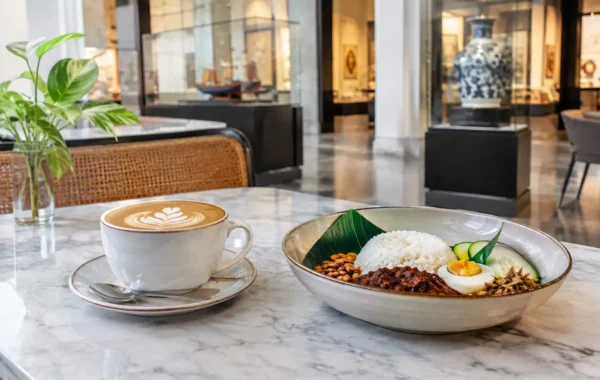
This is especially effective when the venue understands hospitality as part of interpretation. A refined café, restaurant or exhibition space does not dilute heritage if it is handled with taste. On the contrary, it can encourage visitors to linger, reflect and absorb what they have seen. The setting becomes social as well as educational, which suits modern cultural travel far better than the old model of the hurried museum visit.
In that respect, institutions such as Straits & Oriental Museum stand apart. The appeal lies not only in the rarity of authentic ceramics recovered from notable Asian shipwrecks, but in the way the experience extends beyond the display case into a fuller encounter with history, place and leisure.
What collectors and casual visitors notice differently
Collectors tend to look first for authenticity, dating, comparative quality and market confidence. They are more likely to ask whether a piece is a strong example of its type, whether decoration is crisp, whether form and glaze are consistent with period expectations, and whether restoration has been honestly disclosed.
Casual visitors are often guided by emotion before expertise. They notice beauty, scale, colour and the mood of the gallery. They remember the dish with the cobalt brushwork, the storage jar marked by centuries, or the quiet thrill of seeing a cargo once lost at sea. Neither approach is wrong. A good gallery serves both.
The challenge is to avoid talking down to one audience or alienating the other. The strongest spaces manage this by layering information. A visitor can enjoy the visual impact immediately, then go deeper through interpretation, guided storytelling or conversation with knowledgeable staff.
A balanced view of the experience
Not every Chinese antique gallery needs to feel museum-like, and not every visitor wants a scholarly encounter. Some people simply want to enjoy elegant objects in a beautiful room. Others want hard historical detail. The best review, then, leaves room for taste.
If you are seeking purchasing advice, your standards should be stricter. Ask harder questions about origin, repairs and documentation. If you are travelling for cultural enrichment, you may place greater value on atmosphere, interpretation and the range of the overall experience. It depends on why you are there.
What does not change is the value of sincerity. A gallery earns respect when it presents Chinese antiques as more than status symbols. These objects deserve patience. They reward close looking, and they often reveal their significance gradually.
The finest galleries understand that old porcelain is not silent. It speaks of craft, exchange, aspiration and endurance. If a visit leaves you looking more carefully not only at the object, but at the world that carried it to the present, then the gallery has done something rare – it has turned admiration into understanding.
When choosing where to spend your time, look for a place that offers that deeper register. Beauty will bring you in, but story is what makes you stay.