
A shipwreck bowl may have travelled across oceans for centuries before reaching a gallery case. Every visitor deserves a fair chance to encounter that story – whether they arrive using a wheelchair, need a quiet place to pause, communicate differently, have limited vision, or are visiting with a young child. This museum accessibility planning guide approaches access as part of the experience itself: thoughtful hospitality that allows more people to enjoy heritage with comfort, dignity and curiosity.
For an integrated cultural destination, accessibility extends beyond the exhibition floor. It shapes the route from street to entrance, the clarity of ticketing, the atmosphere of a café, the height of a retail display and the confidence a guest feels when asking for help. Good planning does not diminish the sense of discovery. It makes discovery possible.
Start with the whole visitor journey
Accessibility plans often begin with a ramp or a lift. These are essential physical considerations, but they are only one part of a visit. Map the guest journey from first enquiry to departure. Consider a visitor researching online, arriving by car or on foot, entering the building, buying admission, viewing galleries, joining a talk, using facilities, dining and selecting a memento from the gift house.
At each stage, ask a practical question: can a person understand what to do, get where they need to go, use the service independently where possible, and obtain help without embarrassment? This journey-based approach reveals gaps that a building inspection alone may miss.
For example, a step-free entrance has limited value if it is difficult to locate, poorly signed or reached only through a service corridor. A wheelchair-accessible toilet is less useful if guests must negotiate a heavy door to reach it. An exhibition may offer excellent object labels, yet remain demanding for visitors who cannot stand for extended periods. Access is cumulative. A series of small barriers can turn an anticipated cultural outing into an exhausting one.
Build planning around real people
Avoid treating disabled visitors as a single group. Access needs vary widely, including those associated with mobility, vision, hearing, neurodivergence, learning differences, chronic illness, dementia, anxiety and temporary injuries. Parents with prams, older visitors and guests travelling with large bags may benefit from many of the same improvements.
The most valuable source of insight is lived experience. Invite disabled people, carers, local advocates and access professionals to walk the site and discuss their visit frankly. Pay them for their expertise where appropriate. Ask what worked, where uncertainty arose and what would have made the experience more enjoyable, not merely possible.
This is also where heritage settings require honesty. A historic building may have narrow thresholds, level changes or protected architectural features that cannot be altered easily. The right response is not to promise perfect access where it cannot be delivered. Explain constraints clearly, provide the best viable alternative route or experience, and make improvement a continuing commitment rather than a one-off project.
Museum accessibility planning guide: make information useful
A visitor should not have to telephone repeatedly to establish whether they can enter, sit down, use a toilet or bring a support person. Clear pre-visit information is one of the most effective access measures a museum can provide.
Describe access in specific, plain language. State the entrance route, nearby drop-off options, steps and gradients, lift availability, doorway widths where useful, accessible toilets, seating, sensory conditions and whether assistance animals are welcome. Mention borrowed wheelchairs, stools or prams only if they are reliably available. Photographs of entrances, reception desks and key routes can remove uncertainty far better than a general claim that a venue is accessible.
The same principle applies to programming. If a curator’s talk involves low lighting, standing in a gallery, projected text or a crowded room, say so in advance. If captions, sign-language interpretation, large print or a quiet session are available, make these details prominent rather than hiding them in a separate notice.
Information should be reviewed as carefully as exhibition opening hours. A lift under maintenance, a temporary gallery closure or works affecting a route can change someone’s decision to visit. Out-of-date access information creates disappointment and damages trust.
Design galleries for comfort, not just compliance
Physical access begins with a clear, obstacle-free route. Keep circulation spaces free from promotional stands, loose cables and furniture that creates pinch points. Use seating at regular intervals, especially in galleries where visitors may spend time studying intricate ceramics, maps or object narratives. Seats with backs and arms can be particularly helpful for people who find low benches difficult.
Lighting needs careful balance. Ancient porcelain and delicate archaeological material may require controlled illumination, while guests with low vision need enough contrast to navigate safely. Mark edges, steps and changes in level clearly. Avoid placing vital interpretation in glare or shadow. Where immersive dark spaces are used, offer a bypass route or give visitors clear notice before entry.
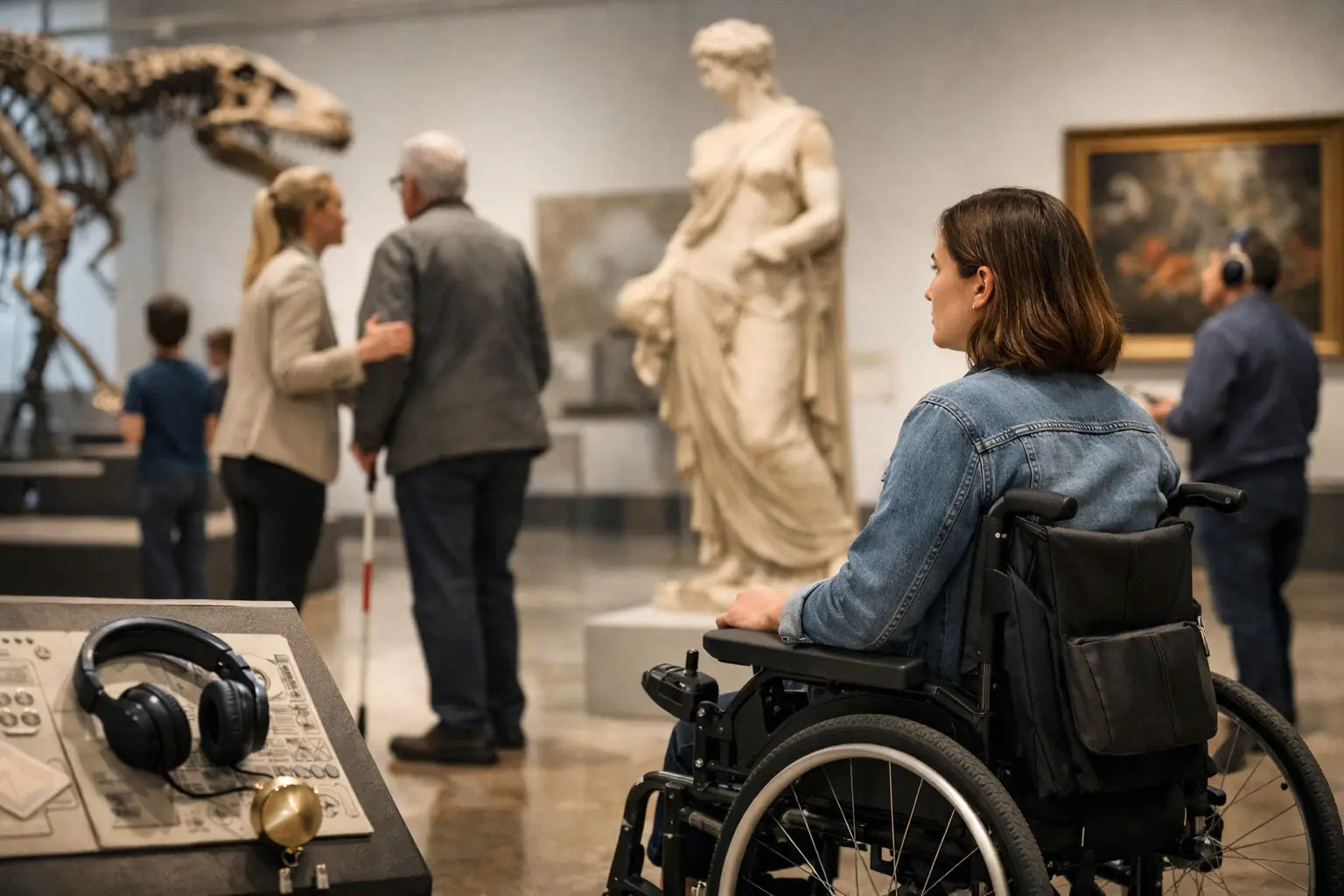
Display design also matters. Cases should allow a child, a wheelchair user and a standing adult to see meaningful details. Labels need legible type, sufficient contrast and language that respects a visitor’s time. Large-print guides, tactile elements and carefully made object handling replicas can add depth, but they should support rather than replace the original artefacts.
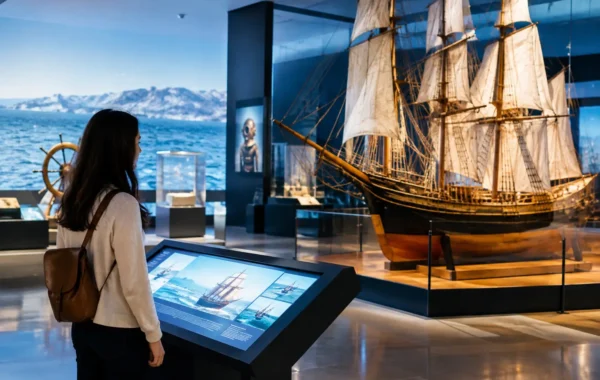
Digital interpretation has enormous potential when it is designed well. Videos should have accurate captions. Audio should be accompanied by text. Touchscreens need reachable placement, clear instructions and enough time before they reset. Any digital content should also have a non-digital alternative, as personal devices, connectivity and sensory preferences differ.
Plan for sensory and cognitive access
Museums can be stimulating places: changing light, reflective cases, echoes, groups of schoolchildren, music, scents from nearby dining spaces and the social pressure to move at a certain pace. What feels atmospheric to one guest can feel overwhelming to another.
Create opportunities for a calmer visit. Quiet opening periods, downloadable visual guides, advance descriptions of sensory features and a designated low-stimulation space can make an enormous difference. In-gallery wording should be direct and well structured, with clear section headings and short passages alongside deeper layers of interpretation for those who want them.
Choice is central. Some visitors will relish a dramatic audiovisual introduction to maritime trade; others may prefer to begin with a printed overview or a quieter display. Offering more than one way into the story is good interpretation, not a compromise in ambition.
Extend access to hospitality and retail
An integrated museum experience should not divide visitors into those who can enjoy the full destination and those who can only view the galleries. Check that café tables include suitable clearance for wheelchair users, menus are available in readable formats and staff can explain ingredients clearly. Consider acoustics too: hard surfaces and busy service counters can make conversation difficult for hearing-aid users and others who process sound differently.
In retail areas, ensure aisles remain generous, popular items are within reach and fragile displays do not make manoeuvring feel risky. A lower counter section, portable card terminal or seated service option can improve independence without changing the character of a refined gift house.
For events, reserve accessible seating with a good view, rather than placing guests at the edge of the room by default. Think about the route to refreshments, the location of speakers and the availability of seating throughout a reception. A well-hosted cultural evening is one where access has been considered before invitations are issued.
Train teams to offer assured, respectful help
The warmest access feature is often a well-prepared member of staff. Training should cover practical site knowledge, respectful language, communication methods and what to do when plans change. Team members must know where the accessible route begins, how to operate relevant equipment and whom to contact if a guest needs support.
Just as importantly, staff should ask before helping. Do not push a wheelchair, take hold of a person’s arm or speak only to a companion. Address the visitor directly, offer options and allow them to decide what assistance is useful. Confidence comes from practice, so include access scenarios in induction and refresher training rather than treating them as a specialist topic for front-of-house staff alone.
Set priorities, measure progress and keep listening
Not every improvement requires a major capital project. Better signs, additional seating, clearer web information, captioning and staff training can often be introduced quickly. Larger works, such as lifts, ramps, toilet upgrades or revised entrances, need budget, specialist advice and potentially heritage approvals. Both matter.
Create a prioritised plan that distinguishes immediate operational changes from medium- and long-term investment. Assign ownership, set review dates and record feedback from guests. Complaints and compliments can both reveal patterns, particularly when they are gathered alongside observations from staff.
At Straits & Oriental Museum, the journey through maritime history is enriched by the detail: the glaze of a recovered vessel, the trade route behind an object, the conversation that continues over food and drink. Accessibility deserves the same curatorial attention. When every guest can move through the experience with greater ease and confidence, heritage becomes not only preserved, but genuinely shared.