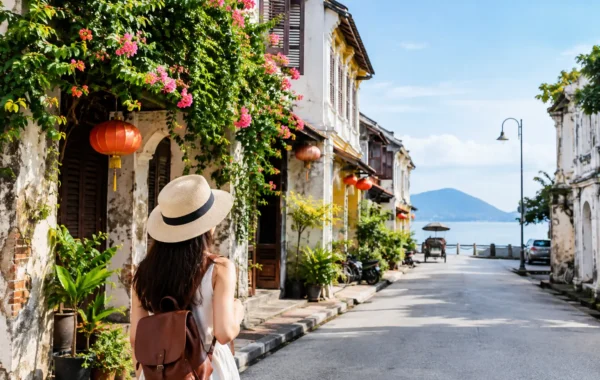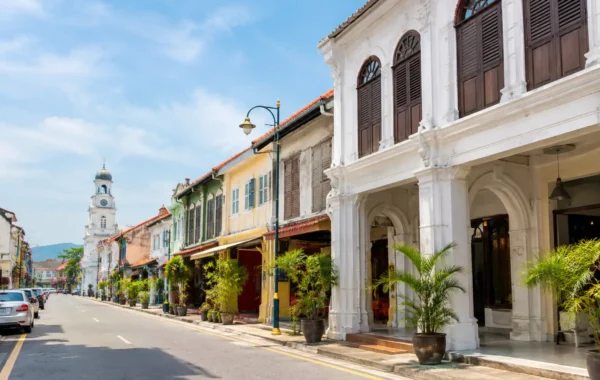
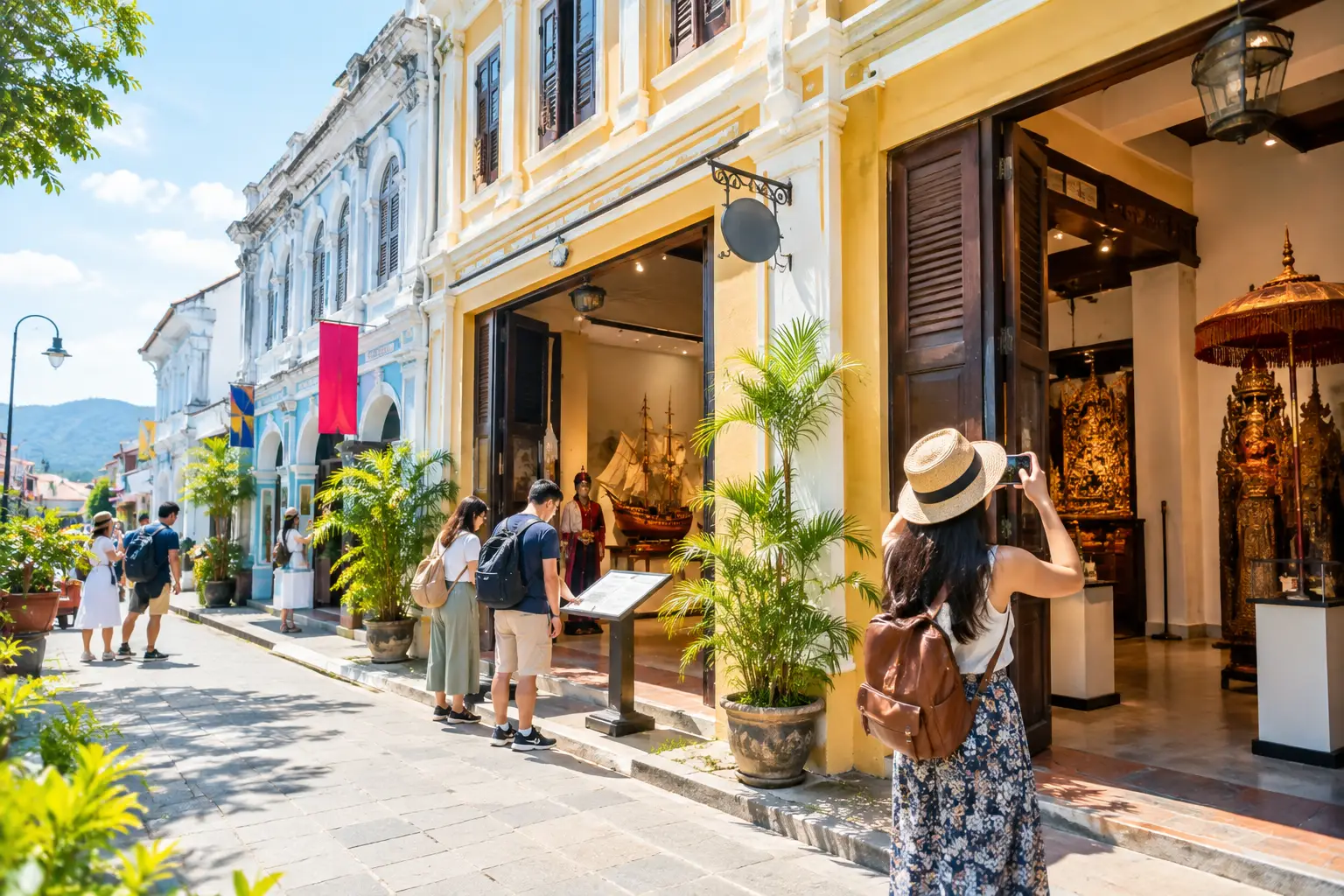

George Town is often admired from the pavement: its shophouse façades, five-foot ways and murals are immediate pleasures. Yet Penang museums offer the deeper encounter – the objects, rooms and personal histories that explain how this port city became one of Southeast Asia’s most richly layered places. Set aside more than an hour if you can. The best visits reward curiosity, unhurried looking and a willingness to follow one story into another.
A strong museum itinerary is not about ticking off every door on a map. It is about choosing the histories that speak to you: the sea routes that carried porcelain across Asia, the domestic rituals of Peranakan households, the politics of revolution, the artistry of batik or the difficult memory of war. Together, these collections turn a holiday in Penang into something more lasting.
Why museums belong in a Penang itinerary
Penang’s heritage is not confined to a single era or community. For centuries, merchants, migrants, artists, administrators and seafarers arrived here carrying goods, beliefs and ambitions. Museums provide the context that a beautiful streetscape alone cannot always supply. A blue-and-white bowl, a family altar or a faded wartime photograph can make the past feel unexpectedly close.
They also offer a welcome change of pace. George Town is wonderfully walkable, but its heat and energy can be intense by midday. A thoughtfully chosen museum visit gives the day shape: an absorbing morning among collections, a pause for lunch, then a return to the streets with new eyes. Families may prefer tactile, visually immediate displays, while collectors and history enthusiasts may happily spend longer reading labels and studying craftsmanship.
Seven Penang museums and heritage collections to seek out
Shipwreck porcelain and maritime trade
For an encounter with the trade networks that connected Penang to the wider world, Straits & Oriental Museum presents authentic ceramics recovered from significant Asian shipwrecks, including the Wanli, Turiang, Royal Nanhai, Nanyang, Xuande and Desaru wrecks. These are not decorative replicas or imagined cargoes. They are objects that travelled through perilous waters, carrying the marks of production, commerce and time.
The experience places porcelain within a larger story of maritime Asia. Look closely at the variation in form, glaze and ornament: a bowl or storage jar was both an object of beauty and part of a vast commercial system. As Malaysia’s first integrated heritage and lifestyle museum, the setting also allows the visit to extend beyond the gallery, with art, hospitality and gift offerings creating a more rounded cultural outing. It is particularly rewarding for visitors who want artefacts to be the starting point for conversation rather than the final stop.
Peranakan life at Pinang Peranakan Mansion
The Peranakan world is one of Penang’s most distinctive cultural inheritances, shaped by Chinese families who developed local customs across generations in the Malay Archipelago. Pinang Peranakan Mansion is prized for its richly furnished interiors, where carved timber, porcelain, embroidery, jewellery and household objects create an impression of ceremonial domestic life.
This is a visit for lovers of detail. The mansion’s visual abundance can initially feel theatrical, but its value lies in what it reveals about taste, status, kinship and cultural exchange. Give yourself time to look beyond the grand rooms. Smaller objects often tell the most intimate stories: a tea service, a pair of shoes, a photograph or an embroidered panel.
Batik as an art form
Batik Painting Museum Penang brings attention to a medium that is often reduced to a souvenir or textile pattern. Here, batik is presented as an expressive art form, with works that demonstrate how wax-resist technique can produce luminous colour, movement and surprising complexity.
It is an especially satisfying stop for travellers interested in design, fashion and Southeast Asian visual culture. The scale is more focused than a large national institution, which can make the encounter feel personal. Visit with an open mind: batik painting is not merely about tradition preserved intact, but about artists interpreting tradition in their own visual language.
The revolutionary chapter at Sun Yat Sen Museum
Set within an atmospheric heritage house, the Sun Yat Sen Museum recalls Penang’s role in the revolutionary networks of the early twentieth century. Dr Sun Yat Sen spent time in the city, and the site draws attention to the region’s connections with political change in China.
This is a compact visit, but its scale is part of its power. Rather than presenting history as distant statecraft, the house suggests how political ideas moved through private rooms, community ties and overseas networks. It works particularly well alongside a walk through George Town’s older commercial streets, where the setting helps the story settle into place.
Penang’s wartime memory at Penang War Museum
On Penang Hill’s southern reaches, the Penang War Museum occupies a former British military fortress and confronts a much darker period of the island’s past. Tunnels, fortifications and preserved structures create a setting that is more physically immersive than a conventional gallery.
The visit is not light entertainment, and it should not be rushed. Its value lies in its ability to make strategic anxieties, occupation and human suffering feel spatially real. The outdoor terrain can be demanding in hot or wet weather, so it suits visitors comfortable with walking and prepared for a more sobering historical experience.
A wider civic story at Penang State Museum and Art Gallery
For a broad view of the island’s social and cultural development, the Penang State Museum and Art Gallery remains a useful reference point. Its collections have encompassed local history, craft, costume and art, making it well suited to first-time visitors who want a framework for the places they will see around the island.
Check the current programme and venue arrangements before building your day around it, as museum displays and operational locations can change. When available, state collections offer a valuable counterbalance to more specialised sites: they draw together the many communities and everyday practices that have shaped Penang.
A playful lens on visual culture at Asia Camera Museum
Not every meaningful museum visit has to be solemn. Asia Camera Museum celebrates the history and curiosity of photography, with vintage cameras and interactive visual moments that appeal to families, design-minded visitors and anyone fascinated by how we frame the world.
Its lighter tone makes it a good choice after a more text-heavy or emotionally weighty museum. It also raises a worthwhile question for modern travellers: what do we notice when we stop treating photographs simply as holiday records and begin to see the technology, craft and choices behind them?
How to plan a more rewarding museum day
Choose two museums with contrasting perspectives rather than trying to see seven in one day. A maritime collection paired with a Peranakan mansion, for example, connects trade with the lives and homes shaped by that trade. Batik and photography make an engaging pairing for visitors drawn to visual culture. The War Museum is best given a separate half-day because of its location and the reflective time it deserves.
Timing matters. Start with a collection that requires concentration, then leave room for a meal, a gallery pause or a stroll through the surrounding streets. Heritage visits become more memorable when they have breathing space. If travelling with children, balance object-led museums with places where setting, colour or interaction holds attention more naturally.
Before setting out, confirm opening hours, admission arrangements and any guided-tour schedules directly with each venue. Smaller heritage sites may have more limited access than major attractions, while special exhibitions can transform what is on offer. A little planning prevents disappointment and gives you permission to linger when a collection proves more compelling than expected.
Penang’s most remarkable stories are rarely contained by one building. Let a museum visit sharpen your eye, then carry that attention outside: to the porcelain motifs on old façades, the smell of food shaped by migration, the rhythms of the port and the families whose histories still animate the city.