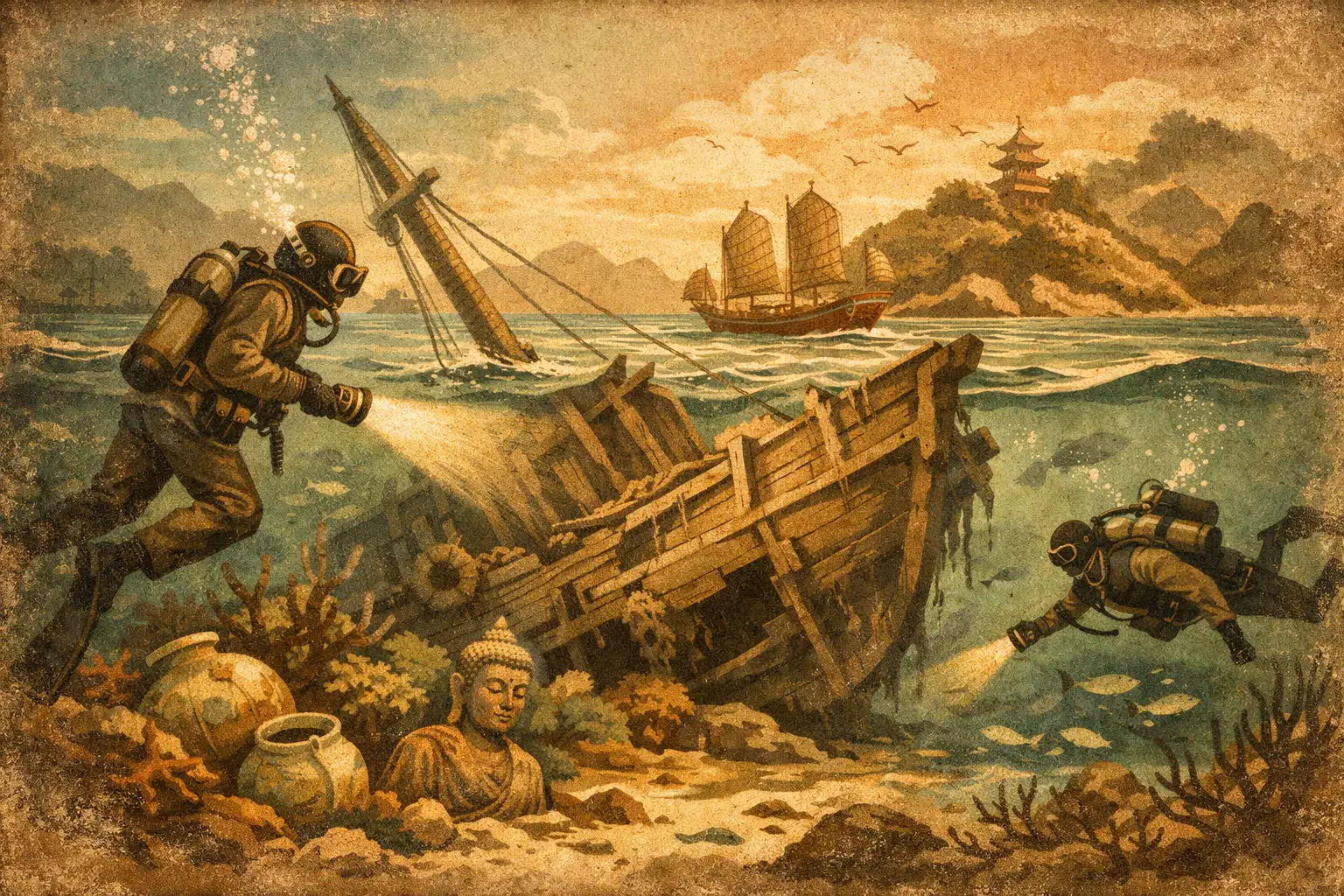

A porcelain bowl lifted from the seabed can hold more than a beautiful glaze. It can reveal who made it, who paid for it, which ports handled it and how deeply connected Asia was long before modern maps divided the region into nations. The top Asian shipwreck discoveries are compelling precisely because they turn maritime trade from an abstract idea into something tangible: a cargo of ceramics, a ship’s timbers, a cluster of personal objects and the sudden silence of a voyage interrupted.
For visitors drawn to heritage, these wrecks offer a rare way to see history at human scale. They also ask us to look beyond the romance of lost treasure. Every recovered vessel is evidence of skilled makers, demanding buyers, dangerous monsoons and port cities that prospered by welcoming the wider world.
Why top Asian shipwreck discoveries matter
From the South China Sea to the Java Sea and the Straits of Melaka, maritime routes carried Chinese porcelain, Southeast Asian stoneware, spices, metals, glass and everyday goods across extraordinary distances. Ceramics survive particularly well underwater, which is why they often form the visual heart of a shipwreck collection. Yet their value is not merely decorative. A bowl’s form, kiln, painted motif and even a mark on its base can help date a voyage and map a commercial network.
A wreck is also a snapshot rather than a complete archive. Cargoes were selected for particular markets, and what survives may reflect the conditions of the seabed as much as the ship’s original contents. That is why the most meaningful interpretations combine ceramics with hull construction, anchors, coins, organic remains and the wider archaeology of nearby ports.
There is another consideration. Recovery can preserve material that would otherwise deteriorate or be disturbed, but it can also remove objects from their original context. The strongest shipwreck stories therefore acknowledge provenance, conservation and the difference between an object that is beautiful and an object that is fully understood.
Seven Asian shipwreck stories that changed the picture
These discoveries are not a simple league table. Some are celebrated for the scale of their cargoes, others for the precision of their dating or the questions they have opened about trade. Together, they form a remarkable journey through Asian maritime history.
The Belitung Shipwreck and the Tang world
Discovered near Belitung Island in Indonesia, the ninth-century Belitung Shipwreck remains one of the most consequential finds in Asian maritime archaeology. Often associated with an Arab dhow, it carried an immense cargo of Tang-dynasty ceramics, including Changsha wares painted with lively motifs, alongside gold, silver and other luxury goods.
Its importance lies in the clarity of its message: Chinese ceramics were being made for overseas customers on a remarkable scale by the early ninth century. A dated bowl from the cargo has helped anchor the voyage to 826. The wreck makes the maritime Silk Road feel immediate, revealing commercial ties between China, Southeast Asia and the Islamic world as a working reality rather than a distant concept.
Cirebon and Intan: commerce in the Java Sea
The Cirebon Shipwreck, found off Java, brought to light a rich late tenth-century cargo of Chinese ceramics alongside objects linked to Southeast Asian and western Asian trade. It reflects a moment when maritime routes were becoming ever more sophisticated, with Java positioned not at the edge of exchange but at its centre.
The nearby story of the Intan Wreck adds another layer. Its cargo included Chinese ceramics, metal objects and other trade goods from around the same broad period. Read together, Cirebon and Intan show that the Java Sea was not simply crossed by merchants. It was a densely connected commercial zone, served by ships carrying mixed cargoes for varied communities and markets.
Nanhai No. 1 and a Southern Song cargo
The Nanhai No. 1, discovered off the coast of Guangdong, is exceptional because the vessel itself has been preserved and studied on a monumental scale. Dating to the Southern Song period, it carried a vast cargo of ceramics, many intended for export, as well as coins and other material evidence of shipboard life and trade.
Its excavation transformed public understanding of Chinese maritime commerce. Instead of seeing export porcelain only through finished objects in collections, audiences could encounter the physical setting of a trading ship and the immense logistical effort behind the cargo. The Nanhai No. 1 also demonstrates how conservation shapes interpretation: preserving a wreck of this scale is a long-term scientific commitment, not a single moment of discovery.
The Java Sea Wreck and a global medieval market
The Java Sea Wreck, dated to the late twelfth or early thirteenth century, contained Chinese ceramics, iron, resin and other goods. Its diverse cargo is especially revealing. The ship was not transporting one luxury product from one place to another. It was part of a regional economy in which bulk materials, practical objects and fine ceramics travelled together.
This is a useful corrective to the familiar image of porcelain as a courtly treasure. Much export ware was made for use: to serve food, store goods, furnish homes and mark hospitality. A surviving cargo can show both the splendour of individual pieces and the commercial scale that made such objects part of everyday life across maritime Asia.
Turiang and Nanyang: the fourteenth-century sea lanes
The Turiang Wreck, discovered off the east coast of the Malay Peninsula, is particularly valued for its fourteenth-century cargo, including Vietnamese ceramics. It speaks to a period when Vietnamese kilns supplied markets across Southeast Asia, demonstrating that Chinese porcelain was not the only force shaping regional taste.
The Nanyang Wreck adds to this wider picture of Southeast Asian exchange. Its ceramics and trade goods remind us that ships moved through an interconnected world of entrepôts, coastal communities and seasonal winds. Such finds are especially resonant in the Straits region, where a voyage could link China, Vietnam, the Malay Peninsula, the Indonesian archipelago, India and beyond.
Wanli and Xuande: porcelain made for distant tables
Wrecks identified through Wanli-period and Xuande-period ceramics are prized for the way they document changing styles of Chinese export porcelain. Blue-and-white decoration, vessel shapes and kiln traditions allow specialists to trace shifts in production and demand across centuries. Names such as Wanli and Xuande may refer to the reign periods represented by the cargo, rather than offering a complete account of every object aboard a vessel.
That distinction matters. Dating shipwreck ceramics is a disciplined process, and cargoes may include older pieces, mixed wares or goods gathered at several ports. Even so, the Wanli and Xuande wreck discoveries provide vivid evidence of porcelain’s enduring appeal – carefully made, visually distinctive and desired far beyond the place of manufacture.
Royal Nanhai and Desaru: regional finds with lasting resonance
The Royal Nanhai and Desaru wrecks hold particular interest for audiences exploring the maritime heritage of Malaysia and the surrounding seas. Their recovered ceramics make visible the traffic that passed through these waters, carrying objects of refinement while connecting local ports to the wider Asian trading world.
Their significance is not confined to rarity. Regional wrecks encourage a more grounded reading of history: the Malay Peninsula was not merely adjacent to great sea routes, but actively shaped by them. Every bowl, jar and dish recovered from these voyages invites questions about local consumers, harbour communities, storage, repair and resale. Those questions are often as revealing as the most spectacular individual artefact.
Reading a shipwreck collection with fresh eyes
When viewing shipwreck ceramics, begin with the object’s material presence. Notice whether a piece is fine porcelain, sturdy stoneware or a coarse storage vessel. Then look for clues to purpose: a small covered box, a large jar and a serving dish each belonged to different habits of trade and use. Decoration can be enchanting, but shape often tells an equally important story.
It is also worth asking what is absent. Textiles, foodstuffs and wooden fittings rarely survive as clearly as ceramic cargoes, while crew members often leave little direct trace. A gallery display can never recreate every aspect of a voyage. What it can do, at its best, is bring the surviving evidence into conversation with the people and places behind it.
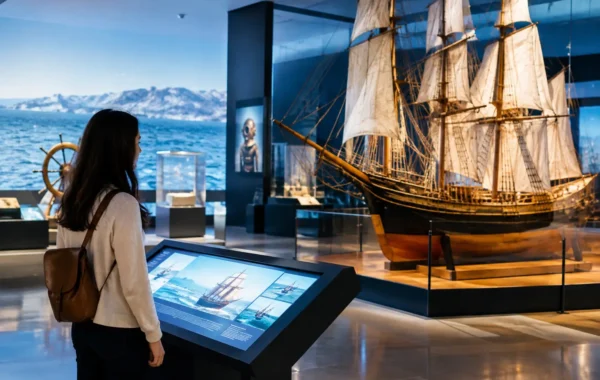
At Straits & Oriental Museum in George Town, authentic shipwreck ceramics offer precisely this opportunity: to stand close to objects that once travelled through uncertain seas, then continue the conversation over food, art and the atmosphere of a heritage destination. The most rewarding visit is not one that merely admires a beautiful vessel, but one that imagines the hands that made it, loaded it and waited for it to arrive.