
A single porcelain bowl can hold the weight of an empire. Not because it is heavy, but because it carries evidence of trade routes, court taste, technological mastery and the habits of everyday life across centuries. When people ask what makes porcelain historically valuable, they are really asking why these refined objects continue to command attention long after the hands that made and used them have disappeared.
The answer is never just beauty. Porcelain has historical value because it sits at the meeting point of art, commerce and power. It can reveal how societies ate, traded, worshipped, travelled and displayed status. Some pieces were made for imperial courts, others for export markets thousands of miles away. Some survived in palace collections, while others rested beneath the sea for centuries before returning to view as witnesses to maritime history.
What makes porcelain historically valuable in the first place?
At the heart of porcelain’s value is its remarkable material achievement. True porcelain requires carefully selected raw materials, high firing temperatures and a level of control that many ceramic traditions spent generations trying to perfect. It is hard, vitrified, often translucent, and capable of carrying exceptionally fine painted decoration. Historically, that technical sophistication mattered enormously. It turned porcelain from a useful object into a symbol of advanced knowledge and refined culture.
Yet technical brilliance alone does not explain everything. Historical value grows when an object can tell a precise story. A dish from a known kiln, a jar bearing a reign mark, or a cargo of export wares recovered from a documented wreck all carry different forms of significance. The more clearly a piece can be placed within a moment, a workshop, a route or a patronage network, the more richly it speaks.
Condition also matters, though not in a simplistic way. An intact vase may attract attention immediately, but a chipped shard recovered from an archaeological context can be just as important to historians if it helps date a shipwreck, trace trading activity or identify a production centre. In museum terms, historical value often depends less on perfection than on evidence.
Craftsmanship, rarity and the prestige of skill
Porcelain became desirable in part because it was difficult to make well. Before European factories learned to produce hard-paste porcelain, Asian wares – particularly those from China – were admired not merely as exotic luxuries but as products of a sophisticated ceramic science. Their whiteness, resonance and delicacy seemed almost miraculous to foreign buyers.
That prestige was amplified by decoration. Cobalt blue underglaze painting, famille rose enamels, celadon glazes and moulded forms all reflected specialised skill and changing tastes. A finely painted plate is not historically valuable simply because it looks elegant in a cabinet. It is valuable because it records the standards of a workshop, the preferences of a market and the aesthetic language of its time.
Rarity adds another layer, but rarity is not always straightforward. Some porcelains are rare because few were made. Others are rare because they were made in large quantities yet seldom survived complete. A common export type from the seventeenth century may become historically important if it appears in a securely dated cargo, offering rare proof of what merchants were moving through Asian waters at a particular moment.
Porcelain as a record of global trade
One of the strongest answers to what makes porcelain historically valuable lies in trade. Porcelain was among the most travelled objects in the pre-modern world. It moved through courtly exchange, merchant shipping and everyday commerce, linking kilns in Asia to ports, households and collections across the globe.
These journeys matter because porcelain often survives where paper records do not. Cargo manifests can be incomplete, lost or vague. A recovered ceramic assemblage can reveal what was shipped, in what styles, and for which market. Shape, motif and composition all become clues. A bowl made in China for Southeast Asian consumers, or a dish tailored to European taste, speaks of a world already deeply interconnected.
This is where maritime archaeology becomes especially powerful. Shipwreck ceramics preserve history in concentrated form. Rather than seeing one isolated object separated from its context, we encounter an entire cargo tied to a route, a period and an event. The result is a far more vivid picture of trade than a single heirloom on its own can offer.
For visitors with an eye for story, this is often the moment porcelain becomes unforgettable. A cup no longer sits as a decorative object alone. It becomes part of a vanished voyage, carrying with it the ambitions of merchants, the risks of monsoon seas and the appetite for fine goods across distant ports.
Why provenance can matter more than appearance
A porcelain piece with clear provenance often has greater historical value than a more visually dazzling object with no documented background. Provenance tells us where an object came from, how it was found, who owned it and why that chain of custody can be trusted. In the heritage world, this is not a minor detail. It is what transforms an attractive artefact into credible history.
An object recovered scientifically from a shipwreck, for instance, holds context that a market-sourced piece may not. Its exact location, associated finds and archaeological record help scholars understand chronology, cargo composition and trade patterns. That context gives the object authority.
This is one reason shipwreck porcelain is so compelling in a museum setting. It offers more than surface beauty. It presents a documented encounter between material culture and maritime history. Collections associated with sites such as the Wanli, Turiang, Royal Nanhai, Nanyang, Xuande and Desaru resonate because they preserve not just ceramic forms, but episodes in Asian seaborne exchange.
Historical value is also cultural value
Porcelain matters because people cared about it intensely in its own time. It appeared on dining tables, in ritual settings, in diplomatic gifts and in elite interiors. It could signal wealth, refinement and access to international goods. Even humble export wares tell us something important about aspiration and consumption.
For families and travellers visiting a heritage museum, this is where porcelain often becomes relatable. A plate, ewer or covered box reflects daily life as much as state power. Who used it? What meal was served on it? Why was one motif favoured in one market and ignored in another? These are human questions, and porcelain answers them with unusual clarity.
Cultural value also changes over time. A bowl once purchased for practical use may later become a treasured heirloom. A cargo once treated as commercial stock may now be recognised as a rare archaeological archive. Historical value is therefore not fixed. It grows as scholarship deepens, contexts are recovered and public understanding expands.
What makes porcelain historically valuable to collectors and museums?
Collectors and museums often look at the same object through slightly different lenses. A collector may be drawn first to rarity, condition, beauty and market desirability. A museum will care deeply about those things too, but it will also ask what the piece can teach. Does it fill a gap in the historical record? Does it represent a key kiln, period or trade route? Can it help the public understand a larger story?
The strongest objects satisfy both worlds. They are visually striking, materially refined and securely grounded in history. That combination is why porcelain has such enduring appeal. It rewards close looking, but it also rewards deeper inquiry.
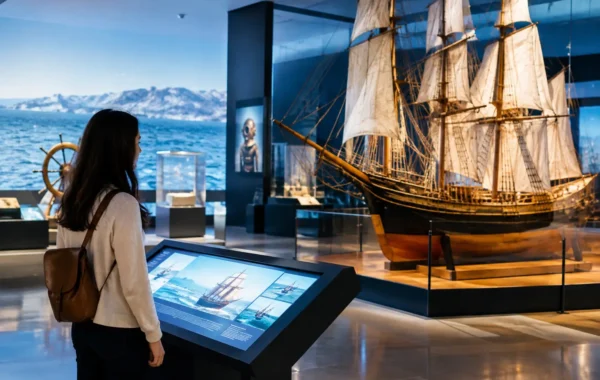
At Straits & Oriental Museum, this encounter becomes especially vivid because porcelain is presented within the wider story of the sea. Seen in relation to shipwrecks and regional trade, these artefacts become more than luxury objects. They become proof that Penang and the surrounding waters belong to a much larger history of movement, exchange and cultural encounter.
There is, of course, a trade-off to remember. Not every old porcelain object is historically valuable, and not every valuable object is visually spectacular. Age alone is not enough. Historical value depends on context, authenticity, craftsmanship, rarity and relevance to a broader story. Sometimes the most important piece in a gallery is the one that appears quiet at first glance.
That is part of porcelain’s lasting fascination. It asks us to look twice – once for elegance, and again for evidence. When those two qualities meet, the result is not merely an antique, but a record of civilisation held in the palm of the hand.
The next time you stand before a porcelain vessel, consider not only how finely it was made, but how far it may have travelled, what world it once served, and what it still has the power to reveal.